11 Jul PC-2439: A Model of Counter-Narcotics Effectiveness Undermined by Bureaucratic Paralysis
By,
Jesús Romero. Co-Founder & Senior Fellow, MSI²
In the ongoing struggle against transnational organized crime and narcotics trafficking, the Department of Defense (DoD) maintains one of its most operationally effective yet least understood initiatives: PC-2439, the designation for Tactical Analysis Teams (TATs) under U.S. Southern Command (SOUTHCOM).
Despite their proven success in disrupting illicit networks across Latin America, TATs have faced chronic institutional neglect, poor interagency coordination, and a lack of codified policy guidance — a situation that threatens U.S. national security and undermines trust in strategic programs.
An Operational Success Trapped in Administrative Limbo
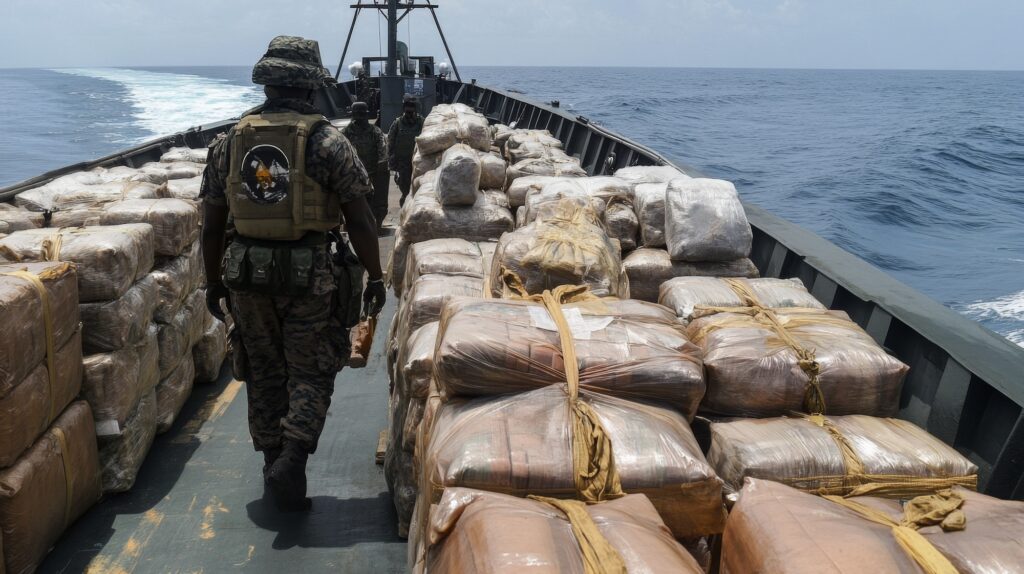
Since its inception, PC-2439 has operated with remarkable efficiency, supporting interagency counter-narcotics missions throughout SOUTHCOM’s area of responsibility (AOR), from Guatemala and Colombia to the Caribbean. These small teams provide tactical-level intelligence support to host nations and interagency partners, leveraging U.S. military capabilities to address evolving narcotics threats. Their performance has been validated repeatedly through measurable operational metrics — dollar for dollar, few DoD programs can match their return on investment in drug interdiction and partner capacity building.
Yet, PC-2439 has languished for more than two years in bureaucratic limbo.
Program members face inconsistencies in assignments, delayed benefits, and disparate treatment, especially when deployed to embassies. While other DoD personnel receive formal turnover procedures, honors, and recognitions, TAT members are often sidelined, their contributions quietly dismissed. In my own case, following my planned departure from the U.S. Embassy in Guatemala, I received no formal recognition, no turnover, and no letter of appreciation, despite nearly two decades of service. A program with such clear national value should not be subject to such structural disregard.
Misperceptions, Mismanagement, and the Civilian Oversight Dilemma
Much of this dysfunction stems from the ambiguous position PC-2439 occupies within the DoD’s broader counter-drug enterprise. While administratively housed under SOUTHCOM’s J2 (Intelligence), the program has been repeatedly influenced — and in some cases managed — by civilian law enforcement agencies, including the DEA and the Department of Justice. Although well-intentioned, this overlay has injected unnecessary confusion, often exposing PC-2439 members to agency-specific biases, conflicting directives, and cultural friction that detracts from their core DoD mission.
New rotations of Judge Advocate General (JAG) officers and agency representatives unfamiliar with the TAT concept have at times questioned its legality or necessity, undermining morale and fostering operational stagnation. Instead of reinforcing one of the most agile and productive counter-narcotics assets in the region, key stakeholders have allowed it to drift, unsupported and undervalued.
Talent Mismanagement and Structural Inequity
The sustainability of any mission-critical program hinges on recruiting and retaining the right talent. Yet JIATF South has systematically undervalued qualified applicants and maintained opaque hiring practices. When I first applied to JIATF South—having supported both JIATFS and JIATF East since the 1990s—I did so with the intent to serve and grow. Instead, I was offered a GS-12, step one position, despite being a retired O-4 and dual Foreign Area Officer (FAO), fluent in multiple languages, and seasoned in Latin American operations. The decision reflected a pattern: institutional disregard for expertise directly aligned with mission success.
That misalignment was compounded by an HR office that operated more like a closed shop than a professional hiring entity. With no external oversight and a tendency toward internal favoritism, JIATFS’s personnel system consistently undervalued mission-aligned experience. Language skills, interagency experience, and cultural fluency—critical to success in TAT deployments—were routinely ignored. This insular approach has hollowed out the very human capital that makes PC-2439 viable.
Linguistic Blindness: A Self-Inflicted Weakness
TAT personnel must coordinate closely with Latin American and Brazilian counterparts, often in real-time and in crisis. Language proficiency is not optional. It is operationally essential. And yet for years, JIATF South refused to incentivize or support language development. Unlike the Department of the Army, which offers language pay and structured training, JIATFS offered nothing. Only recently, under external pressure, has this begun to change. But the damage was done. By neglecting to develop this core skillset, the command diminished interoperability and undermined trust with partner forces.
From Neglect to Collapse: The Terminal Assignment Policy
The final blow came with JIATF South’s shift to “termed positions”—treating TAT assignments as disposable rather than developmental. These overseas deployments are challenging and require continuity, but the command implemented a policy of no guaranteed follow-on roles, regardless of performance. It actively disincentivized excellence. Combined with the current hiring freeze, this policy has brought the PC-2439 program to a staggering halt. A once-vital tool in the counter-narcotics fight has been neutralized not by adversaries, but by internal policy. This is disparate treatment in its purest form—rewarding mediocrity while driving away mission-driven professionals.
Why a SOUTHCOM-NORTHCOM Merger Now Makes Sense
One of the key arguments emerging from the PC-2439 experience is the urgent need to reconsider the structure of U.S. Combatant Commands. Today’s narcotics supply chains don’t respect arbitrary borders. Drugs moving from Colombia pass through SOUTHCOM’s AOR, enter Mexico and the Caribbean, then cross into NORTHCOM territory. And yet, despite this clear continuum, institutional seams persist.
Although Joint Interagency Task Force South (JIATFS) is labeled a “national-level task force,” it still operates within regional constraints. Its coordination with NORTHCOM is often fragmented, and cross-border operational continuity is more aspirational than real. The artificial division between NORTHCOM and SOUTHCOM weakens the U.S. ability to wage a coherent, unified campaign against the transnational threat.
A merger — or at minimum, a joint command structure for counter-narcotics — would ensure that programs like PC-2439 don’t fall through the cracks. A single combatant command could offer consistent oversight, seamless operational alignment, and clarity of mission that would prevent the program from being undermined by conflicting bureaucracies.
It’s Time to Codify What Works
After over 30 years, the fact that PC-2439 still lacks a permanent, codified place within DoD counter-narcotics doctrine is troubling. For a program with extensive operational proof of concept, this absence of institutional protection invites instability. Leadership changes, interagency confusion, and administrative neglect have resulted in a revolving door of misunderstanding and misalignment. The program should be enshrined in formal DoD policy, with clear definitions of roles, authorities, benefits, and operational frameworks.
Despite its proven track record, PC-2439 remains structurally vulnerable. While it has appeared in recent budget justification documents — specifically as Project 2439 in the Department of Defense’s Drug Interdiction and Counter-Drug Activities for FY 2024 and FY 2025 — the program is still treated as a line item, not a strategic pillar. These budget documents confirm federal recognition of its value, with funding directed to analyst support, travel, and operational support in SOUTHCOM and NORTHCOM areas of responsibility. Yet, no formal doctrine or long-term personnel policy has been established. The program is funded but not protected — acknowledged but not codified. This contradiction places PC-2439 in a precarious position, subject to shifts in leadership, mission drift, and eventual erosion.
Moreover, the fact that months passed before my own successor was permanently assigned in Guatemala — despite having months of advance notice — speaks volumes about the disconnect between institutional rhetoric and operational priority. This is not about one person’s experience. This is about the failure to protect and preserve what works.
JIATFS itself has liaison officers in Portugal, Mexico, and other key locations. Why not afford the same clarity and respect to one of its own most effective operational tools?
Conclusion: Stop the Drift, Strengthen the Shield
At a time when U.S. adversaries are adapting, innovating, and embedding themselves into every facet of regional instability — from Venezuela and Mexico to the ports of West Africa — we cannot afford to let internal mismanagement erode our response. Programs like PC-2439 represent the best of what DoD can offer: agile, integrated, proven solutions. But without structural reform, they risk becoming yet another casualty of bureaucracy.
Unless these institutional blind spots are corrected, we will lose one of the few programs that consistently deliver results in the fight against transnational crime.
At a minimum, the Office of the Deputy Assistant Secretary of Defense for Special Operations and Low-Intensity Conflict (DASD-SO/LIC), which oversees funding for these efforts, should initiate a formal review of the PC-2439 program. This review should evaluate whether current personnel practices, oversight gaps, and program fragmentation are aligned with the national security interest or eroding mission effectiveness.
This initiative should also fall within the broader scope of any strategic reassessment concerning the merger of U.S. Northern and Southern Commands. A unified DoD counter-narcotics command structure, guided by mission effectiveness rather than regional boundaries, is essential to defending the homeland against transnational threats.
References
Department of Defense. (2022). Drug interdiction and counter-drug activities: FY2022 budget justification. https://comptroller.defense.gov/Portals/45/Documents/defbudget/FY2022/FY2022_Drug_Interdiction_and_Counter-Drug_Activities.pdf
Department of Defense. (2023). Drug interdiction and counter-drug activities: FY2024 budget justification. https://comptroller.defense.gov/Portals/45/Documents/defbudget/FY2024/FY2024_Drug_Interdiction_and_Counter-Drug_Activities.pdf
Department of Defense. (2024). Drug interdiction and counter-drug activities: FY2025 budget justification. https://comptroller.defense.gov/Portals/45/Documents/defbudget/FY2025/FY2025_Drug_Interdiction_and_Counter-Drug_Activities.pdf
Ruggiero, A. (2023, April 26). Written testimony before the House Oversight Committee on transnational crime and money laundering. U.S. House of Representatives, Committee on Oversight and Accountability. https://oversight.house.gov/wp-content/uploads/2023/04/04-26-23-Ruggiero-Written-Testimony-FINAL.pdf
SOUTHCOM. (2023). 2023 posture statement before the Senate Armed Services Committee. https://www.dvidshub.net/news/526350/southcom-chief-talks-threats-military-engagement-more
U.S. Senate Armed Services Committee. (2022, March 23). Transcript: Hearing on drug interdiction programs and gaps in counter-narcotics capabilities. https://www.armed-services.senate.gov/imo/media/doc/22-16_03-23-2022.pdf
The opinions expressed in this article are those of the author and do not necessarily reflect the views of the Miami Strategic Intelligence Institute (MSI²).