03 Oct Panama as China’s Digital Bridgehead in the Western Hemisphere
By,
José Adán Gutiérrez, CDR USN (Ret.), Senior Fellow, MSI²
Dr. Rafael Marrero, Chief Economist & Founder, MSI²
Bottom Line Up Front
Panama has evolved from a maritime crossroads into Beijing’s digital bridgehead in the Americas. Through Huawei’s headquarters and logistics hub in Panama City and Colón, the People’s Republic of China (PRC) has embedded its technology and influence across more than thirty countries in the hemisphere. This is not commercial happenstance but a deliberate geoeconomic maneuver, leveraging supply chain control and regulatory permissiveness to expand Beijing’s reach.
Why This Matters
The Panama Canal and its adjacent digital infrastructure are no longer peripheral to U.S. security—they are now designated as homeland-critical supply chain terrain. Huawei’s entrenchment in Panama represents more than telecom hardware sales: it is the construction of an influence ecosystem that embeds dependency, surveillance capacity, and strategic leverage inside America’s backyard. For Washington, countering Huawei in Panama is a credibility test of its new “homeland-first” defense posture. For Panama’s elites, neutrality is a shrinking option as financial and reputational risks mount. For Beijing, the isthmus is both proof of concept and potential vulnerability.
Introduction
Panama has always been more than a small state. As the steward of the Canal, it occupies one of the most consequential geoeconomic chokepoints in the world. In the digital era, Panama is no longer merely a transit route for ships and containers—it has become a command post for Beijing’s technological expansion into the Western Hemisphere.
Huawei, the flagship of China’s digital advance, established its Latin American Multinational Headquarters in Panama City in 2011 and its Colón Free Zone distribution hub in 2013 (Huawei Technologies Co., Ltd., 2011; Telecompaper, 2015). These decisions redefined Panama’s role from end-user to strategic enabler. The Colón hub today supplies roughly 35 countries, serving as the beating heart of Huawei’s logistics network in the Americas.
Huawei’s Panama Hub: A Supply Chain Command Post
Huawei’s headquarters and Colón hub are not simply logistics nodes—they are supply chain anchor points that allow Beijing to project digital power across the region. By embedding equipment into Panama’s mobile and fixed networks, Huawei created a platform that is difficult to unwind.
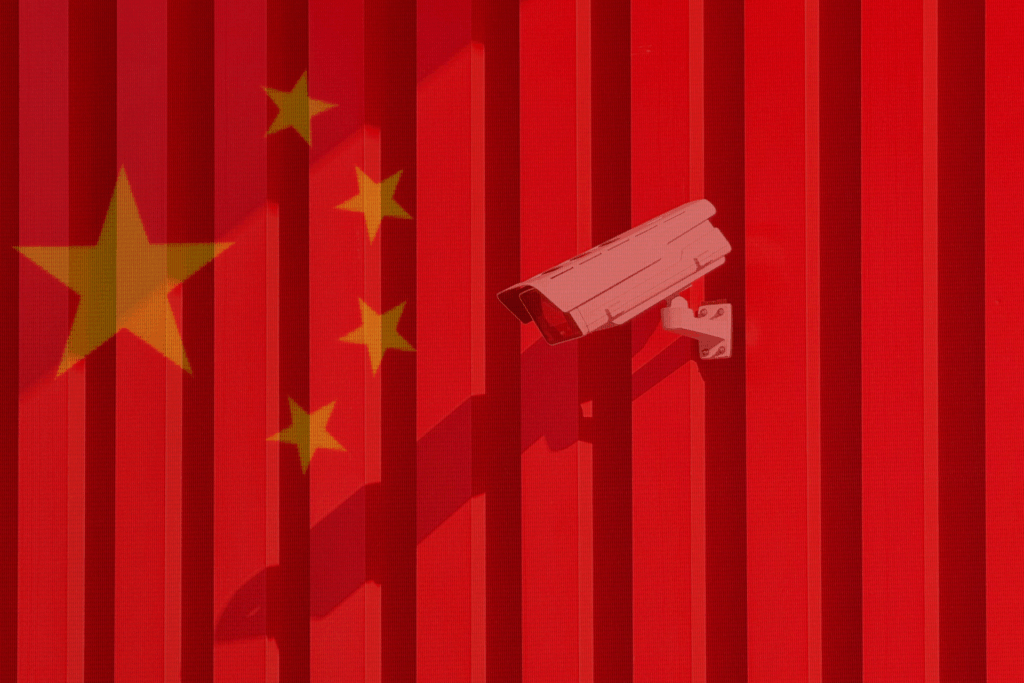
In June 2025, the U.S. Embassy in Panama announced an $8 million initiative to replace Huawei equipment at 13 sensitive sites with secure American technology (U.S. Embassy in Panama, 2025; Developing Telecoms, 2025). While this represents an initial pushback, Huawei’s footprint remains entrenched, particularly through surveillance systems. Hundreds of cameras around Colón and other logistics nodes, many tied to infrastructure “donations,” provide both commercial service and potential dual-use intelligence functions (Center for Strategic and International Studies [CSIS], 2020).
Huawei has also extended influence via education. In partnership with UNESCO and Panama’s Ministry of Education, Huawei launched a STEAM education program in 2023—an initiative that doubles as a talent pipeline for future digital gatekeepers (UNESCO, 2023).
Elite Networks: Enablers, Not Partners
Unlike China’s port concessions or megaprojects where local families are visible co-contractors, Huawei’s strategy in Panama relies on systemic enablers:
- Telecom Operators: +Móvil (Cable & Wireless Panamá) and Millicom’s Tigo rely on Huawei equipment in pilots and infrastructure upgrades. While influential families shape the telecom landscape, no open-source record directly ties them as Huawei’s co-owners (Millicom, 2018).
- Historic Business Families: The Mottas and the González-Revillas exert weight in aviation, banking, and media. Their influence shapes the enabling environment, even absent contractual ties (Ellis, 2025).
- Legal and Financial Gatekeepers: Top Panamanian law firms and banks structure deals that allow Chinese firms to operate with ease.
- Regulatory Facilitators: Panama’s telecom regulator (ASEP) has authorized pilots featuring Huawei technology, underscoring the role of permissive institutions (Americas Quarterly, 2025).
These actors are not Huawei’s “partners” in a formal sense. They are enablers—structural multipliers of Chinese influence.
The U.S. NDS and Panama’s Strategic Exposure
Leaks of the forthcoming U.S. National Defense Strategy confirm a sharp doctrinal shift: from forward primacy in Asia to homeland-first defense in the Western Hemisphere (Ellis, 2025). For Panama, this means:
- Telecom hygiene enforcement: Mandated removal of Huawei hardware from sensitive nodes.
- Canal and port cybersecurity: Treating maritime digital infrastructure as homeland defense assets.
- Financial pressure on enablers: U.S. tools targeting elites who facilitate Chinese penetration.
- Template effect: Panama will serve as the model for confronting Beijing’s digital encroachment in other parts of Latin America.
Geostrategic Implications
For the United States
Panama is a credibility test. Failure to dislodge Huawei here would signal a retreat from the hemisphere (U.S. Embassy in Panama, 2025).
For Panama’s Elites
Short-term profits come at long-term cost. Banking, aviation, insurance, and media empires depend on U.S. financial access. As Washington sharpens enforcement, association with Huawei will become a liability (Americas Quarterly, 2025).
For Beijing
Panama proves Beijing’s ability to penetrate a small but globally pivotal state through digital means. Yet it also reveals dependence on permissive elites and institutions—a critical vulnerability Washington can exploit (Ellis, 2025).
Conclusion
Huawei’s entrenchment in Panama is not accidental—it is the product of a deliberate Chinese strategy exploiting Panama’s permissive ecosystem. Elite networks, regulators, and systemic enablers—not formal partnerships—paved the way for Huawei’s dominance.
But the game is shifting. The United States, under its homeland-first posture, now views Panama’s Canal and digital systems as homeland-critical terrain. Huawei’s presence will be contested directly, not obliquely.
For Panama’s elites, the warning is stark: neutrality is no longer sustainable. For Beijing, the message is sharper: attempts to embed influence in the Western Hemisphere invite direct confrontation on America’s doorstep.
Panama may be small, but in the contest between Washington and Beijing, its digital battleground carries consequences far larger than its size. History teaches that gambits invite countermoves—Panama’s future will be defined by which side prevails in this strategic contest.
References
Americas Quarterly. (2025, July 21). U.S. pressure on Huawei reaches new heights in Panama. https://www.americasquarterly.org/article/u-s-pressure-on-huawei-reaches-new-heights-in-panama
Center for Strategic and International Studies. (2020). Huawei in Latin America: Panamanian case studies. CSIS.
Developing Telecoms. (2025, June 12). U.S. to replace Huawei kit in Panama to curb Chinese influence. https://developingtelecoms.com/telecom-business/vendor-news/18616-us-to-replace-huawei-kit-in-panama-to-curb-chinese-influence.html
Ellis, R. E. (2025, February 4). Beyond the Canal: The real risk of China’s engagement in Panama. The Diplomat. https://thediplomat.com/2025/02/beyond-the-canal-the-real-risk-of-chinas-engagement-in-panama
Huawei Technologies Co., Ltd. (2011, June). Huawei opens new Latin America headquarters in Panama. Huawei Newsroom.
Millicom. (2018, October 24). Millicom to buy Panama’s Cable Onda in $1bn deal. Capacity Media. https://www.capacitymedia.com/article/29ot42ikril15nn07ww7g/news/millicom-to-buy-panamas-cable-onda-in-1bn-deal
Telecompaper. (2015, October 2). Huawei inaugurates LatAm distribution center in Panama. https://www.telecompaper.com/news/huawei-inaugurates-latam-distribution-center-in-panama
UNESCO. (2023, November). Huawei and UNESCO launch STEAM education program in Panama. UNESCO
U.S. Embassy in Panama. (2025, June 11). Embassy announces program to replace Huawei equipment at 13 sites. U.S. Embassy Panama.
The opinions expressed in this article are those of the author and do not necessarily reflect the views of the Miami Strategic Intelligence Institute (MSI²).