
29 Oct From Monroe’s Quill to America’s Fleet: The Return of Hemispheric Defense
By,
CDR José Adán Gutiérrez, USN (Ret.), Senior Fellow, MSI²
LTC Octavio Pérez, US Army (Ret.), Co-Founder and Senior Fellow, MSI²
Dr. Rafael Marrero, Founder and Chief Economist, MSI²
Abstract
Two centuries separate the quill that signed the Monroe Doctrine from the steel hulls now patrolling the Caribbean. Yet their message is the same: foreign empires have no rightful claim in the Western Hemisphere. From Monroe’s warning to Roosevelt’s corollary, from Cold War treaties to today’s naval task force off Venezuela, the United States has repeatedly declared and defended a hemispheric perimeter. This essay traces that continuity: political, moral, and strategic, and argues that the current U.S. naval posture is not an act of aggression but the natural evolution of a doctrine as old as the Republic itself.
I. The Birth of a Hemisphere
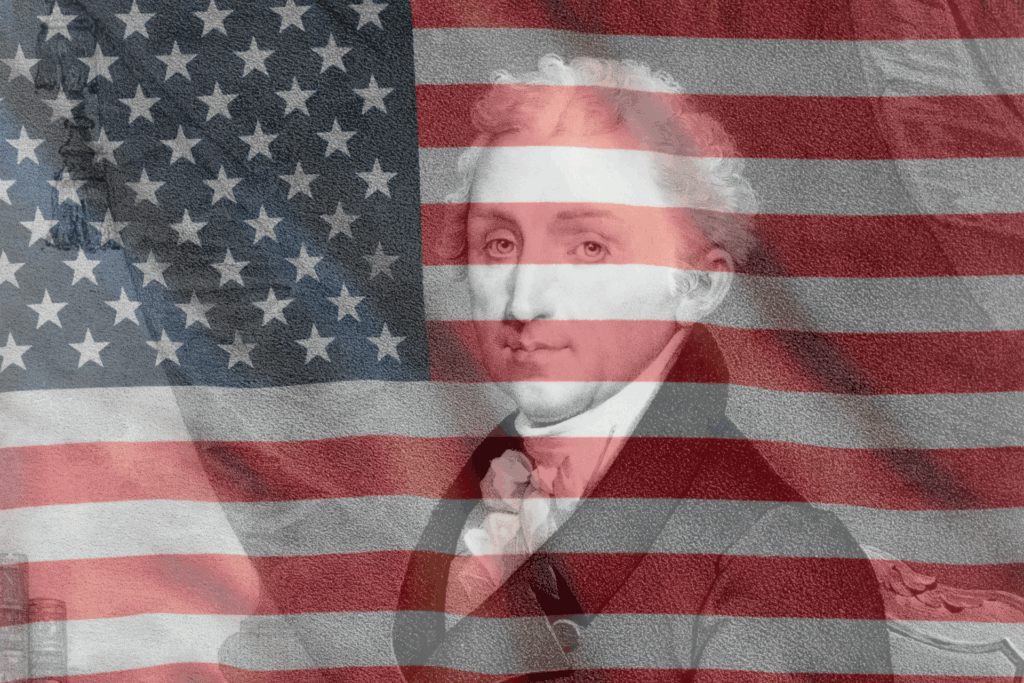
In 1823, President James Monroe stood before Congress and drew a line across history. “The American continents,” he said, “are henceforth not to be considered as subjects for future colonization by any European powers” (Monroe, 1823). It was not merely a diplomatic statement but a civilizational one. The young republic, still fragile after a generation of revolution, asserted moral and geographic sovereignty over an entire hemisphere. The Doctrine gave the New World a shield against the old one. It also gave the United States its destiny.
At the time, America possessed neither the fleet nor the global standing to enforce that declaration. Yet it planted an idea that would outlive the monarchies it opposed. The hemisphere, in this vision, was not a wilderness to be partitioned but a shared zone of independence under the watchful eye of the United States.
II. From Ideal to Enforcement
Eighty years later, Theodore Roosevelt turned Monroe’s ideal into policy muscle. The Roosevelt Corollary (1904) declared that chronic wrongdoing or instability in the Americas could invite “the exercise of an international police power” (Roosevelt, 1904). This was the birth of interventionism as a hemispheric duty. From the Dominican Republic to Nicaragua, from Haiti to Panama, U.S. Marines became the custodians of stability and the guarantors of Western exclusion.
The Corollary arose directly from the Venezuelan crisis of 1902–1903, when European powers blockaded Caracas over unpaid debts. Roosevelt feared that financial leverage could become a pretext for imperial return to the New World. That logic, debt as control, still echoes today.
Between 1903 and 1989, five American presidents enforced the Doctrine through nine major interventions, from supporting Panama’s independence and building the Canal to restoring order in Haiti, Cuba, and Panama itself. Each episode, whether to secure commerce or counter communism and narco-terror, affirmed a single premise: the Western Hemisphere cannot be left undefended.
Critics would later call this imperialism. Roosevelt would have called it realism. He believed that peace in the hemisphere depended not on the goodwill of distant powers but on the steady hand of the United States.
III. The Good Neighbor and the Arsenal
Franklin D. Roosevelt’s Good Neighbor Policy in the 1930s softened the image of intervention, but the strategic logic never disappeared. When the Second World War came, the Western Hemisphere became a fortress. U.S. bases spread from Cuba to Brazil, ensuring that no Axis vessel could threaten the Atlantic gateway. The lesson endured: hemispheric unity was not sentimental; it was survival.
During this period, the Monroe line evolved from a diplomatic warning into the first wall of national defense. The Caribbean and Central America became the moat that secured the continental heart.
IV. The Cold War and the Age of Ideology
After 1945, the Soviet Union replaced Europe as the intruder. The Rio Treaty (1947) bound the Americas into a collective-defense system. The Alliance for Progress and the Reagan Doctrine later fused anti-communism with development and military aid. The hemisphere became both battleground and bastion. Guatemala, Chile, Nicaragua, and Cuba each became theaters where ideology tested the limits of the Monroe vision.
When Soviet missiles appeared in Cuba in 1962, the Doctrine faced its gravest challenge. President Kennedy invoked it directly, framing the confrontation as a defense of hemispheric integrity (Kennedy, 1962). The crisis ended not just in victory but in vindication. The hemisphere had resisted occupation once more.
V. The Post-Cold War Mirage
With the fall of the Berlin Wall, Washington believed history had ended and geography no longer mattered. The Clinton Administration pursued trade liberalization through NAFTA and the Summit of the Americas, seeking prosperity through integration rather than protection. Secretary of State John Kerry even declared in 2013 that “the era of the Monroe Doctrine is over” (U.S. Department of State, 2013).
Yet while America celebrated globalization, new empires quietly entered through open doors. Privatization waves and fragile governance throughout the 1990s created conditions that allowed external creditors and state-linked enterprises from Asia to gain strategic footholds. Chinese policy banks financed infrastructure from Panama to Patagonia. Russian and Iranian intelligence services resurfaced in Havana, Managua, and Caracas. The Doctrine may have been declared obsolete, but the vacuum it left was quickly occupied.
VI. The Return of the Doctrine
By 2019, the tide had turned. National Security Advisor John Bolton announced a “Monroe Doctrine 2.0,” warning Russia, China, and Iran that “the Western Hemisphere is our region” (U.S. Embassy in Nicaragua, 2019). It was a blunt restatement of an old truth. When the United States now deploys carrier groups and intelligence assets near Venezuela, it is not rewriting history. It is reclaiming it.
The ongoing multinational task force—integrated through U.S. Southern Command and supported by allied vessels and intelligence networks—signals not adventurism but re-anchored deterrence. Chinese state-linked corporations have extended more than $141 billion in sovereign loans and infrastructure projects across Latin America since 2005 (Reuters, 2025). Beijing now controls critical ports, refineries, and digital networks in Argentina, Brazil, Panama, Peru, and Venezuela. Its dominance in lithium and copper supply chains from Chile to Bolivia and its investment in telecommunications through Huawei and ZTE form a strategic web of economic and technological influence.
Russia provides advisors and air assets to Caracas and Managua under the guise of training missions (CSIS, 2025). These are not isolated ventures; they represent an entrenched strategic presence that challenges two centuries of hemispheric sovereignty. In response, the U.S. fleet stands as both shield and statement: the hemisphere is not for sale.
VII. The Doctrine’s Living Logic
Every generation has reinterpreted Monroe in its own dialect:
1. In 1823, it was a declaration of moral independence.
2. In 1904, it became a policy of enforcement.
3. In 1947, it evolved into collective defense.
4. In 1962, it became existential survival.
5. In 2025, it returns as strategic restoration.
The continuity is striking. From the schooners of the nineteenth century to the destroyers of today, the United States has defended a single idea: security begins at home, and home begins at the edges of the hemisphere.
VIII. The Moral Imperative
This is not a policy of conquest but of guardianship. The hemisphere has always been the United States’ moral and geographic obligation. Foreign powers that exploit debt, corruption, and despair to entrench themselves in our region are not benign investors; they are modern colonizers. Their methods have changed, but their intentions have not. Ports, digital networks, and oil concessions can serve the same purpose as gunboats once did: projection of influence.
What Roosevelt feared from Europe in 1904, debt used as a pretext for domination, has returned through Beijing’s financing and infrastructure schemes. Chinese development banks now exercise a form of economic sequestration across the Americas, binding entire governments to repayment schedules tied to oil and minerals. Even Mexico, so close geographically, has become a target for industrial and telecommunications expansion through Chinese state enterprises.
The flow of synthetic opioids and chemical precursors from China to Latin American cartels adds a new layer of destabilization. Economic penetration now combines with social corrosion, a hybrid assault that weakens states from within.
To ignore this reality would be to betray the very Doctrine that safeguarded American independence for two centuries.
IX. Conclusion: The Line Still Holds
Today’s naval task force near Venezuela is the visible expression of a two-hundred-year principle. The steel may be new, but the message is ancient. The hemisphere is the foundation of American peace. Its defense is not an act of aggression but of continuity. Monroe’s quill drew the first line. Roosevelt, Kennedy, and Reagan each reinforced it. Now the fleet holds it.
Empires rise and fall, but geography endures; the stewardship of that geography remains a human choice. The Caribbean still guards the Mississippi. The Andes still frame the Pacific approach. The United States remains, by destiny and by design, the keeper of the hemisphere.
The logic of the Monroe Doctrine is now converging with the principles guiding America’s forthcoming National Defense Strategy and National Security Strategy. Both documents are expected to define hemispheric security as an integral component of homeland defense. This reflects the recognition that the safety of the continental United States begins with the stability of the nations that surround it. The Caribbean Sea, the Gulf of America, the Panama Canal, and the South Atlantic are not peripheral zones but extensions of America’s defensive perimeter.
The renewal of the Doctrine is therefore not symbolic; it is strategic. It represents a comprehensive return to hemispheric vigilance. An understanding that keeping foreign powers out and preventing the exploitation of weaker states are inseparable from protecting the homeland itself. In this emerging framework, the Western Hemisphere is no longer a backdrop to global rivalry; it is the front line of national security.
In the end, the Monroe Doctrine was never a relic. It was a promise. And today, that promise sails again.
References
Berg, R. C., Hernandez-Roy, C., Hu, J., & Ziemer, H. (2025, 22 de septiembre). Hearts, Minds, and Uniforms: New Data Reveals China and Russia’s Growing Military Diplomacy Footprint in Latin America and the Caribbean. Washington, DC: Center for Strategic & International Studies. https://www.csis.org/analysis/hearts-minds-and-uniforms
Kennedy, J. F. (1962). Address on the Cuban Missile Crisis. John F. Kennedy Presidential Library and Museum. https://www.jfklibrary.org/learn/about-jfk/historic-speeches/address-during-the-cuban-missile-crisis
Monroe, J. (1823). Seventh Annual Message to Congress. Avalon Project, Yale Law School. https://avalon.law.yale.edu/19th_century/monroe.asp
Baptista, E., Cash, J., & Lee, L. (2025, May 13). China offers Latin America and the Caribbean billions in bid to rival US influence. Reuters. https://www.reuters.com/world/china-latin-america-trade-exceeded-500-billion-2024-2025-05-13/
Roosevelt, T. (1904). Annual Message to Congress. The American Presidency Project. https://www.presidency.ucsb.edu/documents/fourth-annual-message-15
U.S. Department of State. (2013, November 18). Remarks at the Organization of American States (John Kerry). https://2009-2017.state.gov/secretary/remarks/2013/11/217680.htm
U.S. Embassy in Nicaragua. (2019, April 17). National Security Advisor Ambassador John R. Bolton delivers remarks at Bay of Pigs Veterans Association-Brigade 2506. https://ni.usembassy.gov/national-security-advisor-ambassador-john-r-bolton-delivers-remarks-at-bay-of-pigs-veterans-association-brigade-2506/
The opinions expressed in this article are those of the author and do not necessarily reflect the views of the Miami Strategic Intelligence Institute (MSI²).