21 Nov Puerto Rico’s Frontline: US Military Deployments and the Urgent Need to Mitigate the Risk of Igniting a Militant Resurgence
By,
Jim González, Senior Fellow, MSI²
In September 2025, the United States deployed advanced military assets—including F-35 fighter jets, Marines, and armored vehicles—to Puerto Rico, framing the buildup as part of a counternarcotics campaign in the Caribbean. While US officials emphasized operational necessity, news reporting highlighted symbolic and political ramifications: protests erupted in San Juan and in diaspora communities, critics recalled past struggles against US militarization in Vieques and all other active-duty installations, and federal officials contradicted each other on whether the deployments were ‘training’ or combat operations (New York Times, 2025; AP News, 2025; Al Jazeera, 2025).
This analysis examines the extent to which such deployments could catalyze the resurgence, reorganization, or radicalization of dormant Puerto Rican pro-independence militant groups, such as the Boricuan Popular Army (EPB), also known as Macheteros, and the Fuerzas Armadas de Liberación Nacional (FALN) (Calderon, 2021). It examines how historical grievances, symbolic imagery, and contradictory messaging can activate dormant militant narratives, and it provides strategies for balancing security with political legitimacy.
Puerto Rico’s relationship with military power cannot be separated from its colonial history. When F-35s land at Roosevelt Roads or Marines deploy armored vehicles, these images resonate as echoes of a contested past stretching back to 1898. We begin by situating the 2025 deployments within this historical context, then trace the origins and dormancy of groups like the FALN and Los Macheteros to identify organizational models that could reemerge. Federal counterterrorism efforts have dismantled these groups, but they have also created new flashpoints for nationalist resentment. The 2005 FBI operation that killed Filiberto Ojeda Ríos vividly illustrates how law enforcement can paradoxically energize the movements it targets by creating martyrs.
This pattern of resistance and repression finds its most successful expression in the Vieques struggle, where sustained mobilization forced the Navy’s 2003 withdrawal. Contemporary activists draw inspiration and tactical lessons from Vieques, measuring current deployments against this successful model of resistance. Against this backdrop, the 2025 deployments emerge as a contemporary flashpoint carrying distinct risks shaped by contradictory official messaging, symbolic provocations, and social media-enhanced diaspora networks. The analysis identifies five catalytic pathways through which today’s operations could trigger militant resurgence, each with measurable probability and warning indicators that enable early intervention before activism hardens into violence.
Puerto Ricans perceive these deployments as colonial occupation regardless of their legitimate counternarcotics objectives. Without careful management that emphasizes transparency, restraint, and genuine community engagement, they could revive dormant militant narratives and create new grievance cycles. The question is whether policymakers will learn from Puerto Rico’s history or repeat it.
Military Deployments and Colonial Legacies
In September 2025, the United States initiated a substantial military buildup in Puerto Rico, a move laden with historical and political significance. The New York Times reported on September 5 that the US military deployed ten F-35 fighter jets to Puerto Rico, signaling an escalated effort to counter drug-trafficking networks across the Caribbean (New York Times, 2025). Shortly thereafter, The Guardian corroborated the landing of these advanced aircraft at the former Roosevelt Roads naval facility in Ceiba. The report framed the operation as a dual strategy: a counternarcotics initiative and a conspicuous display of power amidst escalating tensions with Venezuela (The Guardian, 2025).
The arrival of these stealth aircraft on Puerto Rican soil, a territory that has been perpetually grappling with its unresolved status as a sovereign entity, immediately ignited widespread political discourse and intense media scrutiny. The US military projected its presence not only in the air but also on the ground. AP News detailed that Defense Secretary Pete Hegseth and Joint Chiefs Chairman General Dan Caine, as initially stated, personally oversaw the disembarkation of hundreds of Marines. Amphibious landing exercises and the strategic positioning of armored vehicles along the coast supported these forces (AP News, 2025).
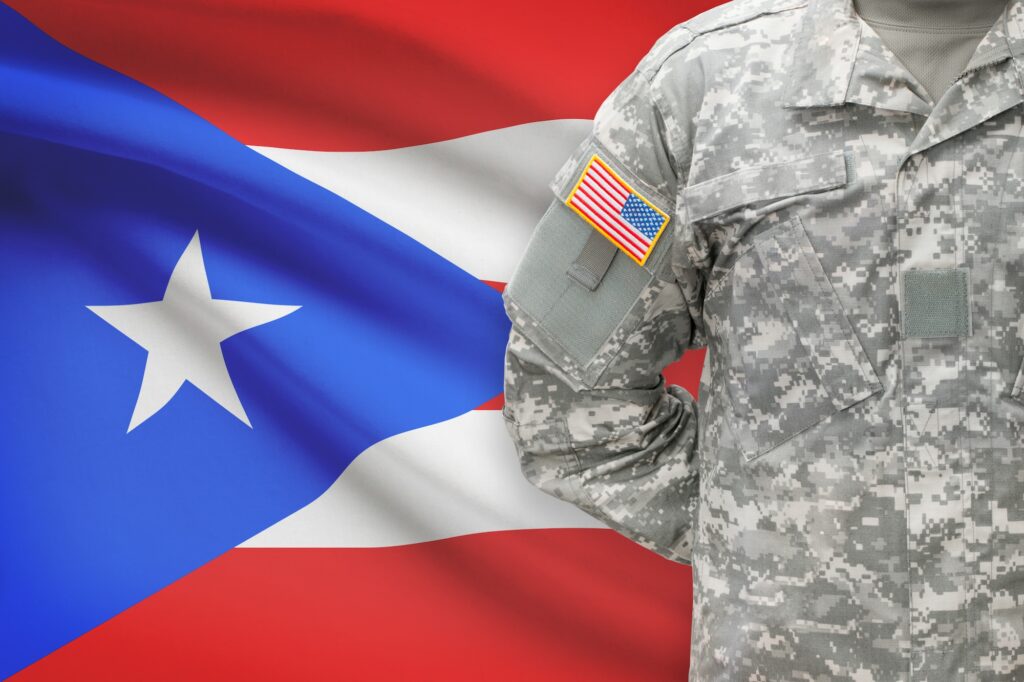
Initially, Pentagon representatives characterized the troop and equipment surge as mere “training exercises.” However, Secretary Hegseth directly challenged this narrative, asserting to reporters, “This is not training—this is real” (Al Jazeera, 2025). This stark contrast between official pronouncements and visible militarization, coupled with the government’s equivocal messaging, spurred immediate public outrage. Student journalists from The DePaulia documented fervent demonstrations that erupted across San Juan and in Puerto Rican diaspora communities, notably in Chicago’s Humboldt Park. Activists vehemently condemned the resurgence of a substantial US military footprint on the island (DePaulia, 2025).
These recent events reverberate deeply within Puerto Rico’s turbulent history of military occupation and control. The prolonged naval presence in Vieques, which concluded in 2003 following extensive widespread protests, remains a potent symbol etched in the collective memory of the Puerto Rican people (Schils). Furthermore, many recall the 2005 FBI raid that resulted in the death of Filiberto Ojeda Ríos, a key figure in the Los Macheteros movement. This incident is remembered not as a successful counterterrorism operation, but as a federal action that escalated nationalist sentiments and potentially fueled dormant militant ideologies, rather than quelled unrest (DOJ OIG, 2006). Within this historical context, the 2025 military deployments carry a potent risk of being perceived not as legitimate efforts to combat illicit activities but as a coercive assertion of colonial authority. Such an interpretation could reawaken latent narratives of resistance and empower previously subdued militant sentiments, underscoring the weight of past actions on current policy.
Roots of Puerto Rican Militancy
Puerto Ricans have long linked their struggle for self-determination to the island’s unique political status. Since the United States annexed Puerto Rico in 1898, the island has remained an unincorporated territory under federal authority, leaving its residents subject to US laws but without the right to vote in federal elections or have voting representation in Congress. Those who champion separation have consistently framed this imposed relationship as a form of colonial oppression (Jimenez, 2015). Against this backdrop of disputed autonomy, organizations advocating for liberation through forceful action materialized during the last century.
During the 1970s and 1980s, the Fuerzas Armadas de Liberación Nacional (FALN) solidified its reputation as the preeminent advocate for Puerto Rican independence. Operating primarily from the Puerto Rican communities scattered across New York and Chicago, the FALN asserted responsibility for over a hundred explosive incidents (Latin American Studies, n.d). Militants directed their acts of defiance primarily at symbols of US authority, including federal buildings, financial institutions, and corporate centers of power. The FALN’s attacks aimed more to send a symbolic message than to cause mass harm, projecting fierce resolve and underscoring Puerto Rico’s unresolved sovereignty question.
Concurrently, on Puerto Rican soil, the Ejército Popular Boricua, also known as Los Macheteros, materialized in 1976. Their clandestine activities encompassed a spectrum of operations, from direct assaults on military outposts to orchestrating a monumental financial raid in 1983 – the theft of $7 million from Wells Fargo in Connecticut (Finlay, 2022). The group framed this audacious act as a righteous “expropriation” of wealth for revolutionary purposes. A stark demonstration of their readiness to confront US military installations directly on the island occurred in 1981 with the audacious strike against the Muñiz Air National Guard Base. This operation rendered eleven aircraft inoperable or severely damaged (Pala, 1981).
Operating in discreet, small cadres, these organizations cultivated international financial streams through expatriate communities. Throughout the Cold War, they benefited from intermittent backing by Cuba and other like-minded entities, as documented by the Central Intelligence Agency (1988). However, their standing among the Puerto Rican populace remained a source of contention. Public opinion polls consistently indicated that the aspiration for independence was not a majority sentiment, and the majority of the populace recoiled from engaging in violent conflict (CRS, 2022). Despite this, these radical factions skillfully leveraged accumulated resentments and historical narratives to legitimize their violent endeavors within their insular ideological circles. The prominence of these aggressive acts ultimately compelled the full engagement of federal agencies, resulting in comprehensive counter-extremist initiatives designed to dismantle their operational frameworks and neutralize their impact. Current reactions to the 2025 deployments echo these historical precedents, with proponents of resistance explicitly citing the Vieques experience as a model for opposing what they perceive as a resurgence of military presence. As the aggressive actions escalated, the federal government intensified its security measures, which, in turn, ignited fresh symbolic points of contention.
US Counterterrorism and Symbolic Flashpoints
Federal authorities perceived Puerto Rican nationalist movements as domestic terrorism, unleashing vigorous FBI surveillance, undercover operations, and legal actions throughout the 1980s and 1990s (US House, 1999). These relentless efforts significantly hampered the operational effectiveness of both the FALN and Los Macheteros, ultimately leading to their dissolution by the early 2000s (Belli, 2008; UPI, 1985). However, the implementation of these counterterrorism strategies was not without its consequences; independence proponents and civil liberties defenders voiced strong objections, accusing the FBI of discriminatory profiling and exceeding its lawful authority (Centro de Estudios Puertorriqueños, n.d.).
The situation reached a boiling point on September 23, 2005, a date laden with historical significance as the anniversary of the Grito de Lares revolt. In Hormigueros, an FBI attempt to apprehend Los Macheteros leader Filiberto Ojeda Ríos culminated in his death. A subsequent investigation by the Department of Justice Inspector General determined that Ojeda Ríos sustained his fatal wound during an initial confrontation but succumbed hours later due to a lack of timely medical attention (DOJ OIG, 2006). This event sparked widespread outrage among Puerto Rican officials and the public, who decried the FBI’s use of excessive force and its apparent disregard for Ojeda Ríos’s life, branding his demise as an extrajudicial killing. An independent commission established in Puerto Rico concluded that the raid severely damaged public confidence in federal governance (Comisión Independiente, 2006).
The fate of Ojeda Ríos became a potent symbol for those advocating for Puerto Rican independence. While it did not ignite a widespread resurgence of armed activism, it underscored a recurring pattern: federal law enforcement actions in Puerto Rico have the potential to stir nationalist sentiment deeply. Ojeda’s demise, much like the protracted conflict in Vieques, serves as a stark reminder that security operations in Puerto Rico generate repercussions that extend far beyond their intended tactical objectives, resonating deeply within the island’s historical consciousness.
The Vieques Struggle and Civil Resistance
Understanding the stakes of today’s maneuvers becomes clearer through the lens of Vieques, a small island located just east of Puerto Rico, which the US Navy used for decades of live-fire combat training (US Navy BRAC Program Management Office, n.d.). In the late 1990s, a broad nonviolent coalition—residents, environmental advocates, religious leaders, and pro-sovereignty activists—mobilized to end the bombardments (Olsen, 2004). The movement’s momentum surged in April 1999 after two 500-pound bombs from an F/A-18 struck a lookout post, killing civilian security guard David Sanes Rodríguez and injuring several others (Congressional Research Service [CRS], 2004; Withers, 2013). The tragedy galvanized island-wide protests and drew international attention to issues of environmental contamination, militarization, and colonial subordination (Library of Congress, n.d.; Los Angeles Times, 1999).
After sustained and pervasive advocacy, the Navy ultimately withdrew its forces in 2003. This withdrawal marked an extraordinary victory for grassroots initiatives challenging the entrenched influence of the American military (Schils, 2011). Vieques has since been indelibly imprinted on the collective memory of Puerto Ricans, serving as a potent emblem of the ecological devastation caused by its continued use as a military training center and the formidable power of concerted action. For a segment of the Puerto Rican populace, it cemented an ingrained distrust of any American military presence.
The lingering repercussions of the Vieques struggle continue to exert significant influence in 2025. According to The DePaulia, demonstrators invoke Vieques as proof that Puerto Rico remains a pawn in US strategic designs (DePaulia, 2025). By explicitly linking these contemporary deployments to historical confrontations, activists are portraying these events not as isolated incidents, but as fundamental elements of an ongoing trajectory of colonial domination.
The 2025 Deployments: A Contemporary Flashpoint
The September 2025 deployments represent the most visible US military presence in Puerto Rico since the Navy shuttered Naval Station Roosevelt Roads in 2004, a facility once considered the strategic anchor of US operations in the Caribbean (US Navy BRAC Program Management Office, n.d.; Congressional Research Service [CRS], 2001). The New York Times reported that the US military stationed ten F-35s on the island to strengthen Caribbean operations (New York Times, 2025). AP News confirmed the arrival of hundreds of Marines, accompanied by armored vehicles and amphibious drills (AP News, 2025). While the Pentagon initially framed the buildup as training, Secretary Hegseth contradicted this narrative, stating unequivocally: “This is not training—this is real” (Al Jazeera, 2025). Such ambiguity has fueled speculation that US officials are positioning Puerto Rico as a forward operating hub in a broader confrontation with Venezuela (WLRN, 2025).
The recent deployments have ignited a significant political storm. As reported by The DePaulia, demonstrators in San Juan vociferously condemned the increased military presence, drawing chilling parallels to the historical militarization of Vieques. In Puerto Rican enclaves abroad, such as Chicago’s Humboldt Park, activists staged displays of solidarity, interpreting these deployments as stark manifestations of ongoing colonialism, according to the DePaulia in 2025 (DePaulia, 2025). Rolling Out documented concerns voiced by community leaders, who cautioned that such “remilitarization” could ignite the passions of younger generations, connecting present-day actions to the enduring legacies of Los Macheteros and Ojeda Ríos (RollingOut, 2025). This fervent opposition underscores a fundamental analytical challenge: regardless of official pronouncements framing these deployments as counternarcotics operations, Puerto Ricans perceive them through the potent lens of their island’s colonial past and nationalist consciousness. Consequently, the arrival of aircraft, vessels, and Marines is experienced not as a pragmatic security initiative but as an emblem of subjugation, carrying the potent capacity to fuel radical discourse.
Puerto Rico Scenario Analysis and Policy/Intelligence Implications
Catalytic Pathways to Resurgence
In September 2025, forces dispatched a concentration of aircraft, Marine units, and heavy armor to Puerto Rico. While the official explanation centered on a crackdown against illicit drug trafficking, this strategic maneuver harbors substantial potential to ignite renewed militancy. The New York Times and CBS News report that US officials deployed the F-35s to demonstrate overwhelming power against Caribbean drug syndicates (New York Times, 2025; CBS News, 2025). However, a contrasting perspective emerged from The Guardian and WLRN, which posited the deployment as a strategic move within a broader US effort to exert pressure on Venezuela (The Guardian, 2025; WLRN, 2025). This divergence in stated objectives cultivates a perception of unwarranted occupation, thereby fostering an environment conducive to nationalist narratives of resistance.
- Symbolic Provocation: The most immediate pathway is symbolic. Marines deploying armored vehicles on Puerto Rican beaches evokes images of foreign invasion rather than cooperative security. Independence activists have seized upon these images to reinforce claims of colonial occupation (DePaulia, 2025).
- Martyrdom Events: “A second pathway involves confrontation: if deployments cause civilian casualties during protests or raids, activists may frame those deaths as martyrdom events akin to Ojeda Ríos’ death in 2005. Past cases show that such flashpoints rapidly amplify grievance narratives (DOJ OIG, 2006; Comisión Independiente, 2006).
- Protest-Policing Spirals: Already, protests have emerged in San Juan and diaspora communities, such as Chicago’s Humboldt Park (DePaulia, 2025; RollingOut, 2025). Should these protests escalate into clashes, they could reappear in Puerto Rico.
- Diaspora Amplification: Puerto Rican diaspora communities remain politically active. As with the FALN in the 1970s, diaspora activism could provide financial, logistical, and symbolic support for militants. In 2025, social media expands this capacity, enabling diaspora activists to amplify local grievances to global audiences.
- External Exploitation: Great-power competition provides a final pathway. Adversarial states could exploit images of US militarization in Puerto Rico to highlight colonial hypocrisy. This tactic has precedent at the United Nations Decolonization Committee, where Puerto Rico’s status is debated annually (UN, 2020). Amplification by external actors could lend legitimacy to militant narratives within the domestic context.
Organizational Adaptation in a Contemporary Context
Even though groups like the FALN and Los Macheteros are no longer active as cohesive entities, a resurgence of militant activity in Puerto Rico would not necessitate rebuilding the extensive frameworks of the 1980s. Instead, modern-day militants could evolve by adopting tactics mirroring current extremist trends. One potent strategy involves a decentralized model of resistance, where isolated groups or individuals execute impactful symbolic strikes. The clandestine nature of these operations, characterized by minimal overt coordination and fueled by a shared ideology rather than a central command, would pose significant detection challenges for law enforcement.
Furthermore, militants might pivot to digital warfare and disruption, leveraging the island’s precarious infrastructure. Even limited cyberattacks targeting power systems, communication networks, or governmental online presences could dramatically magnify the perception of Puerto Rico’s susceptibility. Such a shift represents a more resource-efficient approach than traditional armed struggles; yet, it would still convey a powerful, resolute defiance of American governance.
A further strategy embraces integrated symbolic maneuvers, blending minor acts of aggression with the deliberate interruption of public gatherings. Desecrating government structures, deploying rudimentary incendiary devices, or orchestrating chaos during rallies could powerfully illustrate the concept of territorial claim. These actions require little technical expertise, yet they effectively capture media attention and bolster narratives of defiance. Such a demonstration acts as a potent symbolic catalyst for these flexible approaches.
The appearance of advanced combat aircraft and heavy armor, coupled with discordant official pronouncements—such as Defense Secretary Pete Hegseth’s assertion that “this is not a drill—this is genuine” (Al Jazeera, 2025)—furnishes extremist groups with an opening to re-contextualize even minor acts as integral components of a grander liberation effort. Consequently, the very spectacle of militarization becomes an impetus for tactical ingenuity, enabling previously subdued nationalist factions to reclaim prominence without the extensive organizational frameworks they once commanded.
Policy and Security Implications
The policy implications are both immediate and far-reaching, revealing deep tensions between operational objectives and political legitimacy. These events underscore a fundamental dilemma: how can federal agencies pursue security goals without undermining the very trust and stability they aim to protect? One critical lesson lies in the transparency of mission. When federal agencies issue mixed signals—Pentagon officials describing the deployments as “training” while figures like Hegseth characterize them as “real operations” (Al Jazeera, 2025)—credibility suffers. Ambiguity not only fuels suspicion but also creates fertile ground for misinformation. Clear, consistent communication is not just strategic; it is essential for maintaining public trust and confidence.
Equally vital is the principle of civilian primacy. Military forces must avoid assuming roles traditionally filled by civilian law enforcement, particularly in matters of protest or civil unrest. Assigning primary responsibility to the Puerto Rican police, under appropriate oversight, helps ensure a locally grounded response and reduces the perception of federal overreach. Without this, narratives of occupation are likely to gain traction. Community engagement remains essential for building legitimacy. Building legitimacy requires more than operational success—it depends on inclusive dialogue and open communication. Involving territorial officials, civil society leaders, and diaspora representatives in shaping security strategies fosters a sense of shared ownership. The historical example of Vieques illustrates this vividly: authorities who exclude communities from decision-making provoke mobilization and resistance (Schiler, 2018).
Strategically, a minimalist deployment strategy offers a prudent path forward. Reducing the scale and visibility of military assets can limit the potential for symbolic provocation. Temporary, narrowly scoped missions—such as short F-35 rotations or limited Marine exercises—are less likely to inflame tensions, especially when paired with humanitarian or disaster-response initiatives that demonstrate tangible benefit. Finally, policymakers must invest in counter-narratives. To effectively challenge frames that depict these actions as occupation, federal agencies need to highlight successes in counternarcotics efforts, humanitarian missions, and commitments to Puerto Rican self-determination. However, the messengers matter: these stories carry more weight when told by trusted local voices, not distant Pentagon spokespeople.
Together, these strategic lessons form a roadmap for more responsible, legitimate, and effective policy in Puerto Rico.
Conclusion
The recent military presence has reignited discussions concerning the intricate relationship between security, autonomy, and rightful authority within the United States’ territorial strategy. While Pentagon officials characterize this buildup as a component of a drug interdiction initiative targeting Caribbean cartels, it has nonetheless sparked significant dissent, both on the island and among Puerto Rican communities in Chicago and New York (New York Times, 2025; AP News, 2025; DePaulia, 2025). American leaders, by shifting between “training exercises” and “actual operations,” have fostered apprehension that they are re-establishing Puerto Rico as a militarized staging ground for broader global power struggles, particularly in opposition to Venezuela (Al Jazeera, 2025; WLRN, 2025).
This deployment is particularly contentious due to the historical context. From the extensive Navy occupation of Vieques to the 2005 FBI operation that resulted in the death of Filiberto Ojeda Ríos, Puerto Ricans have perceived military intervention not merely as a security measure, but as an oppressive colonial act (DOJ OIG, 2006; Comisión Independiente, 2006). Nationalist factions, such as the FALN and Los Macheteros, adeptly leveraged such events to galvanize resentments and justify their use of force. Although these groups are no longer active organizations, their symbolic resonance endures, leaving open the possibility that new military engagements could catalyze a resurgence of militant sentiment and action.
An examination of potential scenarios reveals several likely developments. These include: symbolic provocation through a conspicuous military presence, the creation of martyrs through violent confrontations, escalating cycles of protest and policing, amplified reactions from diaspora communities, and exploitation by rival nations. Any of these scenarios could energize dormant networks, even if they manifest as leaderless resistance or diaspora-connected activism. The ramifications would extend beyond Puerto Rico, impacting mainland US cities, causing reputational damage at the United Nations, and intensifying the crisis of legitimacy within Puerto Rican governance.
The policy and intelligence implications are clear. Leaders must guide deployments with transparency, proportionality, civilian oversight, and genuine community engagement. Intelligence agencies must enhance their early warning systems while rigorously safeguarding civil liberties, particularly when monitoring activism within the diaspora. Counter-narratives need to be grounded in credible local voices, rather than being solely reliant on official federal pronouncements. Most importantly, deployments must remain constrained in scope and visibility, lest they morph into emblems of colonial subjugation.
Ultimately, a resurgence of Puerto Rican militancy is not an inescapable outcome. It represents a contingent risk, profoundly influenced by how the United States manages its presence on the island. By drawing lessons from history, theoretical frameworks, and international comparisons, the US can avert repeating cycles of provocation and repression. Nevertheless, if handled poorly, the 2025 deployments could herald a new era of nationalist militancy in Puerto Rico. Such a development would jeopardize US security, undermine legitimacy, and destabilize the island’s precarious political environment.
References
Al Jazeera. (2025, September 9). US deployment in the Caribbean ‘not training,’ says Defence Chief Hegseth. https://www.aljazeera.com/news/2025/9/9/us-deployment-in-caribbean-not-training-says-defence-chief-hegseth
AP News. (2025, September 14). Hegseth and Caine visit Puerto Rico as the US steps up military operations in the Caribbean. https://apnews.com/article/hegseth-caine-puerto-rico-military-caribbean-marines-88c1ad093ee158606e784e731391249e
Belli, R. (2008). Effects and effectiveness of law enforcement intelligence measures to counter homegrown terrorism: A case study on the FALN. START/University of Maryland. https://www.start.umd.edu/sites/default/files/publications/local_attachments/Countermeasures_FALN.pdf
Calderon, Rafael (2021). Twentieth Century Guerrilla Movements in Latin America: Twentieth Century Guerrilla Movements in Latin America: A Primary Source History – Fernando Herrera Calderón – Google Books
Centro de Estudios Puertorriqueños. (n.d.). FBI Files on Puerto Rican Organizations Collection (MSS-326). Centro Library and Archives, Hunter College, CUNY. https://centroarchives.hunter.cuny.edu/repositories/2/resources/212
Central Intelligence Agency. (1988). CIA intelligence memoranda on Cuban policy on Puerto Rico. [Declassified documents]. Central Intelligence Agency, FOIA Electronic Reading Room https://www.cia.gov/readingroom/docs/CIA-RDP80T00634A000400010020-0.pdf
Comisión Independiente de Investigación. (2006). Informe final sobre la investigación de la muerte de Filiberto Ojeda Ríos (2005). Gobierno de Puerto Rico. https://cdc.pr.gov/InstitutoDeEducacion/RecursosEducativos/Informes/Informe%20Final%20sobre%20la%20Investigación%20muerte%20Filiberto%20Ojeda%202005.pdf
Congressional Research Service. (2021). Puerto Rico’s Political Status and Economic Recovery. CRS Reports. https://crsreports.congress.gov/product/pdf/R/R44721
Congressional Research Service. (2004). Vieques, Puerto Rico Naval Training Range: Background and issues for Congress (RS20458). https://www.congress.gov/crs_external_products/RS/PDF/RS20458/RS20458.3.pdf
Congressional Research Service. (2001, December 17). Vieques, Puerto Rico Naval Training Range: Background and issues for Congress (RS20458). https://www.everycrsreport.com/reports/RS20458.html
DePaulia. (2025, September 22). Return of US military to Puerto Rico sparks outcry in Humboldt Park. https://depauliaonline.com/78942/news/return-of-u-s-military-to-puerto-rico-sparks-outcry-in-humboldt-park
DOJ OIG. (2006). A review of the FBI’s involvement in the shooting death of Filiberto Ojeda Ríos. US Department of Justice, Office of the Inspector General. OIG Special Report – A Review of the September 2005 Shooting Incident Involving the FBI and Filiberto Ojeda Rios (Executive Summary)
Finlay Nancy ( 2022). Financing a Free Puerto Rico: The Great Wells Fargo Heist of 1983. https://connecticuthistory.org/financing-a-free-puerto-rico-the-great-wells-fargo-heist-of-1983/
Jimenez, M. A. (2015). “American” state of exception: Reimagining the Puerto Rican colony and the nationalist enemy under United States rule, 1900–1940 (Doctoral dissertation, University of Texas at Austin). University of Texas Digital Repository. https://repositories.lib.utexas.edu/server/api/core/bitstreams/b2e0b5b9-758a-453f-915d-181138789851/content
Latin American Studies (n.d), Puerto Rican Separatists. https://www.latinamericanstudies.org/epb-macheteros.htm
Library of Congress. (n.d.). 1999: Vieques Island protests – A Latinx civil rights resource guide. https://guides.loc.gov/latinx-civil-rights/vieques-island-protests
Los Angeles Times. (1999, July 5). Thousands protest Navy target practice. https://www.latimes.com/archives/la-xpm-1999-jul-05-mn-53155-story.html
New York Times (2025). The US is deploying 10 fighter jets to Puerto Rico for a drug cartel fight. https://nypost.com/2025/09/05/us-news/us-deploying-10-fighter-jets-to-puerto-rico-in-fight-against-drug-cartels-sources/
Olsen, F. (2004). Civil Disobedience on Vieques: How Nonviolence Defeated the US Military. Florida Journal of International Law, 16(1). https://scholarship.law.ufl.edu/cgi/viewcontent.cgi?article=1398&context=fjil
O’Rourke, R. (2001). Vieques, Puerto Rico Naval Training Range: Background and Issues for Congress (CRS Report). Congressional Research Service. Retrieved from https://www.policyarchive.org/download/3340
Pala, C. (1981). Terrorists blew up nine Puerto Rican National Guard jet fighter planes. United Press International (UPI) Archives. https://www.upi.com/Archives/1981/01/12/Terrorists-blew-up-nine-Puerto-Rican-national-guard-jet/4105348123600/
RollingOut. (2025, September 29). Return of US military to Puerto Rico sparks sharp backlash. https://rollingout.com/2025/09/29/puerto-rico-military-return-sparks-sharp
Schils, Nathalie (2011). Home Global Nonviolent Action Database. Puerto Ricans force the United States Navy out of Vieques. https://nvdatabase.swarthmore.edu/content/puerto-ricans-force-united-states-navy-out-vieques-island-1999-2003
The Guardian. (2025, September 5). Trump sends 10 stealth fighter planes to Puerto Rico amid war on Caribbean drug cartels. https://www.theguardian.com/us-news/2025/sep/05/trump-fighter-planes-puerto-rico-venezuela-drug-cartel
United Press International. (1985, August 30). The FBI arrested 14 people in Puerto Rico, Boston… https://www.upi.com/Archives/1985/08/30/The-FBI-arrested-14-people-in-Puerto-Rico-Boston/5003494222400/
US Navy BRAC Program Management Office. (n.d.). Former Naval Station Roosevelt Roads. https://www.bracpmo.navy.mil/BRAC-Bases/Southeast/Former-Naval-Station-Roosevelt-Roads/
US House of Representatives, Committee on Government Reform. (1999). The FALN and Macheteros clemency: Misleading explanations, a reckless decision, a dangerous message (H. Rept. 106-488). Washington, DC: US Government Printing Office. https://www.congress.gov/committee-report/106th-congress/house-report/488
Withers, G. (2013). Vieques: A target in the sun. Washington Office on Latin America (WOLA). https://www.wola.org/sites/default/files/downloadable/Regional%20Security/Vieques%20a%20Target%20in%20the%20Sun%205.1.13.pdf
WLRN. (2025, September 22). US military buildup in the Caribbean signals broader campaign against Venezuela. https://www.wlrn.org/americas/2025-09-22/u-s-military-buildup-in-caribbean-signals-broader-campaign-against-venezuela
U.S. GOVERNMENT DISCLAIMER: The views expressed by Jim González, a current US government contractor, are solely his own and do not necessarily reflect the views of the Defense Intelligence, Defense Homeland Security, the Office of Director of National Intelligence Government Agency, or the United States Government.
The opinions are those of the author and do not necessarily reflect the position of the Institute. More information about the Miami Strategic Intelligence Institute is available at www.miastrategicintel.com