08 Dec Bad Bunny, Calle 13, and the globalization of anti-American pop culture
By,
Dr. Rafael Marrero, President & Founder, MSI²
To David Horowitz, a survivor of communism and a frontline cultural warrior.
To Charlie Kirk, a martyr in the struggle for the Second War for American Independence.
Bottom line up front
Across five decades, Latin America’s most influential musicians (Rubén Blades, Calle 13, and Bad Bunny) have transformed popular music into a platform for ideological activism. What began as protest salsa in the 1970s has evolved into digital woke reggaetón, carrying with it a steady undercurrent of anti-Americanism, Marxist romanticism, and cultural grievance. Their lyrics, imagery, and political statements form a continuous thread that mirrors the revolutionary rhetoric of Havana, Caracas, and other authoritarian centers of influence.
This analysis demonstrates how a movement once rooted in artistic rebellion has matured into a sophisticated instrument of cultural soft power, one capable of shaping global perceptions of the United States, redefining moral norms, and influencing a generation more through rhythm and imagery than through argument or reason.
Abstract
Over the last half-century, a new form of ideological communication has emerged in Latin popular music, carried by artists whose charisma and global reach rival that of political leaders. This essay examines how Rubén Blades, Calle 13, and Bad Bunny have embedded anti-American and neo-Marxist narratives in their music while being celebrated by Western media as cultural innovators and moral voices.
Drawing upon political-cultural analysis and academic literature on soft power and propaganda in entertainment, it argues that these artists exemplify a broader trend: the conversion of art into activism, and of dissent into brand identity. By blending revolutionary symbolism with commercial spectacle, they have transformed Latin music into both a message and a market, eroding civic gratitude and normalizing ideological hostility toward the United States.
Ultimately, this study situates their work within the geopolitical continuum of cultural influence campaigns, from Cold-War solidarity with Havana to today’s digital populism, revealing how entertainment has become the most effective medium through which authoritarian and populist regimes export their narratives, not by force of arms but by the seduction of rhythm.
Why this matters
Culture molds politics. When global entertainment platforms glorify resentment toward the United States, they normalize ideological currents friendly to regimes that undermine liberty and repress dissent. Understanding the network of cultural influence that links music, media, and political power is essential for defending freedom of thought across the hemisphere.
Introduction: The rhythm of grievance
From the salsa of the 1970s to contemporary reggaetón, Latin music has served not only as entertainment but also as a vehicle for ideological communication. What began as a cultural expression of identity and social struggle has, over time, been harnessed to broadcast explicitly political narratives, often hostile to the United States and the liberal democratic order it represents. In this evolution, music became both a mirror and a messenger: a soundtrack for grievance, rebellion, and ideological reprogramming.
During the Cold War, revolutionary Cuba effectively utilized art as a form of propaganda. Havana’s cultural institutions (the Casa de las Américas, the Instituto Cubano de Arte e Industria Cinematográficos, [ICAIC], and state-sponsored music festivals) exported a message of resistance cloaked in rhythm. Their mission was clear: to redefine Latin identity through an anti-imperialist lens and to replace admiration for American prosperity with a sense of resentment towards American influence. These institutions cultivated a generation of intellectuals and artists, such as Silvio Rodríguez and Pablo Milanés, and the nueva trova movement, whose music and poetry romanticized insurgency while vilifying the United States as the root cause of inequality across the hemisphere.
By the 1970s and 1980s, the Cuban model of “art as revolution” had spread across the region. In Nicaragua, the Sandinista government elevated musicians such as Carlos Mejía Godoy into ideological symbols; in Chile, the legacy of Víctor Jara and Quilapayún became a rallying cry for Marxist martyrdom. The aesthetic of protest (raised fists, folk guitars, and collectivist anthems) transcended borders. From Panama to Chile and Argentina, leftist musicians and poets found in their art a moral justification for revolution and a lucrative international market for dissent. This ideological export would outlast the Soviet Union itself, mutating into cultural capital for the postmodern Left.
In the post-Cold War era, as socialism collapsed in Europe, it found refuge in the realm of culture. The anti-American narratives once transmitted by political pamphlets now circulate through music videos, award shows, and digital streaming platforms. Today’s reggaetón and Latin trap, fronted by artists like Calle 13 and Bad Bunny, inherit this tradition of grievance, rebranding Marxist resentment as moral virtue and revolutionary chic. The beat has changed, but the message remains: the United States is the oppressor, and cultural rebellion is a form of liberation.
Major media outlets, such as CNN, The Guardian, and Rolling Stone, have amplified this narrative, framing performers who criticize America as authentic voices of “resistance.” However, beneath the choreography of protest and the spectacle of celebrity activism lies a coordinated hemispheric campaign, political, ideological, and cultural, to delegitimize the moral authority of liberal democracy while glorifying the populist authoritarianism championed by the Castro-Chávez-Maduro axis.
The result is a paradox: art once celebrated for its spontaneity now functions as a strategic instrument of soft power. The rhythm of grievance has become the rhythm of geopolitics. This seductive melody sells rebellion to the masses while undermining the very civilization that made such freedom of expression possible.
Rubén Blades: The salsa prototype and Bolivarian overtone
To understand the ideological genealogy of Latin America’s protest music, one must begin with Rubén Blades, a Panamanian-born intellectual, Harvard-educated attorney, actor, and musician who turned salsa into a vehicle for leftist militancy. More than a singer, Blades became the voice of a generation disillusioned with American power and seduced by the romanticism of revolution. He used the global reach of his music, what critics once called “salsa intelectual”, to merge Marxist class struggle, liberation theology, and anti-imperialist resentment into the rhythmic language of the tropics.
By the late 1970s, Blades had achieved a level of influence that rivaled Bob Dylan in the English-speaking world. His collaborations with Willie Colón on albums such as Metiendo Mano! (1977) and Siembra (1978) sold millions of copies, carrying political lyrics in danceable form to audiences across the Americas, Europe, and Africa. Songs like “Tiburón”(1979) were thinly veiled allegories portraying the United States as a predatory shark devouring defenseless Latin nations. “Buscando América” (1984) lamented a continent wounded by injustice, implicitly indicting U.S. capitalism and Cold-War policy as the root of that suffering. At concerts from Havana to Buenos Aires, his verses became hymns for those who viewed the United States as an imperial occupier rather than a stabilizing force.
Blades’s political ambitions extended beyond music. In 1994, he founded the Papa Egoró Movement, a left-leaning environmentalist party in Panama, and ran for the presidency, finishing in a close third. Later, under the Torrijos government, he served as Minister of Tourism (2004–2009), publicly praising Latin America’s “Bolivarian awakening” under Hugo Chávez and Evo Morales. Although he later attempted to distance himself from authoritarian excesses, his rhetoric consistently framed the United States as a hegemonic power exploiting Latin workers and cultures. His speeches and interviews throughout the 1980s and 1990s echoed dependency theory arguments common in leftist academia, portraying U.S. prosperity as the product of Latin America’s economic subjugation.
Blades’s cultural gravitas amplified the legitimacy of these ideas. To millions of young Latin listeners, he represented intellectual respectability, the artist-lawyer who gave moral and poetic sophistication to the anti-American cause. He effectively rebranded militancy as moral conscience, replacing the guerrilla uniform with a microphone. By romanticizing revolution through music, Blades normalized a posture of perpetual grievance toward the United States and laid the emotional groundwork for future artists, like Calle 13 and Bad Bunny, to inherit and globalize that narrative.
In this sense, Rubén Blades was not merely the “Bob Dylan of Latin America”; he was its political troubadour of discontent, transforming salsa from celebration to indictment. His lyrical sophistication made anti-American sentiment fashionable among the cultural elite, marking the beginning of a long chapter in which protest became performance and ideology became entertainment. The political and aesthetic vocabulary he pioneered continues to echo through Latin music’s most commercially successful voices today.
Calle 13: From cultural militancy to political alignment
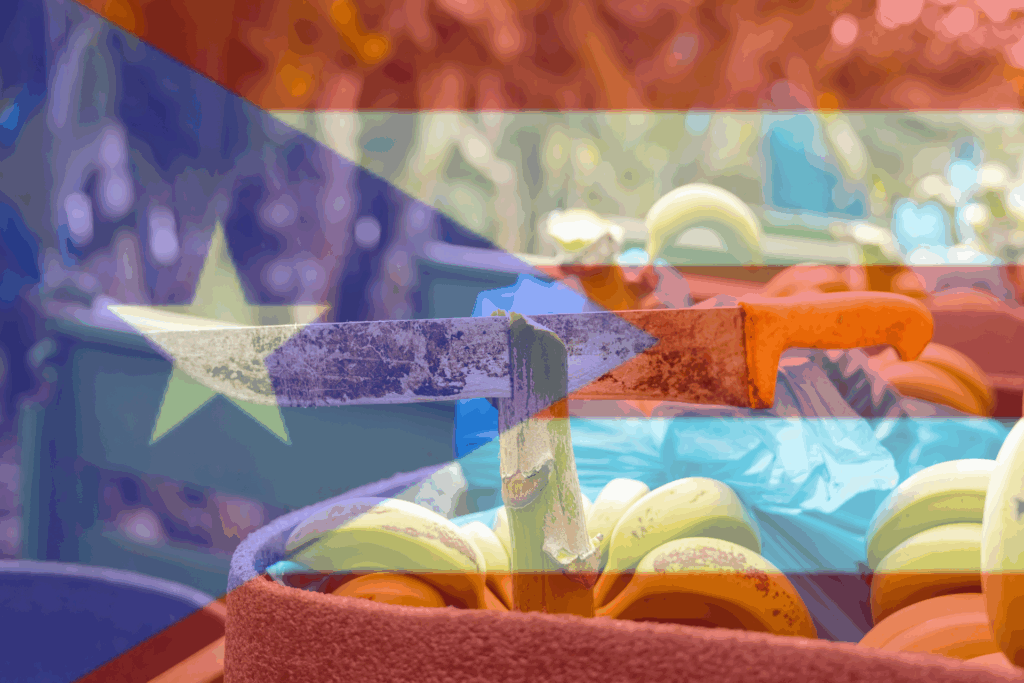
Calle 13’s breakout political moment came in 2005 with “Querido FBI,” written within hours of the Federal Bureau of Investigation (FBI) raid that killed Filiberto Ojeda Ríos, the Marxist guerrilla and pro-independence militant who led the Havana-backed urban guerrilla group Los Macheteros (Machete wielders). The song functions as a protest communiqué, denouncing U.S. federal action as an act of imperial aggression.
Filiberto Ojeda Ríos was not merely a revolutionary agitator; he was also a musician. A professional trumpet player trained in Havana during the early years of the Cuban Revolution, he performed with several Latin-jazz ensembles before turning to radical politics. Declassified U.S. intelligence reports indicate that Ojeda Ríos received ideological and technical training from Cuban intelligence services and later applied those skills to organize clandestine operations for Puerto Rican independence. His dual identity, as artist and militant, embodied the fusion of culture and insurgency that would later reappear, in lyrical form, through groups like Calle 13. The transformation from trumpet player to terrorist exemplifies how music, once a medium of harmony, can be repurposed into a tool of agitation and ideological recruitment.
The song’s most notorious line, “Hoy me disfrazo de machetero y esta noche voy a ahorcar a diez marineros” (“Today I will disguise myself as a machetero, and tonight I am going to hang ten sailors”), encapsulates the rage and symbolism of Puerto Rican separatist extremism (Calle 13, 2005). Scholars interpret the lyric as a rhetorical escalation rather than a literal threat, but its effect is unmistakable. Cervantes (2007) and Rivera (2012) note that it deliberately invokes violent imagery to dramatize perceived colonial oppression, marking one of the most openly anti-U.S. statements in contemporary Latin popular music.
The moral blindness of such rhetoric becomes even more striking when placed against the historical record of violence carried out by extremist separatist groups in Puerto Rico. On December 3, 1979, members of the Armed Forces of National Liberation (FALN) and allied radicals ambushed a U.S. Navy bus in Sabana Seca, opening fire on unarmed sailors returning to base. Two Americans, Petty Officers Marvin E. Phillips and Ruben D. López, were killed instantly, and ten others were gravely wounded. The gunmen fled into the night, leaving behind a scene of carnage that shocked the island. Federal investigators later described the attack, claimed by a faction of the FALN, as one of the deadliest acts of domestic terrorism in Puerto Rican history.
Against this backdrop, “Querido FBI” is not a courageous defense of justice but a callous artistic provocation that trivializes real tragedy. To romanticize armed separatists or portray attacks on U.S. servicemen as “resistance” is to desecrate the memory of those who served honorably and died in uniform. The song’s imagery, suggesting violence against “marineros”, cannot be dismissed as metaphor when real sailors were, in fact, murdered on Puerto Rican soil. Far from cultural empowerment, such art glorifies cowardly acts of terror and undermines the moral foundations of artistic responsibility.
Ideological alignment and international endorsements
René Pérez Joglar, known artistically as Residente, the frontman of Calle 13, has consistently used his musical platform to champion political movements and regimes hostile to U.S. interests. Over the past two decades, he has performed in both Venezuela and Cuba, where his appearances were sponsored or amplified by state-run institutions and covered by official media outlets as expressions of solidarity with the Bolivarian and Cuban revolutions (Jiménez, 2015; El Universo, 2009; Ministerio del Poder Popular para la Cultura, 2024). In Caracas, Residente appeared at festivals organized by Venezuela’s Ministry of Culture and PDVSA La Estancia to commemorate singer-activist Alí Primera, where he praised “the peoples’ struggle” against what he called U.S. imperialism. His Havana performances, broadcast by Cuban state television and reported in Granma, the official newspaper and propaganda organ of the Cuban Communist Party, were celebrated as tributes to socialist unity through art.
Residente’s activism extends beyond concerts. He openly campaigned for the release of Oscar López Rivera, a convicted member of the Fuerzas Armadas de Liberación Nacional (FALN), the same Marxist-Leninist armed urban guerrilla responsible for numerous bombings and terrorist attacks on U.S. soil during the 1970s and 1980s (Rivera, 2012). At public events and on social media, he portrayed López Rivera not as a terrorist but as a “political prisoner,” aligning with leftist Latin American leaders who demanded his release. In 2017, when President Barack Obama commuted López Rivera’s sentence, Residente celebrated the decision as a “victory for Puerto Rican dignity.”
He has also led calls for the removal of the U.S. Navy from the island of Vieques, echoing long-standing anti-military and anti-U.S. narratives propagated by Cuban and Venezuelan propaganda outlets. During televised interviews and live performances, Residente described the U.S. military presence as “colonial occupation,” framing it as a continuation of imperial exploitation rather than a matter of national defense.
Beyond his regional activism, Residente has taken anti-Israeli political positions, frequently casting Israel as a colonial aggressor and aligning himself with global pro-Palestinian campaigns (Rivera, 2012). This broader pattern situates him among artists who merge identity politics, post-colonial grievance, and Third-Worldist ideology into a single cultural narrative that equates the United States and its allies with oppression.
Through these acts of advocacy, Residente has effectively transformed Calle 13 from a musical group into a transnational ideological brand, one that harmonizes the rhetoric of Caracas, Havana, and radical activism under the banner of cultural authenticity and social justice. His career illustrates how modern celebrity activism operates as soft power: music as megaphone, ideology as merchandise.
Bad Bunny: Digital heir to populist protest
Bad Bunny’s rhetoric and artistic posture echo similar anti-U.S. sentiments, including criticism of immigration enforcement and symbolic rejection of the mainland in his world tours. State-aligned media such as TeleSUR have amplified his messages as anti-imperialist art.
His prominence has now reached the symbolic center of U.S. pop culture. In September 2025, Reuters confirmed that the NFL had invited Bad Bunny to headline the Super Bowl LX Halftime Show, scheduled for February 8, 2026. The announcement sparked debate due to his prior anti-U.S. statements and imagery. Critics argued that an artist who has derided American institutions should not headline an event celebrating national unity, while supporters viewed it as a milestone for Latino representation. The controversy highlights the paradox of an artist who profits from U.S. liberty while promoting the rhetoric of grievance. As commentators note, the NFL’s decision exemplifies “woke capitalism”, the pursuit of moral branding and inclusion optics over cultural coherence (Phiri, 2023; Paternotte, 2021; Reuters, 2025).
Corporate gatekeepers and ideological branding
The politics surrounding the Super Bowl halftime show extend beyond the performers on stage. Since 2019, the National Football League has partnered with Roc Nation, the entertainment company founded by rapper and businessman Shawn “Jay-Z” Carter, to produce the event. Roc Nation controls creative direction, performer selection, and sponsorship integration for the league’s “Inspire Change” initiative. Carter’s role illustrates how ideological messaging in mass entertainment is curated from the top down rather than generated spontaneously by artists.
Jay-Z’s personal brand has long combined entrepreneurship with progressive activism. In 2013, he and Beyoncé traveled to Havana, Cuba, under a U.S. Treasury cultural-exchange license, a trip widely interpreted as an implicit endorsement of normalized relations with the Castro regime (Reuters, 2013). He has publicly supported the Black Lives Matter movement and used his platform to frame criminal justice issues through a racial-politics lens (Rolling Stone, 2020). “Jay-Z” Carter has also been photographed wearing Che Guevara T-shirts, invoking the image of a Marxist revolutionary whose legacy is inseparable from anti-American violence.
From a cultural-policy standpoint, Jay-Z’s control of the Super Bowl halftime show places one of the nation’s largest family broadcasts under the artistic influence of a figure whose political sympathies often align with anti-establishment and anti-U.S. currents shaping global pop culture. The decision highlights how corporate entertainment conglomerates are increasingly outsourcing moral authority to celebrity entrepreneurs who conflate commercial marketing with ideological activism. The result is a spectacle that sells rebellion while benefiting from the freedoms and markets it critiques.
Power couple as cultural amplifiers
Jay-Z and Beyoncé function as a unified cultural and ideological brand, not as separate artistic entities. Beyoncé’s professional choices, such as her September 20, 2013, performance in Caracas, Venezuela, during The Mrs. Carter Show World Tour, extend the couple’s influence into regions governed by anti-U.S. regimes (Concert Archives, 2013). Because many of her tours bear the “Mrs. Carter” title, the political and symbolic associations inevitably extend to Jay-Z. Their joint projects, such as the On the Run Tour, reinforce that individual gestures by either artist contribute to a shared ideological narrative (NFL, 2019; Reuters, 2013).
When assessing Jay-Z’s cultural reach, it is therefore necessary to consider how Beyoncé’s geographic engagements and public stances magnify his brand and worldview. Their collaboration merges commercial spectacle with moral signaling, blending artistic entertainment, political activism, and corporate branding into one seamless enterprise. Together they embody a new form of celebrity diplomacy: one that sells rebellion wrapped in rhythm, turning ideology into image and dissent into a lifestyle commodity.
Benito Antonio Martínez Ocasio a/k/a Bad Bunny: Digital heir to populist protest
Bad Bunny’s discography as activism: themes, tracks, and tactics
Bad Bunny has repeatedly leveraged his catalog to advance a political and cultural posture that blends anti-U.S. grievance, “decolonial” rhetoric, and LGBTQ+ signaling, often packaging it for maximum viral reach through visually provocative staging and high-impact media moments.
1. Protest as Product: “Afilando los Cuchillos” (2019)
Co-released with Residente and iLe during the mass demonstrations that led to Gov. Ricardo Rosselló’s resignation, the track serves as a street-level communiqué, anti-corruption, anti-establishment, and explicitly movement-oriented. NPR and Pitchfork documented how the song helped soundtrack the marches, with the artists’ rhetoric framed as a call for people’s justice rather than partisan agitation (Contreras, 2019; Pitchfork, 2019; The Guardian, 2019).
2. LGBTQ+ Performance Politics: “Yo Perreo Sola” (2020)
In the “Yo Perreo Sola” video, Bad Bunny appears in drag and centers a message of “respect” for women and queer club culture. Major music press lauded the clip as a breakthrough in Latin mainstream visual codes (Rolling Stone, 2020; Billboard, 2020). That same season, he used The Tonight Show to memorialize the murdered trans woman Alexa Negrón Luciano, wearing a shirt that read “They killed Alexa, not a man in a skirt,” and performing in a skirt, cementing his LGBTQ+ ally persona in prime-time U.S. media (CBS News, 2020; Pitchfork, 2020; Vogue, 2020).
3. Anti-Privatization and Anti-Gentrification Messaging: “El Apagón” (2022)
Released with an embedded 18-minute mini-documentary by investigative journalist Bianca Graulau, “El Apagón” targets the island’s power privatizer LUMA, Act 22 tax migrants, displacement, and beach/land privatization. Rolling Stone and Billboard characterized it as a blistering, explicitly political indictment packaged as a music video, an example of how Bad Bunny fuses journalism, aesthetics, and agitation (Rolling Stone, 2022; Billboard, 2022; Democracy Now!, 2022).
4. Guest Optics at the Choliseo
Bad Bunny’s 2025 No Me Quiero Ir de Aquí residency at the Coliseo de Puerto Rico (“El Choliseo”) functioned as both a concert series and an ideological showcase. In addition to high-profile appearances by LeBron James, a prominent NBA professional athlete and Black Lives Matter supporter with longstanding commercial ventures tied to the People’s Republic of China, the guest list included figures identified with progressive, “woke,” and pro-socialist causes. Among them was René Pérez Joglar (Residente), an open supporter of the Havana and Caracas regimes and a recurring voice for leftist, LGBTQ-inclusive activism. Their joint appearance on stage symbolically bridged two generations of Puerto Rican artists whose creative brands fuse identity politics with nationalist and anti-U.S. discourse (Bleacher Report, 2025; Billboard, 2025; Jiménez, 2015).
The collective message was unmistakable: resistance packaged as pop spectacle. The inclusion of globally recognized, ideologically charged figures transformed the Choliseo into a hybrid venue, part entertainment arena, part political theater. Through curated guest optics, Bad Bunny reinforced his cultural mission: to elevate Puerto Rican separatist sentiment and progressive politics under the universal banner of celebrity rebellion.
5. Flag Symbolism and Separatist Iconography
Equally revealing is the version of the Puerto Rican flag prominently displayed throughout Bad Bunny’s videos and live performances. Rather than the navy-blue triangle of the official Commonwealth flag, his imagery often features a sky-blue triangle, a design historically associated with the Puerto Rican independence movement and used by nationalist and socialist organizations since the 1930s (Smithsonian Institution, n.d.; Puerto Rico Flag Foundation, n.d.).
Puerto Rico has been a territory of the United States since 1898, following the Treaty of Paris that ended the Spanish-American War. Its residents have been U.S. citizens since 1917 under the Jones–Shafroth Act, and the island’s political status as a Commonwealth binds it under the U.S. Constitution. By law and protocol, the official flag of the Commonwealth of Puerto Rico, featuring the navy-blue triangle, is to be displayed together with, and never in place of, the United States flag. The version shown in Bad Bunny’s videos and stage productions, with its lighter sky-blue triangle, is not the official flag but rather the separatist or “independentista” version, long associated with pro-independence movements and anti-U.S. activism (Puerto Rico Flag Foundation, n.d.; Smithsonian Institution, n.d.).
The sky-blue-triangle flag gained enduring historical and symbolic resonance on October 25, 1977, when members of the Puerto Rican Socialist Party (PSP), a Marxist, pro-independence organization and official fraternal affiliate of Havana’s Cuban Communist Party, scaled the Statue of Liberty and unfurled a massive Puerto Rican flag from its crown. Far from a publicity stunt, the action was a deliberate political confrontation meant to expose what the activists described as the United States’ colonial relationship with Puerto Rico. Draping the flag across Lady Liberty’s forehead served as both metaphor and indictment: while the statue symbolizes freedom and democracy, Puerto Ricans, they argued, remained bound by a territorial status that denied them full political representation. Their demands were explicit: the release of Puerto Rican “political prisoners” and an end to “U.S. colonial rule on the island” (Zinn Education Project, n.d.; New York Times Archives, 1977). The image of the sky-blue flag fluttering above America’s most recognizable symbol of liberty became one of the enduring icons of separatist resistance. When contemporary artists, including Bad Bunny, reproduce that hue or composition in stage design and video imagery, they echo the symbolism of the 1977 protest and align their art with a visual tradition rooted in anti-American dissent.
By projecting or wearing this variant flag, Bad Bunny invokes a visual language that has long been understood as separatist rather than civic. The color shift, subtle to the casual viewer but rich in historical significance, signals allegiance to a cause that views the United States not as a protector but as a colonizer.
Equally significant is his recurring use of the “pava,” the traditional jíbaro straw hat that is instantly recognizable to Puerto Ricans. The pava is strongly associated with the jíbaro, or mountain peasant, a cultural archetype representing rural virtue and agrarian identity. Its political meaning, however, is more complex. The Partido Popular Democrático (PPD) adopted the jíbaro figure and the pava as its emblem, together with the slogan “Pan, Tierra y Libertad” (“Bread, Land, and Freedom”), a phrase with clear ideological parallels to early Soviet and Marxist revolutionary rhetoric. The PPD’s first elected governor, Luis Muñoz Marín, was himself a self-described democratic socialist who fused populist economic reform with nationalist symbolism.
The pava’s revolutionary undertones also extend beyond Puerto Rico. A similar style of straw hat, known as the “sombrero de yareyA,” was worn by the Mambí Liberation army in Cuba during its nineteenth-century struggle for independence from Spain, lending the symbol a trans-Caribbean resonance. Thus, when Bad Bunny wears the pava, he is not merely celebrating rural pride; he is visually recasting agrarian imagery into a quasi-revolutionary aesthetic, merging Puerto Rican nationalism with leftist iconography (Smithsonian Institution, n.d.; Wikipedia–PPD, 2025).
Together, these elements, ideologically aligned guests, symbolic attire, and the separatist flag, extend Bad Bunny’s artistic project far beyond music. His Choliseo performances become political tableaux that merge Puerto Rican nationalism, progressive identity politics, and anti-U.S. narratives into a single, cohesive visual and sonic brand. In doing so, he transforms pop culture into propaganda, turning national grievance into global entertainment.
Cultural boundaries and the protection of youth
A further dimension of the Bad Bunny phenomenon is the deliberate blurring of gender and sexual identity through performance. In concerts, videos, and televised events, he has appeared in female attire, used explicitly sexual choreography, and filled his lyrics with coarse or suggestive language, actions that promoters describe as “breaking taboos.” These displays are marketed as a form of freedom of expression, yet they have become the centerpiece of prime-time, family-oriented programming.
The National Football League’s Super Bowl – long a symbol of national unity – now risks turning its halftime stage into a vehicle for sexual provocation and ideological messaging. Parents must ask themselves a simple question: Is this what I want my children to view? When art abandons restraint, it forfeits its ability to uplift. The entertainment industry’s pursuit of shock value corrodes the moral imagination of the young and erodes respect for modesty, discipline, and human dignity.
Preserving decency in mass culture is not censorship; it is a form of civic stewardship. Broadcasters, sponsors, and educators share responsibility for ensuring that public spectacles reflect virtue, not vulgarity, and that freedom of expression does not become a license to avoid accountability. The defense of culture begins not with repression, but with discernment and moral courage.
Networks, funding ecosystems, and public associations
Bad Bunny’s management operates under Rimas Entertainment, founded by Rafael Ricardo Jiménez-Dan, a former Venezuelan vice minister during the Chávez years. Billboard (2023) and NotiCel (2022) reported that his early investment in Rimas triggered political scrutiny in Puerto Rico. While this confirms corporate history involving a Chávez-era official, there is no verified evidence linking Bad Bunny’s current management or operations to Maduro-era financiers.
Ideological framework: Cultural Marxism and Woke Capital
To grasp the intellectual architecture behind the anti-American posture of modern Latin music, one must examine the twin forces of Cultural Marxism and Woke Capital, two seemingly contradictory yet mutually reinforcing movements that have converged to redefine art, politics, and commerce in the twenty-first century.
The term Cultural Marxism does not refer to a conspiracy, but to a philosophical evolution of classical Marxism. While traditional Marxism sought to overturn capitalism through economic revolution, its later disciples, most prominently Antonio Gramsci, the Frankfurt School theorists, and postmodern philosophers such as Herbert Marcuse, understood that Western civilization could not be toppled by class struggle alone. The key, they argued, was cultural hegemony: transforming values, language, and aesthetics so that revolutionary ideas would become the new moral common sense. By infiltrating education, media, and the arts, the Left could erode faith in God, family, and nation, the pillars of Western order, without firing a shot.
This slow, deliberate strategy explains why anti-American narratives today are more emotional than economic, more aesthetic than political. It is not about seizing factories; it is about seizing meaning. As Gramsci warned, “The conquest of power requires the conquest of culture.” In Latin America, this conquest was achieved through music, film, and literature that reframed resentment as justice and rebellion as a form of identity. From Blades’s intellectual salsa to Bad Bunny’s woke reggaetón, the cultural battlefield has replaced the economic one. The slogans have changed, but the goal remains the same: dismantling the moral foundations of the West under the banner of liberation.
Enter Woke Capital, the newest and most paradoxical phase of this ideological evolution. If Cultural Marxism reengineered morality, Woke Capital commodified it. Global corporations, once symbols of Western economic strength, now weaponize progressive rhetoric to sell products, sanitize brands, and deflect scrutiny. Diversity becomes a marketing slogan; dissent becomes “hate speech.” The result is a market-driven moral theater where multinational conglomerates preach radical inclusivity while quietly exploiting labor and consumers.
Bad Bunny’s global success illustrates this fusion perfectly. His anti-systemic persona thrives on platforms owned by the very capitalist structures he denounces. Streaming services, fashion brands, and entertainment conglomerates eagerly promote his shock performances not despite their ideological edge, but because of it. Rebellion has become profitable; outrage has become a currency. This is the genius of Woke Capital: it monetizes dissent while neutralizing its revolutionary potential. Every provocation becomes a product, every controversy, a campaign.
Together, Cultural Marxism and Woke Capital have produced a civilization that celebrates subversion as virtue and confusion as progress. They blur the line between liberation and nihilism, between authenticity and artifice. The cultural left supplies the ideology, while corporate capital supplies the distribution. In this arrangement, the artist becomes both preacher and product, missionary and merchandise.
The consequences are profound. A society that rewards grievance over gratitude and self-expression over self-discipline soon forgets the moral grammar of freedom. Art ceases to elevate the soul; it becomes an instrument of ideological conformity. What began in the Frankfurt School’s lecture halls now echoes in concert arenas and streaming platforms, sung to the beat of rebellion yet financed by the system it claims to resist.
In this ideological framework, Bad Bunny is not an anomaly; he is the logical outcome. He stands at the crossroads of Cultural Marxism and Woke Capital, embodying the fusion of subversive messaging and corporate monetization. His fame, like his ideology, is both a rebellion and a brand, a grievance and a spectacle. The West faces not an artistic revolution but a cultural colonization of its own making, a soft tyranny of taste and ideology that replaces truth with trend and virtue with visibility.
Media Complicity and Geopolitical Utility
Western media have not merely reported on these cultural narratives; they have often amplified them under the pretext of social awareness. By celebrating anti-American rhetoric as art and grievance as virtue, mainstream outlets grant moral legitimacy to messages that echo the propaganda of Havana, Caracas, and their allies. The result is an inverted moral economy: the freest nation on earth is depicted as aggressor, while regimes that imprison journalists and artists are romanticized as victims.
Entertainment journalism has become a conduit for ideological laundering, converting protest into performance, anger into branding, and political hostility into a commercial spectacle. Streaming platforms and social media allow such narratives to achieve viral reach without editorial scrutiny. In this way, the entertainment industry serves as an informal extension of authoritarian soft power, conveying resentment through rhythm and rhyme.
Recognizing this dynamic is not censorship; it is civic hygiene. Nations that fail to guard their cultural space ultimately lose control over their moral narrative.
Restoring Cultural Integrity
Rebuilding intellectual and artistic sovereignty requires a deliberate, long-term effort. The response must be strategic, not reactive.
- Expose Propaganda Networks. Document how authoritarian regimes use art, film, and music to influence global opinion. Transparency neutralizes subversion.
- Strengthen Historical Literacy. Teach both the achievements and the costs of liberty. A generation that cannot distinguish dissent from destabilization is easily manipulated.
- Empower Artists of Principle. The antidote to ideological art is not silence but excellence. Support creators who celebrate freedom, enterprise, and gratitude.
- Reinvest in Cultural Diplomacy. Promote exchange programs and bilingual media that highlight the creative vitality of democratic nations.
Restoring cultural integrity means reclaiming art as a vessel of truth, not a vessel of resentment. It requires a coalition of educators, policymakers, and artists committed to defending civilization through culture.
Conclusion
Rubén Blades sanctified resistance, Calle 13 radicalized it, and Bad Bunny digitalized it, infusing rebellion with sexualized spectacle and identity politics. Each has turned protest into performance and dissent into ideology, reshaping art into a weapon of influence. Together they exemplify the new front line of moral and ideological struggle: the cultural battle for the soul of the West.
However, only within free societies can such debates even occur, and that freedom demands guardianship. Parents, educators, and citizens must engage the public square with conviction, insisting that entertainment honor truth, virtue, and the innocence of youth. The preservation of civilization begins not in censorship, but in courage, the courage to defend beauty, order, and moral clarity against the tide of vulgarity. A people that forgets why decency matters will soon forget why freedom does.
Key Evidence: Ideological Themes Across Generations
| Artist | Era / Context | Representative Works or Acts | Ideological Themes | U.S. Reception / Impact |
| Rubén Blades | 1970s–1980s / Cold War | Tiburón (1979), Buscando América (1984) | Anti-imperialism, dependency theory, revolutionary romanticism | Praised as an intellectual ‘salsa de protesta’; little challenge to rhetoric |
| Calle 13 | 2000s–2010s / Post-9/11 populism | Querido FBI (2005), Latinoamérica (2011); support for Chávez & Castro | Explicit anti-U.S. activism, militant separatism, and regional populism | Polarizing; hailed by left-leaning critics, condemned by U.S. veterans’ groups |
| Bad Bunny | 2010s–2020s / Digital globalization | El Apagón (2022), Puerto Rico Residency (2025), Super Bowl LX invitation (2026) | Woke anti-imperialism, decolonial discourse, cultural grievance | Corporate embrace despite anti-American rhetoric (‘woke capitalism’) |
References
Aparicio, F. R. (1998). Listening to salsa: Gender, Latin popular music, and Puerto Rican cultures. Wesleyan University Press. https://www.weslpress.org/9780819563088/listening-to-salsa/
Aswad, J. (2020, February 2). Super Bowl Halftime Show: Jennifer Lopez and Shakira Deliver Red-Hot Performance. Variety. https://variety.com/2020/music/news/super-bowl-halftime-show-jennifer-lopez-shakira-1203490227/
Billboard. (2023, April 21). Bad Bunny label Rimas launched by investor with Hugo Chávez ties. Billboard Pro. https://www.billboard.com/pro/bad-bunny-label-rimas-launched-by-investor-hugo-chavez-ties/
Calle 13. (2005). Querido FBI [Recorded by Residente & Visitante]. On Residente o Visitante [CD]. Sony BMG Latin. (Original release: White Lion Records, Puerto Rico.)
Cervantes, M. (2007). Calle 13: “Querido FBI” y la resistencia boricua. Revista Cultural Caribe, 4(2), 33–40.
Concert Archives. (2013, September 20). Beyoncé – The Mrs. Carter Show World Tour: Live in Caracas, Venezuela (Estadio de Fútbol de la Universidad Simón Bolívar). Concert Archives. https://www.concertarchives.org/concerts/beyonce-813d04b9-c327-4d14-8c30-29bcd472e6ae
El Universo. (2009, November 2). Calle 13 cantó en Caracas, sin Chávez. El Universo. https://www.eluniverso.com/2009/11/02/1/1378/calle-canto-caracas-sin-chavez.html/
Jiménez, R. (2015). El discurso político en la música urbana: Calle 13 y la nueva canción latinoamericana. Revista de Estudios Culturales Latinos, 12(3), 45–63.
Laje, A., & Márquez, N. (2016). El libro negro de la nueva izquierda: Ideología de género o subversión cultural. Grupo Unión Editores. https://www.unioneditorial.net/libro/el-libro-negro-de-la-nueva-izquierda-ideologia-de-genero-o-subversion-cultural/ )
Latin Post. (2024, September 11). Bad Bunny faces controversy over alleged ties to Venezuelan regime. Latin Post. https://www.latinpost.com/articles/163595/20240911/bad-bunny-faces-controversy-over-alleged-ties-venezuelan-regime.htm
Ministerio del Poder Popular para la Cultura. (2024, October 29). Misión Cultura presente en homenaje a Alí Primera. https://www.mincultura.gob.ve/noticias/mision-cultura-presente-en-homenaje-a-ali-primera-tipicamente-ali/
Nodal. (2017, January 18). Residente de Calle 13 celebra la liberación del independentista puertorriqueño Oscar López Rivera. Noticias de América Latina y el Caribe. https://www.nodal.am/2017/01/residente-de-calle-13-celebra-la-liberacion-del-independentista-puertorriqueno-oscar-lopez-rivera/
NotiCel. (2022, August 1). Company behind Bad Bunny grew from $2 million put up by former Venezuelan official. NotiCel. https://noticel.com/en/ultima-hora/20220801/company-behind-bad-bunny-grew-from-2-million-put-up-by-former-venezuelan-militaryman-to-1-billion/#:~:text=Starting%20with%20Mart%C3%ADnez%20Ocasio%2C%20but,corporate%20entities%20and%20other%20commercial
Paternotte, D., & Verloo, M. (2021). De-democratization and the politics of knowledge: Unpacking the cultural Marxism narrative. Social Politics: International Studies in Gender, State & Society, 28(3), 556–578. https://doi.org/10.1093/sp/jxab025
PDVSA La Estancia. (2022). Aniversario de Alí Primera [Instagram post]. Instagram. https://www.instagram.com/p/CaC7FhdLOEX/
Phiri, P. (2023). Wokeism: A critical analysis of its impact on society and the emergence of woke capitalism. Diversity & Equality in Health and Care. https://www.primescholars.com/articles/wokeism-a-critical-analysis-of-its-impact-on-society-and-the-emergence-of-woke-capitalism.pdf
Reuters. (2013, April 8). Beyonce, Jay-Z Cuba trip was OK’d by US Treasury Dept – source. Reuters. https://www.reuters.com/article/lifestyle/beyonce-jay-z-cuba-trip-was-ok-d-by-us-treasury-dept-source-idUSBRE9370WQ/
Reuters. (2025, September 29). Bad Bunny to perform Super Bowl LX halftime show. Reuters. https://www.reuters.com/sports/bad-bunny-perform-super-bowl-lx-halftime-show–flm-2025-09-29/
Rivera, R. (2012). Calle 13 and the new politics of Latin hip hop. Latin American Music Review, 33(2), 120–138.
Roc Nation. (2019, August 14). Roc Nation enters into long-term partnership with NFL as league’s official live music entertainment strategists. Roc Nation. https://www.rocnation.com/news/roc-nation-nfl-entertainment-strategist/
Shaffer, C. (2020, June 2). Jay-Z and Roc Nation take out full-page ads dedicated to George Floyd: Newspaper ad signed by parents of police brutality victims featured extended MLK quote. Rolling Stone. https://www.rollingstone.com/music/music-news/jay-z-roc-nation-george-floyd-ads-1009213/
The San Juan Daily Star. (2024, November 3) (2024, September 11). Senate candidate seeks probe into alleged ties of Bad Bunny’s management to Venezuelan regime. The San Juan Daily Star. https://www.sanjuandailystar.com/post/senate-candidate-seeks-probe-into-alleged-ties-of-bad-bunny-s-management-to-venezuelan-regime
Torres, A. (2017). Rubén Blades y la política panameña: Entre la rebelión y la institucionalidad. Revista Panamá Cultural, 9(1), 87–103.
Villa, L. (2024, November 2). Did the Biden administration ask the FBI to investigate Bad Bunny’s label? This Puerto Rican politician claims so. Remezcla. https://remezcla.com/music/did-the-biden-administration-ask-the-fbi-to-investigate-bad-bunnys-label-this-puerto-rican-politician-claims-so/
Waxer, L. (2002). Situating salsa: Global markets and local meanings in Latin popular music. Routledge. https://www.routledge.com/Situating-Salsa-Global-Markets-and-Local-Meanings-in-Latin-Popular-Music/Waxer/p/book/9780815340201
The opinions expressed in this article are those of the author and do not necessarily reflect the views of the Miami Strategic Intelligence Institute (MSI²).