10 Aug Beyond Sovereignty: Rethinking Mexico’s Security Partnership with the United States
By,
José Adán Gutiérrez, Senior Fellow, MSI²
Abstract: In August 2025, The New York Times reported that President Donald Trump had allegedly signed a secret executive order directing the U.S. military to plan operations targeting Latin American drug cartels designated as Foreign Terrorist Organizations (FTOs) (New York Times, 2025). The administration simultaneously offered a $50 million bounty for Venezuelan President Nicolás Maduro, accused of leading his country’s Cartel de los Soles.
Against a backdrop of escalating cartel violence and institutional fragility, this paper examines how different sectors of Mexican society—government, civil society, business, victims’ groups, and the public—perceive the possibility of direct U.S. military intervention. It incorporates recent analysis on cartel governance, human rights implications, and state capacity erosion (Gutiérrez, 2025) and expands the scope to assess Venezuelan, Miami exile, Colombian, and other regional reactions.
The paper contrasts the U.S. military’s long-standing support role in counternarcotics operations with the operational counterterrorism leadership envisioned in Trump’s initiative. It asks the unavoidable question: Is it time to try something different in the war against the drug cartels?
Introduction
President Trump’s recent actions have shifted the U.S. counternarcotics approach from rhetoric to concrete planning. On August 8, 2025, The New York Times reported that the President signed a secret order authorizing the Pentagon to prepare strike plans against cartels designated as FTOs (New York Times, 2025). In parallel, the U.S. Department of State announced a $50 million reward for Venezuela’s Maduro, marking a significant hemispheric expansion of the campaign.
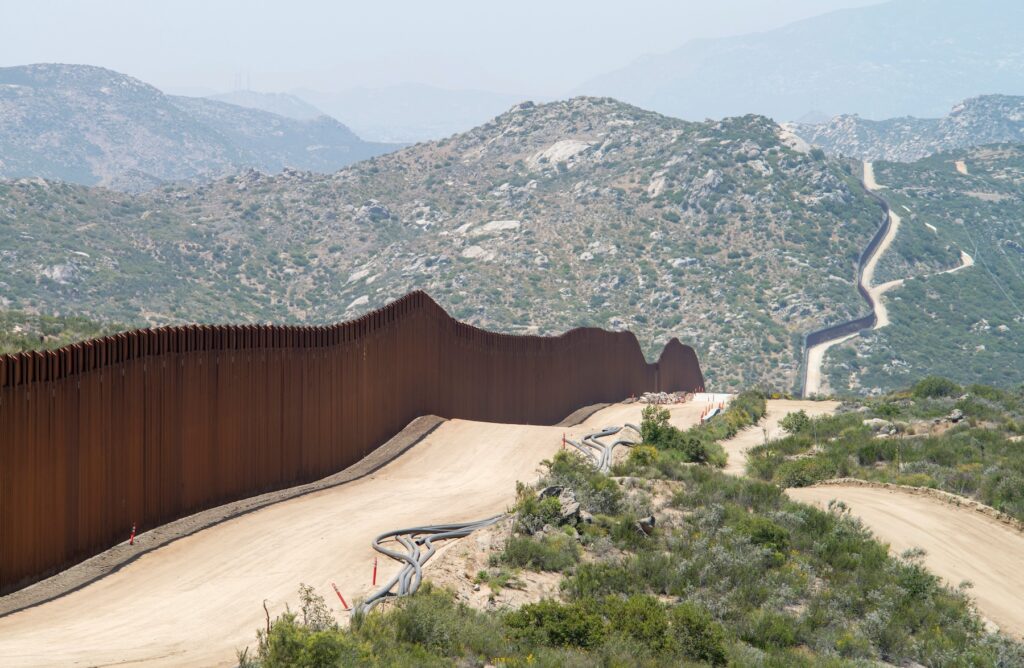
Mexico is confronting not only high levels of violence but also a profound governance crisis—where cartels effectively govern large swathes of territory, terrorizing citizens and undermining the state’s basic function of protecting its people and ensuring fundamental rights. This dual challenge of physical insecurity and institutional erosion shapes how Mexicans perceive President Trump’s initiative.
Trump’s Transition to an Operational Lead Role
For decades, U.S. military involvement in counternarcotics has been conducted in a supporting role. The Joint Interagency Task Force South (JIATF-South) in Key West, Florida, is a primary example. JIATF-South coordinates intelligence fusion, maritime surveillance, and interdiction in support of law enforcement and partner nations, avoiding direct combat on foreign soil and territorial waters.
Trump’s February 2025 FTO designations and the August 2025 secret order break with the status quo, moving toward an operational lead role for the U.S. military (Reuters, 2025). In addition to traditional maritime and border interdictions, the new mission set may potentially include cross-border raids and targeted strikes. The Maduro bounty further extends the scope to a corrupt sitting head of state, signaling that the campaign is not just bilateral with Mexico but hemispheric in nature.
Historical Context and the Current Climate of Fear
Since 2006, Mexico’s militarized fight against organized crime has claimed over 400,000 lives. Cartels now control or heavily influence significant portions of the country, exercising de facto governance—levying “taxes,” administering “justice,” and dictating local commerce (Gutiérrez, 2025). This authority is enforced through violence that meets the threshold of terror, with civilians kidnapped, tortured, disappeared, or executed to ensure compliance. The grim discovery of unmarked mass graves has become a hauntingly regular occurrence.
The inability of the Mexican state to uphold its monopoly on force compromises its legitimacy. No government can govern effectively if it cannot protect its citizens or ensure their most basic human rights. The pervasive insecurity has eroded trust in public institutions and intensified calls—by some—for extraordinary measures, including potential outside intervention (Mexico News Daily, 2024).
Mexican Government and Political Leadership
President Claudia Sheinbaum’s administration has categorically rejected the idea of foreign troops on Mexican soil. In response to the August 2025 revelations, Sheinbaum stated, “There will be no invasion” and stressed that the U.S. order “has nothing to do with Mexican territory” (Los Angeles Times, 2025). This reflects a long-standing multi-party consensus that sovereignty is non-negotiable, even amid severe security crises.
Public Opinion
A December 2024 Reforma poll revealed a near-even split: 46% of Mexicans supported some form of cooperation with the U.S. against cartels, while about half opposed it (Mexico News Daily, 2024). Support is higher in regions hardest hit by violence, where cartel governance and impunity are most entrenched. However, historical memory of U.S. interventions tempers public willingness to accept direct U.S. military presence.
Civil Society and Victims’ Groups
Victim advocacy networks—such as the LeBarón and Langford families—argue that the state has lost control of vast areas and welcome decisive action, even from abroad (Washington Post, 2019). For many of these families, the call is not born of political calculation but of raw grief and desperation. They have buried loved ones—sometimes without ever recovering their bodies—and live with the daily absence of justice or even official acknowledgment. In countless towns, relatives of the disappeared scour fields, ravines, and riverbanks with their own hands, hoping to unearth remains from the unmarked mass graves that surface with chilling frequency. Their pleas for help are shaped by this enduring pain: they want decisive action whether it comes from their own government—which they increasingly doubt will act—or from any actor, domestic or foreign, capable of ending the cycle of terror.
Human rights organizations, while deeply sympathetic to these victims, caution that militarization, particularly by foreign forces, could exacerbate abuses and further weaken already fragile institutions (Pew Research Center, 2013). Their focus remains on strengthening Mexico’s justice system, rooting out corruption, and ensuring that any security cooperation—foreign or domestic—complies with human rights standards. Many within civil society advocate for enhanced bilateral cooperation under Mexican command rather than unilateral U.S. action, believing that this approach offers the best balance between urgent security needs and the preservation of sovereignty and democratic governance.
Regional Diplomatic Context
Inside Venezuela: The Maduro government denounces the $50 million bounty on his head as “imperialist aggression,” portraying it as a pretext for regime-change (New York Times, 2025). State media frame the move as a warning to other sovereign states resisting U.S. influence.
Miami Venezuelan Community: The exile community largely supports the bounty, viewing it as validation of Maduro’s criminality, while some urge caution against measures that could trigger regional instability (Politico, 2019).
Colombia: Likely to quietly support strong action against cartels given its history of U.S. security cooperation, while remaining cautious about border stability with Venezuela (Reuters, 2025).
Other States: Right-leaning governments such as Ecuador and Paraguay may discreetly endorse U.S. measures; left-leaning governments in Brazil, Chile, and Honduras are expected to publicly reject actions perceived as interventionist (Al Jazeera, 2025).
How other Latin American countries respond will influence Mexico’s domestic debate, either reinforcing resistance or pressuring for calibrated cooperation.
Implications for Mexico
1. Sovereignty Risks:
Any perception of foreign troops operating on Mexican soil risks triggering a severe political backlash and constitutional challenges. The Mexican Constitution explicitly prohibits the presence of foreign military forces without congressional approval, and public opinion has historically been sensitive to sovereignty issues due to past U.S. interventions. Even limited, targeted operations—if not transparently coordinated—could be portrayed by political opponents as violations of national dignity, potentially destabilizing the government and eroding public trust.
2. Institutional Fragility:
Mexico’s democratic checks and balances are already strained by widespread corruption, weak judicial enforcement, and chronic impunity. Introducing foreign military actors during this period of institutional weakness could further erode state autonomy if command and control structures become blurred. This fragility means that any foreign-led operation risks undermining Mexico’s ability to independently govern its security sector, potentially creating long-term dependency on outside intervention rather than building sustainable domestic capacity.
3. Human Rights Obligations:
The state’s inability to consistently protect its citizens’ rights is both a driver for considering foreign military assistance and a warning against it. While decisive action could help dismantle violent criminal networks, there is a well-documented risk that militarized operations—particularly those involving foreign forces—can lead to collateral damage, civilian casualties, and abuses. Such outcomes could fuel anti-intervention sentiment, damage Mexico’s international reputation, and provide cartels with propaganda to portray themselves as defenders against foreign aggression. Any plan must integrate robust accountability mechanisms to avoid repeating past mistakes.
Conclusion
President Trump’s secret order and the Maduro bounty represent a decisive shift from the U.S. military’s traditional support role in counternarcotics operations to an operational lead in counterterrorism missions against Latin America’s murderous cartels (New York Times, 2025). For Mexico, where cartels govern large territories and terrorize citizens, the appeal of decisive action is tempered by the imperatives of sovereignty, historical experience, and institutional survival.
No government can sustain legitimacy if it cannot protect its citizens and uphold their basic rights. Addressing Mexico’s security crisis must therefore prioritize restoring the state’s capacity to govern effectively, strengthening democratic institutions, and protecting human rights—while carefully calibrating international cooperation to avoid undermining sovereignty.
Yet after three decades of sustained effort under administrations from across the political spectrum, Mexico’s armed forces have been unable to decisively defeat the cartels. Too often, operations led by the Mexican military are compromised before objectives can be achieved—whether by corruption, infiltration, or operational leaks. If the strategies of the past thirty years have failed to produce lasting results, repeating them is unlikely to change the outcome.
This reality raises a difficult but unavoidable question: Is it time for Mexico to accept direct, more robust U.S. military assistance? If so, the most effective approaches would avoid large-scale occupation forces and instead focus on joint and combined, compartmentalized, intelligence-driven operations—led by vetted units, supported by U.S. special operations forces, advanced surveillance, and precision strike capabilities. Such cooperation would need to be shielded from compromise, operate under effective bilateral oversight, and be designed to dismantle the cartels’ operational core while minimizing collateral damage.
Taking a new and different approach—one that combines Mexico’s sovereign leadership with targeted, high-capability U.S. support—may be the only way to break a cycle of violence and impunity that has resisted every domestic strategy attempted for a generation in Mexico.
References
Al Jazeera. (2025, August 8). Trump signs order authorizing military action against cartels: Reports. https://www.aljazeera.com/news/2025/8/8/trump-signs-order-authorising-military-action-against-cartels-reports
Gutiérrez, J. A. (2025, June 6). Chin up: Mexico’s deteriorating separation of powers and the gathering storm. Miami Strategic Intelligence Institute. https://open.substack.com/pub/msi2/p/chin-up-mexicos-deteriorating-separation
Los Angeles Times. (2025, August 8). ‘There will be no invasion.’ Sheinbaum confident Washington won’t strike cartels in Mexico. https://www.latimes.com/world-nation/story/2025-08-08/there-wont-be-an-invasion-sheinbaum-confident-washington-wont-strike-cartels-in-mexico
Mexico News Daily. (2024, December 24). Poll: Mexicans divided regarding idea of US intervention against cartels. https://mexiconewsdaily.com/politics/trump-cartels-mexico-terrorist/
New York Times. (2025, August 8). Trump issues secret order for U.S. military planning against cartels; $50 million bounty on Maduro. https://www.nytimes.com/2025/08/08/us/trump-military-drug-cartels.html
Pew Research Center. (2013, July 16). Mexican public favors military use, U.S. aid to fight drug cartels. https://www.pewresearch.org/global/2013/07/16/mexican-public-favors-military-use-u-s-aid-to-fight-drug-cartels/
Politico. (2019, November 5). Trump offers Mexico help waging war on drug cartels after murder of U.S. citizens. https://www.politico.com/news/2019/11/05/trump-mexico-drug-cartels-066678
Reuters. (2025, August 8). Trump administration eyes military action against drug cartels, US officials say. https://www.reuters.com/legal/government/trump-administration-eyes-military-action-against-drug-cartels-us-officials-say-2025-08-08/
Rolling Stone. (2024, May 7). Trump is planning to send kill teams to Mexico to take out cartel leaders. https://www.rollingstone.com/politics/politics-news/trump-mexico-cartel-raid-2024-election-1235002221/
Washington Post. (2019, December 12). The LeBarón family has a message for Washington. https://www.washingtonpost.com/world/the_americas/the-lebaron-family-has-a-message-for-washington/2019/12/12/f326d630-1c90-11ea-977a-15a6710ed6da_story.html
The opinions expressed in this article are those of the author and do not necessarily reflect the views of the Miami Strategic Intelligence Institute (MSI²).