05 Oct Bolivia’s Lithium Nation Moment: A Story of Cycles and Choices
By,
CDR José Adán Gutiérrez, USN (Ret), Senior Fellow, MSI²
Dr Rafael Marrero, Chief Economist & Founder, MSI²
Abstract
Bolivia’s 2025 general elections ended nearly two decades of dominance by the Movement for Socialism (MAS) and launched a historic runoff between centrist Rodrigo Paz and conservative Jorge “Tuto” Quiroga. Whoever prevails will inherit the country’s most acute economic crisis in a generation—and a resource endowment that makes Bolivia central to the global race for lithium. This article situates Bolivia’s present moment within its long history of squandered resource wealth: silver in the colonial era, natural gas in the early twenty-first century, and now lithium. The core question is whether Bolivia can break this tragic cycle or whether lithium will join the list of lost opportunities.
Introduction: The Weight of History
Bolivia is a landlocked nation that has long been rich beneath its soil and poor above it. From the sixteenth-century silver mines of Potosí that fueled European wealth but left indigenous populations in misery (Klein & Farthing, 2021), to the natural gas boom of the 2000s that briefly reduced poverty before reserves declined (Madrid, 2012), Bolivia’s history has been one of resource abundance without enduring prosperity. Each cycle has followed the same pattern: promise, extraction, fleeting growth, and collapse.
The August 2025 elections broke the MAS political monopoly that had endured since 2006. The runoff on October 19 will determine whether Paz or Quiroga inherits a country that is simultaneously collapsing economically and rising geopolitically as the custodian of the world’s largest lithium deposits (Reuters, 2025a; USGS, 2024). The stakes could not be higher.
Political Transition: An Era Ends
For two decades, MAS embodied a fusion of indigenous empowerment, redistribution, and resource nationalism. But by 2025, its internal fractures, corruption scandals, and economic failures led to collapse. Its candidate won barely 3 percent of the vote, marking the lowest result in its history (Reuters, 2025a). Morales is legally barred from candidacy, and Arce’s credibility is exhausted.
The runoff pits Paz, a centrist who emphasizes pragmatic reforms and stabilization, against Quiroga, a conservative who advocates deeper liberalization and closer alignment with the United States (El País, 2025; Bloomberg, 2025). Businessman Samuel Doria Medina’s endorsement of Paz suggests a coalescing center-right bloc. Bolivia has entered a period of competitive pluralism, but the question is whether its fragile institutions can sustain it without succumbing to deadlock or violent street mobilization.
The Economic Abyss: Crisis as Inheritance
Bolivia’s economy is unraveling. Foreign reserves, once nearly $15 billion, fell below $2 billion by January 2025 (U.S. Department of State, 2025). Inflation surged above 20 percent, while diesel and gasoline shortages disrupted agriculture, transport, and daily life (El País, 2025). Hydrocarbons, once Bolivia’s lifeline, are in structural decline, with exports shrinking and investment collapsing (International Monetary Fund [IMF], 2025).
This collapse mirrors past cycles. The natural gas boom of the 2000s reduced extreme poverty by half but left little reinvestment in productive capacity (Madrid, 2012). As gas revenues dwindled, the state lacked buffers, forcing it into debt and devaluation. The next administration must negotiate with the IMF for stabilization support, but austerity without social protection risks igniting unrest.
Lithium: The Geoeconomic Prize
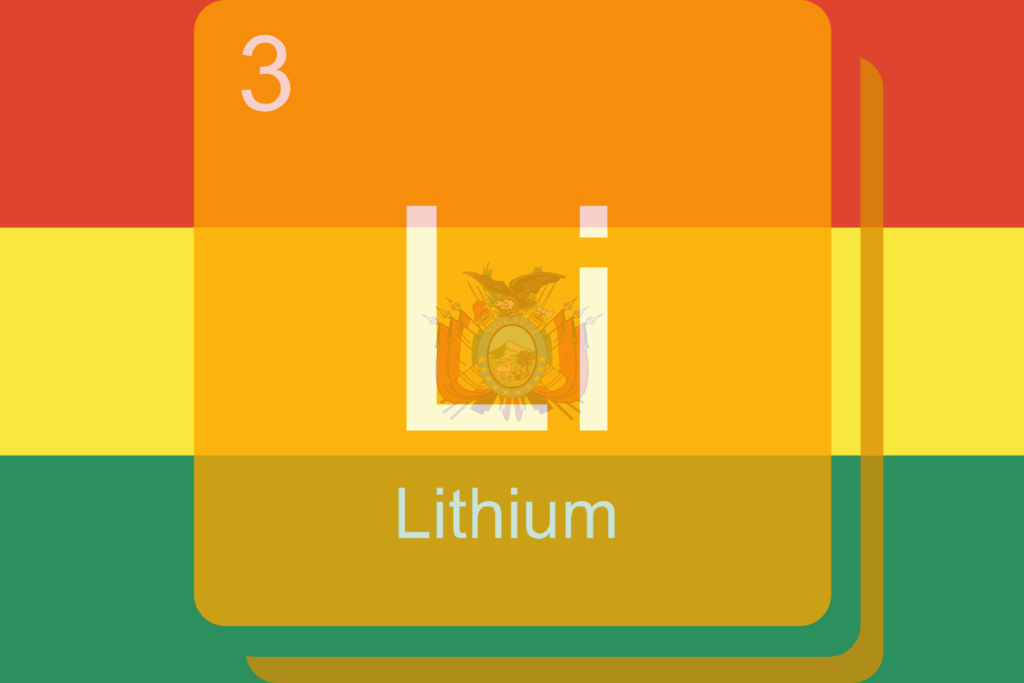
The Uyuni Salt Flat contains approximately 23 million metric tons of lithium resources—the largest deposit on Earth (USGS, 2024). In theory, Bolivia could supply one-fifth of global demand for electric vehicle batteries by the 2030s. In practice, the country produced fewer than 2,000 tons in 2024, far behind Chile and Argentina (Argus Media, 2025).
The reasons are governance and politics. In 2025, multi-billion-dollar contracts with Chinese and Russian firms were suspended, reinstated, and fought over in parliament. Congressional sessions descended into physical brawls, and local organizations in Potosí denounced the deals for ecological risk and poor fiscal terms (Reuters, 2025b; Argus Media, 2025). Civil society demands transparency, water safeguards, and fair revenue distribution.
The risks are stark. Lithium extraction threatens fragile high-altitude ecosystems, consuming massive water resources and potentially replicating the ecological damage seen in Chile’s Atacama basin (Sovacool, 2022). Without transparency and Free, Prior, and Informed Consent (FPIC), Bolivia risks another boom that enriches outsiders while leaving communities behind.
Foreign Policy Crossroads: Between Beijing and Washington
MAS governments expelled the U.S. ambassador and the DEA while deepening ties with China, Russia, and Iran (Stratfor, 2025). Both Paz and Quiroga now vow to restore relations with Washington after a 17-year rupture. Paz emphasizes pragmatic stabilization and energy security, while Quiroga calls for bold reforms and closer U.S. alignment (Bloomberg, 2025; Reuters, 2025c).
For the United States, the opportunity is immediate and strategic: either re-engage commercially through investment, development finance, and technology partnerships, or risk ceding the field once again to Beijing. At the same time, Bolivia is likely to court the European Union, Japan, and South Korea, diversifying partners beyond China’s dominance (Gallagher, 2021).
Breaking the Pattern—or Repeating It?
History casts a long shadow. Silver fueled empires but left Bolivia impoverished. Natural gas reduced poverty, but ended in depletion and debt. Now, lithium, a resource central to the global energy transition, offers Bolivia perhaps its last chance to escape the cycle.
The outcome will depend on governance. If the new administration embraces stabilization with social protection, transparency in lithium governance, and diversified foreign partnerships, Bolivia could finally turn resource wealth into sustainable prosperity. If not, lithium will become another tragic entry in a centuries-long story of squandered riches.
Conclusion: The Narrow Window
Bolivia’s 2025 elections opened a narrow window in which leadership and governance choices will reverberate far beyond La Paz. The October 19 runoff is more than a contest between Paz and Quiroga—it is a referendum on whether Bolivia can break free from its historical curse.
The urgency cannot be overstated. Without decisive action, Bolivia risks repeating the pattern of silver and gas: resources extracted, fortunes squandered, society divided, and democracy weakened. But if it seizes this moment—with inclusive stabilization, transparent lithium governance, and strategic foreign policy—Bolivia could transform itself from a perennial story of lost opportunities into a leader of the global energy transition.
The choice is stark: lithium can be Bolivia’s bridge to the future or another chapter in its long history of broken promises.
References
Argus Media. (2025, August 13). Bolivia OKs Russia Li deal in secret vote: Correction. https://www.argusmedia.com/en/news-and-insights/latest-market-news/2720780-bolivia-oks-russia-li-deal-in-secret-vote-correction
Bloomberg. (2025, August 20). Bolivia’s Paz vows to restore U.S. ties and prioritize fuel supplies. https://www.bloomberg.com/news/articles/2025-09-23/bolivia-s-paz-vows-to-restore-us-ties-secure-fuel-supplies
El País. (2025, October 1). Bolivia turns right: Paz and Quiroga head to runoff as MAS collapses. https://elpais.com/america/2025-08-18/rodrigo-paz-y-tuto-quiroga-se-disputaran-la-presidencia-de-bolivia-en-octubre.html
Gallagher, K. (2021). China’s global energy finance and implications for Latin America. Global Policy, 12(3), 300–313.
International Monetary Fund. (2025). Bolivia: 2025 Article IV Consultation Staff Report. IMF. https://www.imf.org/en/Publications/CR/Issues/2025/06/02/Bolivia-2025-Article-IV-Consultation-Press-Release-Staff-Report-and-Statement-by-the-567384
Klein, H., & Farthing, L. (2021). A concise history of Bolivia (3.ª ed.). Cambridge University Press. https://www.cambridge.org/core/books/concise-history-of-bolivia/7E46644FF00BC525835AEA067C60DD51
Madrid, R. L. (2012). The rise of ethnic politics in Latin America. Cambridge University Press. https://doi.org/10.1017/CBO9781139022590
Reuters. (2025a, August 18). Bolivia’s centrist Paz leads election; MAS suffers historic defeat. https://www.reuters.com/world/americas/bolivias-left-historic-defeat-presidential-vote-set-october-runoff-2025-08-18/
Reuters. (2025b, July 12). Fistfights erupt in Bolivia’s Congress over lithium contracts. https://www.reuters.com/world/china/bolivian-congress-brawls-over-china-russia-lithium-deals-2025-07-04/
Reuters. (2025c, August 25). Quiroga promises bold reforms and closer U.S. alignment. https://www.reuters.com/world/americas/bolivias-centrist-paz-leads-election-mas-suffers-historic-defeat-2025-08-18/
Sovacool, B. (2022). Lithium, water, and sustainability in South America’s salt flats. Energy Policy, 158, 112609.
Stratfor. (2025, agosto 6). Economic crisis fuels political shakeup in Bolivia. https://worldview.stratfor.com/article/economic-crisis-fuels-political-shakeup-bolivia
U.S. Department of State. (2025). 2025 Investment Climate Statements: Bolivia. Washington, DC: U.S. Department of State. https://www.state.gov/reports/2025-investment-climate-statements/bolivia
U.S. Geological Survey. (2024). Mineral commodity summaries: Lithium. U.S. Department of the Interior. https://pubs.usgs.gov/periodicals/mcs2024/mcs2024-lithium.pdf
The opinions expressed in this article are those of the author and do not necessarily reflect the views of the Miami Strategic Intelligence Institute (MSI²).