18 Jan Energy, Influence, and the Dollar: Why Panama and Venezuela Mark a Turning Point in U.S. Hemisphere Strategy
By,
CDR José Adán Gutiérrez, USN (Ret), Senior Fellow, MSI²
Dr. Rafael Marrero, Founder and Chief Economist, MSI²
Prefatory Note: This analysis is published as the Miami Strategic Intelligence Institute prepares the release of Chinese Social Imperialism: The CCP’s Expanding Footprint in Latin America, authored by CDR José Adán Gutiérrez, USN (Ret), and Dr. Rafael Marrero, Chief Economist.
Anchored in the 2025 United States National Security Strategy and National Defense Strategy, the forthcoming volume examines in far greater depth the cumulative strategy through which the People’s Republic of China has expanded economic, technological, cognitive, and institutional influence across Latin America and the Caribbean, as well as the evolving United States response to that challenge.
While the book provides a systems-level examination of hemispheric competition, the present paper focuses on two recent cases, Panama and Venezuela, as early operational examples of the strategic reversal now underway.
Abstract
This paper examines United States actions in Panama and Venezuela from 2025 through early 2026 as early operational manifestations of the Western Hemisphere-focused doctrine articulated in the 2025 National Security Strategy. It argues that key elements of this strategy were implemented before the document’s public release, demonstrating that execution preceded formal doctrinal codification.
Through coordinated use of diplomatic, economic, legal, informational, and military instruments of national power, the United States achieved measurable reversals of Chinese, Russian, Iranian, and Cuban influence in both cases. The paper further evaluates the strategic consequences of these actions, including the disruption of coordinated efforts by China, Russia, and BRICS-aligned states to weaken the U.S. dollar’s role in global energy markets, and assesses how these precedents are likely to shape future U.S. behavior in the hemisphere.
1. Introduction: Strategy Implemented Before Doctrine
The 2025 National Security Strategy marked a decisive reorientation of the United States’ grand strategy toward the Western Hemisphere. Signed in late November 2025 and released publicly in early December, the document formalized a view that had already been shaping policy, namely that vulnerabilities in the hemisphere translate directly into vulnerabilities inside the United States (White House, 2025).
Rather than announcing a new doctrine and subsequently acting upon it, the administration pursued concrete measures in the Americas earlier in 2025 that reflected a reassessment of regional priorities. These measures were driven by growing concern that China, Russia, Iran, and aligned partners had exploited economic dependency, governance fragility, and institutional capture to entrench themselves across critical sectors in Latin America (White House, 2025).
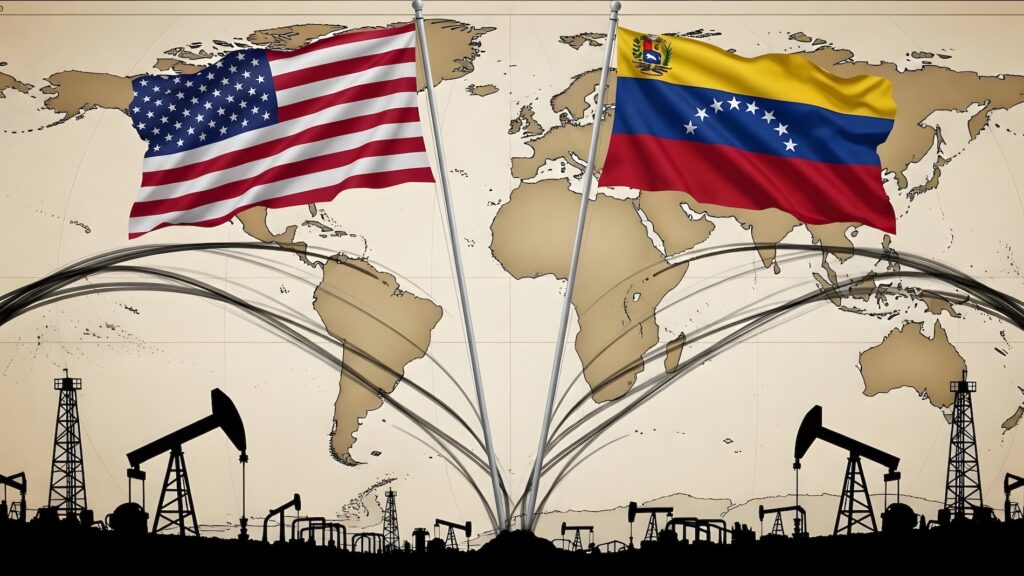
Panama and Venezuela emerged as early test cases. Each required a distinct application of power, yet both reflect a shared strategic objective: denying extra-hemispheric actors durable influence over infrastructure, energy, financial flows, and national decision-making in the Western Hemisphere.
2. The 2025 National Security Strategy and the Western Hemisphere
The 2025 National Security Strategy elevates the Western Hemisphere to a central pillar of United States security planning. The document frames the region as a frontline of homeland defense and identifies non-hemispheric powers as seeking to exploit economic and technological leverage to undermine sovereignty and U.S. interests (White House, 2025).
The strategy emphasizes protection of critical infrastructure, denial of strategic access, and the coordinated use of all instruments of national power. Analysts have characterized this posture as a modernized reaffirmation of hemispheric primacy, expressed not through territorial claims but through competition over infrastructure, energy systems, and financial architecture (Brookings Institution, 2025).
Crucially, the strategy links economic security, energy markets, and financial leadership as mutually reinforcing components of national power. This linkage is essential for understanding the strategic significance of Panama and Venezuela.
3. Panama: Strategic Recalibration and the Prevention of Infrastructure Capture
3.1 Strategic Risk Environment
Panama’s strategic importance stems from the Panama Canal, a vital artery for global trade and the United States’ naval mobility. Following Panama’s recognition of the People’s Republic of China in 2017, Chinese state-linked enterprises expanded their presence in port operations and logistics infrastructure near the canal. By the early 2020s, U.S. assessments increasingly viewed this trend as a long-term risk to canal neutrality and strategic access (U.S.–China Economic and Security Review Commission, 2023).
3.2 Policy Shift in 2025
In February 2025, Panama announced it would not renew its memorandum of understanding with China under the Belt and Road Initiative. The decision followed direct engagement with senior U.S. officials who emphasized sovereignty, treaty obligations, and security concerns associated with foreign control of infrastructure near the canal (Newsroom Panama, 2025).
The timing is significant. Panama’s decision preceded the public release of the 2025 National Security Strategy, illustrating that U.S. policy execution anticipated doctrinal publication rather than following it.
3.3 Instruments of Power Applied
The United States relied primarily on diplomatic, economic, and informational tools. High-level engagement framed the issue as one of national autonomy rather than ideological alignment. Economic signaling underscored the long-term costs of strategic dependency. The outcome demonstrated that recalibration was possible where local political conditions allowed and where U.S. engagement was sustained and credible.
4. Venezuela: Coercive Pressure and Strategic Disruption
4.1 Venezuela as a Platform for Extra-Hemispheric Influence
By 2025, Venezuela had become a convergence point for Chinese financial leverage, Russian security cooperation, Iranian sanctions-evasion networks, and Cuban intelligence penetration. China extended oil-backed financing. Russia maintained military and energy ties. Iran facilitated fuel shipments and technical cooperation. Cuba embedded intelligence and security personnel throughout Venezuela’s internal security institutions (Congressional Research Service, 2025).
From a United States perspective, Venezuela represented not only a humanitarian and governance crisis but also a hostile platform for adversarial influence in the hemisphere.
4.2 Escalation and Capture
Throughout 2025, the United States escalated pressure through sanctions enforcement, maritime interdictions, and legal actions grounded in longstanding indictments related to narcotics trafficking and terrorism financing (U.S. Department of Justice, 2020).
In early January 2026, U.S. forces captured dictator Nicolás Maduro and his wife, Cilia Flores. Both were transferred to the United States and arraigned in federal court in New York on narcotics and terrorism-related charges. This outcome will have a significant impact on the Hemisphere’s geopolitical balance, as well as on the world’s economy.
4.3 Strategic Significance
The capture of Maduro represents the most forceful United States action in the hemisphere in decades. It reflects a coordinated application of intelligence, legal authority, economic pressure, and military power consistent with the logic articulated in the 2025 National Security Strategy.
5. Energy, Currency Power, and the Disruption of De-Dollarization Efforts
Beyond regime disruption, Venezuela occupies a central position in a broader contest over the international monetary system. China and Russia, with political backing from several BRICS-aligned states, have sought to reduce reliance on the U.S. dollar in global trade, particularly in energy markets (International Monetary Fund, n.d.; Reuters, 2023).
The oil trade is foundational to the dollar’s primacy. Since the 1970s, dollar-denominated oil transactions have reinforced global demand for U.S. currency and underwritten American financial power. Displacing the dollar from energy markets is therefore widely viewed by U.S. competitors as a necessary precursor to broader de-dollarization (International Monetary Fund, n.d.).
Venezuela was uniquely positioned to serve as a test case. It holds the world’s largest proven oil reserves and has already been partially removed from dollar-based markets due to sanctions. China and Russia explored mechanisms to settle Venezuelan oil sales in alternative currencies, including yuan-denominated arrangements and opaque barter systems routed through third countries (Reuters, 2023; U.S. Energy Information Administration, 2024).
By reasserting control over Venezuelan oil production and export channels, the United States disrupted this trajectory. Venezuelan crude is once again subject to U.S. legal, financial, and enforcement frameworks, removing a key platform for energy-based de-dollarization and reinforcing the objectives articulated in the 2025 National Security Strategy (White House, 2025).
6. Strategic Consequences for China, Russia, Iran, and Cuba
China’s ambitions to internationalize the yuan through commodity trade suffered a tangible setback. Russia’s efforts to construct sanction-resilient energy markets outside the dollar system were constrained. Iran lost a critical partner for evading sanctions and experimenting with alternative trade (Reuters, 2026).
Cuba experienced the most severe consequences. Venezuelan oil had accounted for a substantial portion of Cuba’s energy supply. U.S. enforcement actions and political disruption sharply curtailed these flows, exacerbating Cuba’s economic crisis and dismantling its intelligence foothold in Caracas (Reuters, 2026).
7. Implications for Future U.S. Hemisphere Policy
The Panama and Venezuela cases suggest that the United States intends to sustain a more assertive hemispheric strategy focused on early intervention, strategic denial, and financial as well as security resilience. Future efforts are likely to prioritize prevention of infrastructure capture, protection of energy markets, and reinforcement of governance capacity as buffers against external manipulation.
8. Conclusion
United States actions in Panama and Venezuela since early 2025 demonstrate that the Western Hemisphere focus articulated in the 2025 National Security Strategy was already being implemented in practice. These actions produced measurable effects, including the rollback of Chinese influence in Panama, the collapse of a hostile regime in Venezuela, and the disruption of coordinated efforts to weaken the U.S. dollar through energy markets.
These developments are examined in greater depth in the forthcoming volume Chinese Social Imperialism: Beijing’s Silent Infiltration of Ports, Space, Minerals, and Minds in the Americas, which analyzes both China’s long-term hemispheric strategy and the evolving United States response across economic, technological, cognitive, and security domains. Together, the book and this analysis underscore a central conclusion: the Western Hemisphere has reemerged as a decisive arena of strategic competition, and United States policy is now acting accordingly.
References
Associated Press. (2026, January 5). Maduro says “I was captured” as he pleads not guilty to drug trafficking charges. Associated Press. https://apnews.com/article/131f59e517cc8314a53c8dace230d328
Associated Press. (2026, January 7). What’s next in deposed Venezuelan leader Nicolás Maduro’s criminal case. Associated Press. https://apnews.com/article/maduro-venezuela-criminal-case-whats-next-5aebeae4392b4f24b816da0f2ee893f2
Brookings Institution. (2025, December 8). Breaking down Trump’s 2025 National Security Strategy. Brookings Institution. https://www.brookings.edu/articles/breaking-down-trumps-2025-national-security-strategy/
CBS News. (2026, January 6). Ousted Venezuelan President Nicolás Maduro arraigned in U.S. court. CBS News. https://www.cbsnews.com/live-updates/venezuela-trump-maduro-charges/
Congressional Research Service. (2025, September 30). Venezuela: Political crisis and U.S. policy (IF10230). https://www.congress.gov/crs-product/IF10230
International Monetary Fund. (n.d.). Currency composition of official foreign exchange reserves (COFER). https://data.imf.org/en/datasets/IMF.STA:COFER
Newsroom Panama. (2025, February 2). Panama will not renew the memorandum on the Silk Road with China. Newsroom Panama. https://newsroompanama.com/2025/02/02/panama-will-not-renew-the-memorandum-on-the-silk-road-with-china/
PBS NewsHour. (2025, February 6). Rubio presses Panama to reduce Chinese influence over its canal or face U.S. measures. PBS NewsHour. https://www.pbs.org/newshour/politics/rubio-presses-panama-to-reduce-chinese-influence-over-its-canal-or-face-u-s-measures
Reuters. (2023, May 11). Vast China-Russia resources trade shifts to yuan from dollars after Ukraine fallout. Reuters. https://www.reuters.com/markets/currencies/vast-china-russia-resources-trade-shifts-yuan-dollars-ukraine-fallout-2023-05-11/
Reuters. (2026, January 8). Cubans brace for more hardship as U.S. pressure on Venezuela chokes off oil. Reuters. https://www.reuters.com/world/americas/cubans-brace-more-hardship-us-pressure-venezuela-chokes-off-oil-2026-01-08/
U.S. Department of Justice. (2020, March 26). Manhattan U.S. Attorney announces narco-terrorism charges against Nicolás Maduro Moros and other Venezuelan officials. U.S. Department of Justice. https://www.justice.gov/usao-sdny/pr/manhattan-us-attorney-announces-narco-terrorism-charges-against-nicolas-maduro-current
U.S. Department of Justice. (2020, March 26). Nicolás Maduro Moros and 14 current and former Venezuelan officials charged with narco-terrorism. U.S. Department of Justice. https://www.justice.gov/archives/opa/pr/nicol-s-maduro-moros-and-14-current-and-former-venezuelan-officials-charged-narco-terrorism
U.S. Energy Information Administration. (2024, February 8). Venezuela country analysis brief. https://www.eia.gov/international/analysis/country/VEN
U.S.–China Economic and Security Review Commission. (2023). 2023 annual report to Congress. https://www.uscc.gov/sites/default/files/2023-11/2023_Annual_Report_to_Congress.pdf
White House. (2025). National Security Strategy of the United States of America (November 2025). https://www.whitehouse.gov/wp-content/uploads/2025/12/2025-National-Security-Strategy.pdf
The opinions expressed in this article are those of the author and do not necessarily reflect the views of the Miami Strategic Intelligence Institute (MSI²).