21 Jun Guatemala Lost at the Border: Ports, Narcotrafficking, and Corruption
By,
Jesús Romero. Co-Founder & Senior Fellow, MSI²
I. Introduction: A Captured State. Guatemala does not merely suffer from porous borders; its state has been captured by entrenched corruption networks embedded at the highest levels of power.
Institutional capture has turned ports, customs offices, prosecutors’ offices, and even the Ministry of Defense itself into platforms for criminal and foreign interests. The consequence is evident in the major cocaine seizures abroad that repeatedly trace their origin back to Guatemalan territory.
Even more troubling, intelligence sources report that high-ranking officials—including the Minister of Defense himself—may be involved in selling off strategic properties to front companies linked to the Chinese Communist Party. In this context, organized crime and foreign actors not only operate with impunity but appear to be dictating the true direction of state policy.
II. Massive Shipments Originating from Guatemalan Ports
In December 2024, authorities in the Dominican Republic seized 9.8 metric tons of cocaine in a banana container that had departed from Puerto Barrios, Guatemala, en route to Belgium. Chiquita Guatemala confirmed the container had been scanned with no anomalies upon departure, while the Guatemalan government claimed the drugs were inserted in the Dominican Republic.
In June 2025, Spain seized 1,190 kg of cocaine hidden in 14 containers of recycled cardboard from Guatemala. Operation “Shuko” became the largest bust of its kind in two decades.
In the United States, CBP intercepted nearly 13 kg of cocaine dissolved in chocolate powder and over 100 kg hidden in fresh fruit, all shipped from Guatemala. In each instance, the drugs passed through Guatemalan customs without detection.
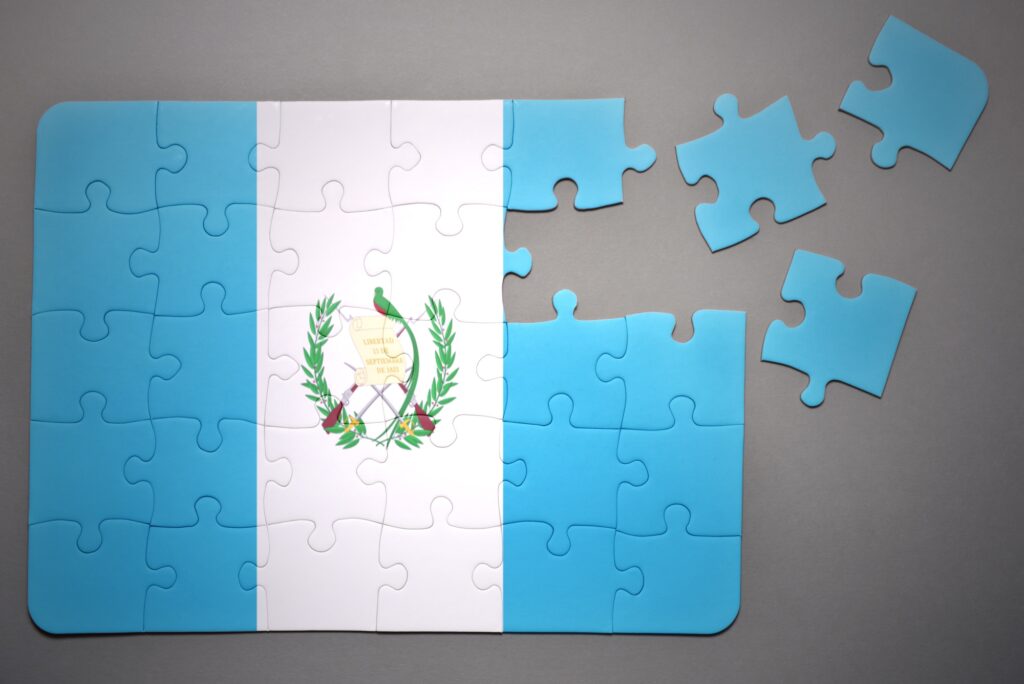
III. Weak Borders, Surrendered Ports
In 2024, Guatemala reported domestic seizures totaling 18.2 metric tons, a 264% increase compared to 2023. However, the largest drug seizures occur outside the country, revealing major failures—or complicity—within Guatemalan customs control systems.
IV. A Minister Under Suspicion
Confidential sources indicate that the Minister of Defense is promoting the sale of strategic military properties to companies tied to the Chinese Communist Party, using covert administrative favors. Among the assets reportedly involved are logistics centers and lands near ports and border zones.
V. A Co-opted Prosecutor’s Office, Neutralized Justice
Attorney General Consuelo Porras has been sanctioned by the United States for obstructing anti-corruption investigations. Under her leadership, the Public Ministry has persecuted honest prosecutors, independent judges, and journalists like José Rubén Zamora, ensuring impunity for the highest levels of power, including any investigations into the Ministry of Defense.
VI. Telling Silences
The most revealing aspect of this crisis is not what is said, but what is not said. Mexican President Claudia Sheinbaum has not met with Guatemalan President Bernardo Arévalo following the border shooting in La Mesilla. The Defense Minister was also conspicuously absent during former U.S. Ambassador Christopher Landau’s visit.
Even more revealing was his absence during the presidential tour to Taiwan from June 5 to 8, 2025. President Arévalo traveled to Taipei accompanied by the Foreign Minister and the Economy Minister, but the Defense Minister was not reported as part of the official delegation.
Rather than reaffirm national sovereignty during a geopolitically symbolic tour, the head of Defense chose to remain absent, deepening suspicions about his lack of institutional alignment and possible personal agendas.
While drug cartels cross borders with impunity and strategic state assets are quietly negotiated away, those entrusted with defending the nation’s sovereignty are hiding behind empty gestures and fabricated agendas.
These silences are not diplomacy.
They are complicit.
VII. Conclusion: Diplomatic Visits Change Nothing
Despite repeated visits from high-ranking U.S. officials—secretaries, undersecretaries, and State Department envoys—corruption persists, and the pact of impunity between customs authorities and the Ministry of Defense remains unbroken.
As long as corruption continues to win, Guatemala will be unable to secure its borders, defend its sovereignty, or disengage from international drug trafficking.
References
ContextoHN. (2025, June 2). President Arévalo of Guatemala begins tour of Taiwan and Japan in search of investment and tourism. ContextoHN https://contextohn.com/internacionales/presidente-arevalo-de-guatemala-inicia-gira-por-taiwan-y-japon-en-busca-de-inversiones-y-turismo/
EFE Agency. (2025, May 26). Bernardo Arévalo will visit Taiwan and Japan in June to strengthen bilateral relations. Destino Panamá. https://www.destinopanama.com.pa/2025/05/bernardo-arevalo-visitara-taiwan-y-japon-en-junio-para-reforzar-las-relaciones-bilaterales/
Prensa Libre. (2025, June 4). Bernardo Arévalo arrives in Taiwan to meet with President William Lai and sign a letter of cooperation. Prensa Libre. https://www.prensalibre.com/guatemala/politica/bernardo-arevalo-arrives-in-taiwan-to-meet-with-president-william-lai-and-sign-a-cooperation-letter-breaking/
Prensa Libre. (2025, June 6). China reacts after Arevalo’s visit to Taiwan and asks Guatemala to make the right decision soon. Prensa Libre. https://www.prensalibre.com/guatemala/politica/china-reacts-after-arevalo-s-visit-to-taiwan-and-asks-guatemala-to-make-the-right-decision-pronto-breaking/
The opinions expressed in this article are those of the author and do not necessarily reflect the views of the Miami Strategic Intelligence Institute (MSI²).