30 Dec María Corina Machado, Leader of Democracy
By,
Pedro Corzo, Senior Fellow, MSI²
A few days ago, I was talking with two dear friends, businessman Kemel Jamis and writer José Antonio Albertini, about the lack of leaders in Latin America who possess a democratic vision on a hemispheric scale.
We went back to the 19th century and the mid-20th century, noting that they were times rich in notable figures in all imaginable spheres, such as Simón Bolívar, José de San Martín, José Martí, Juan Domingo Perón, Francisco I. Madero, and many others; however, we agreed that in this 21st century, there appears to be a kind of leadership aridity with regard to politics in general, and even more so among those who have an explicit commitment to democracy in particular.
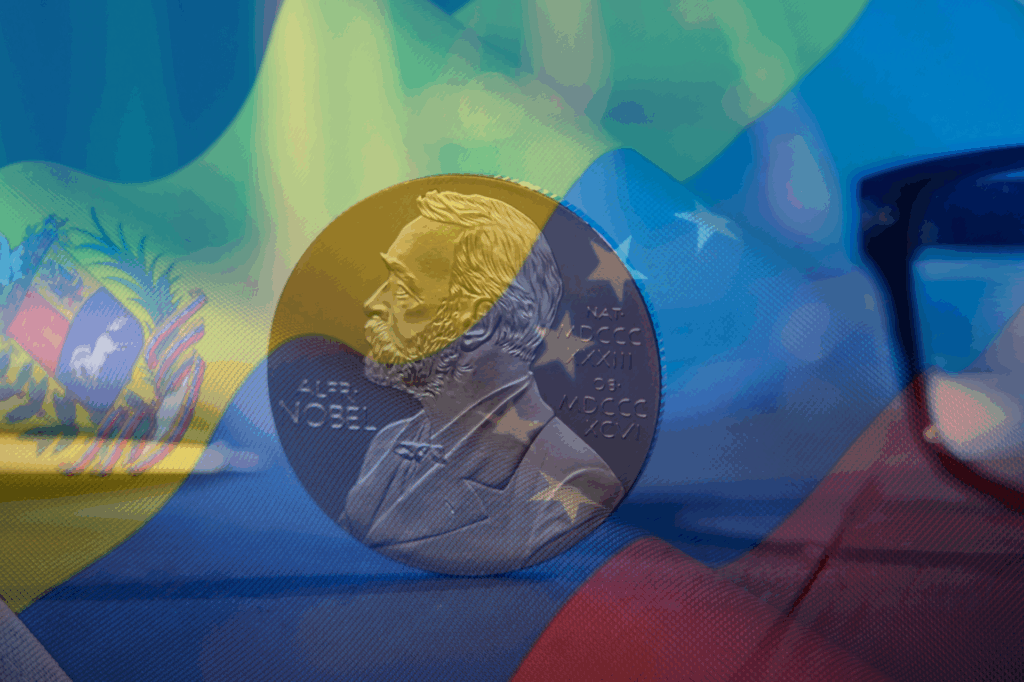
At that moment, Jamis intervened and pointed out that he is certain that this hemispheric leadership vacuum can and will be filled by María Corina Machado, the Venezuelan leader and Nobel Peace Prize laureate, who has shown herself to be brimming with talent and courage, as when, in a full national assembly led by Hugo Chávez, she confronted him and called him a thief, even though the majority was against her.
The reality is that Latin America has suffered from a chronic lack of leaders firmly committed to democracy, specifically those who have distinguished themselves or will distinguish themselves through their continental projection, although we must admit that notable personalities have also been scarce at the national level, with exceptions such as former Colombian president Álvaro Uribe and current Argentine leader Javier Milei.
Moreover, it must be said that the majority of national leaders have shown very little vision regarding the dangers facing democracy from Castro-Chavismo and its variants, and a very limited spirit of solidarity with the republics that have been subjected to autocrats, among which Cuba, Venezuela, and Nicaragua must be counted.
On the other hand, despotism and autocracies have had no shortage of prominent leaders, among whom Fidel Castro and Hugo Chávez stand out at the continental level, and Nicolás Maduro, Rafael Correa, Daniel Ortega, Evo Morales, Manuel Noriega, and Mel Zelaya at the national level, individuals who, all of them, leave much to be desired regarding the discernment of their followers and of those who have promoted and supported them for decades without taking into account their abuses and plundering.
One autocrat who must not be left out is Augusto Pinochet. The Chilean dictator could have been a hemispheric leader, though not a democratic one, as a consequence of having been the architect of the overthrow of an unconditional ally of Fidel Castro and all his associates, Salvador Allende, who was an important figure of the vegan left, if such a thing exists, with a strong inclination toward cannibalism.
It is worth noting that there are figures who could be placed in one or the other of these categories, such as Luiz Inácio Lula da Silva, Nayib Bukele, Michelle Bachelet, and the Kirchner-Fernández couple, since the deep contradictions into which they have fallen in their respective leaderships, both domestically and in their foreign policy, leave to the judgment of any observer their future placement, although for the moment this observer would place da Silva and Kirchner-Fernández among the enemies of hemispheric democracies, in the same category as Castro and Chávez; the complicit conduct of the three reached aberrant levels.
National leaders are a fundamental anchor in any country, a presence that should not be confused with that of caudillos or satraps in the service of minorities, just as international paradigms are needed that can synthesize, through their leadership and proposals, the most cherished aspirations of citizens.
I fully share the proposal of Jamis and Albertini that Mrs. María Corina Machado can fully assume continental leadership, since she has demonstrated strong democratic convictions, honoring her commitment to those who value freedom and citizens’ rights above all else, and finally, because she does not fear her enemies.
María Corina, as has occurred throughout history when despots attempt to break those who challenge them, has risen and reached unimaginable heights even for her most faithful supporters, as were the elections of July 28, 2024, and the fact that an adversary of the political left, yet a consistent politician, achieved the Nobel Peace Prize thanks to her constant sacrifice and exemplary integrity.
The opinions expressed in this article are those of the author and do not necessarily reflect the views of the Miami Strategic Intelligence Institute (MSI²).