30 Oct Op-Ed: Milei, Trump, and South Atlantic Geopolitics
By,
Fabián Calle, Argentina Liaison & Senior Fellow, MSI²
The relationship between Javier Milei and Donald Trump cannot be understood solely through ideological affinity or political style. Geopolitical, strategic, and economic factors help explain why the United States, under the current Republican administration, has given such strong and, for many, unexpected support to the Argentine government.
The South Atlantic and Antarctica: The Strategic Playing Field
One of the key elements is the growing importance of the South Atlantic. In the event of a global conflict, US aircraft carriers would not enter through Panama, which can also be neutralized with relative ease. Maritime projection to the south is vital, especially with the Antarctic on the horizon: the Antarctic Treaty expires in less than thirty years, and the major powers (primarily the United States and China) are already considering a scenario of melting ice, exploitation of natural resources, and increased competition.
In this context, Argentina acquires a strategic weight that transcends the regional level.
A Harsh Neighborhood with Washington
The South American political map does not favor the United States. Brazil, under Lula, maintains a tense relationship with Washington: ideologically confrontational, close to Venezuela, China, Russia, and Iran, with rhetoric aimed at weakening the dollar or justifying aggression from Moscow and Tehran. Chile, although with changes on the horizon, remains governed by the left; Petro in Colombia is even more hostile toward Washington. Against this backdrop, Milei presents himself as a unique ally: pro-American, pro-Western, and pro-capitalist.
Trump and Political Memory
Beyond geopolitics, Milei skillfully cultivated his personal relationship with Trump. He publicly supported him when many considered Kamala Harris’s victory a foregone conclusion. In international politics, such a gesture is not forgotten. Trump remembers those who stood by him in difficult times.
Furthermore, his administration includes key figures who know Latin America well: Marco Rubio at the State Department, Mike Waltz as U.S. Ambassador to the UN, and Susan Wiles as chief of staff. Many of these figures are from Florida, speak Spanish, and understand the political nuances of the region. Therefore, it was no surprise that one of the first measures was to impose sanctions on Cristina Fernández de Kirchner, her children, and associates for being “significantly corrupt,” restricting visas and business dealings with U.S. companies.
Unprecedented Economic Support
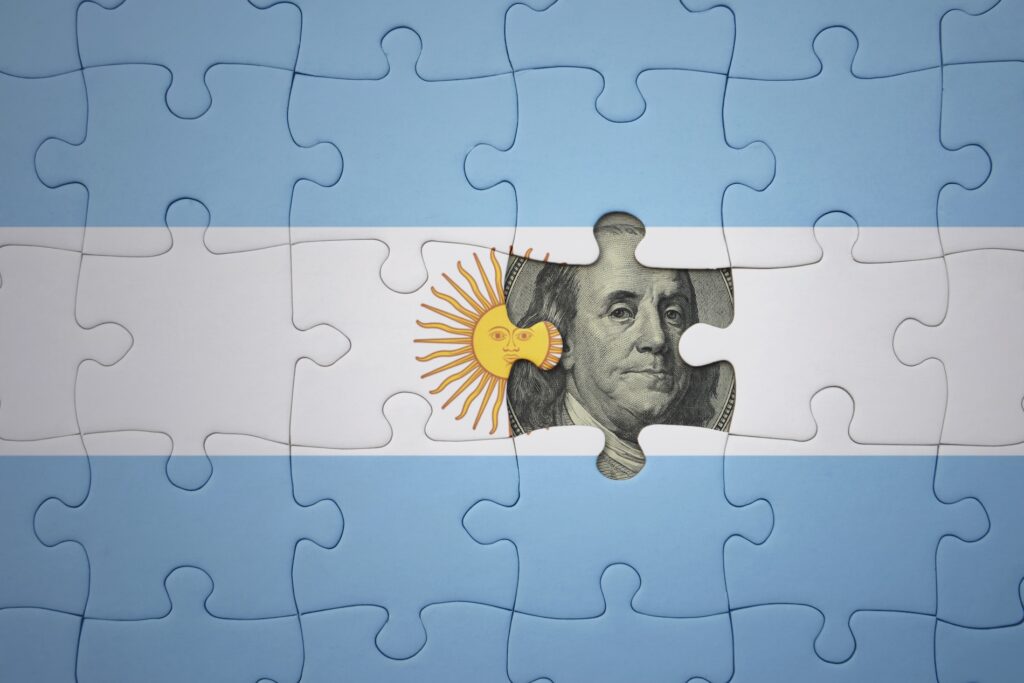
This political and personal network resulted in concrete support: a currency swap that allows Argentina to more easily meet its external obligations in 2026 and even part of 2027, in addition to direct interventions by purchasing pesos. Washington had previously only intervened in yen and euros, never in the Argentine currency.
Milei’s Social Mandate
Domestically, Milei took office with a clear social mandate: to stabilize the economy and control inflation. In 2023, Argentina was sinking into chaos with prices changing daily and inflation projected to reach five-figure hyperinflationary levels. Today, the country shows signs of recovery: estimated growth of around 4-5% for this year and next, drastically reduced inflation, and unemployment that, while it has risen, has not done so alarmingly.
This economic achievement largely explains the outcome of the recent legislative elections. The “inner circle” and part of the press failed to read the social climate: the public rewarded stabilization after the 2019-2023 disaster, a period that left a traumatic mark and even erased from the collective memory the recollection of Fernando de la Rúa’s collapse.
The confluence of geopolitical factors, Milei’s personal commitment to Trump, and internal economic stabilization combined to create an unprecedented scenario: Argentina has emerged as Washington’s main strategic ally in the region. This position, far from being circumstantial, could shape the course of hemispheric politics in the years to come.
The opinions expressed in this article are those of the author and do not necessarily reflect the views of the Miami Strategic Intelligence Institute (MSI²).