
05 Aug Op-Ed: Taiwan and Belize, a Model of Cooperation Amid Honduran Disenchantment with China
By,
Dr. Orlando Gutiérrez-Boronat, Senior Fellow | MSI2
While Belize celebrates this expansion of economic and diplomatic ties, Honduras faces the consequences of a miscalculated gamble.
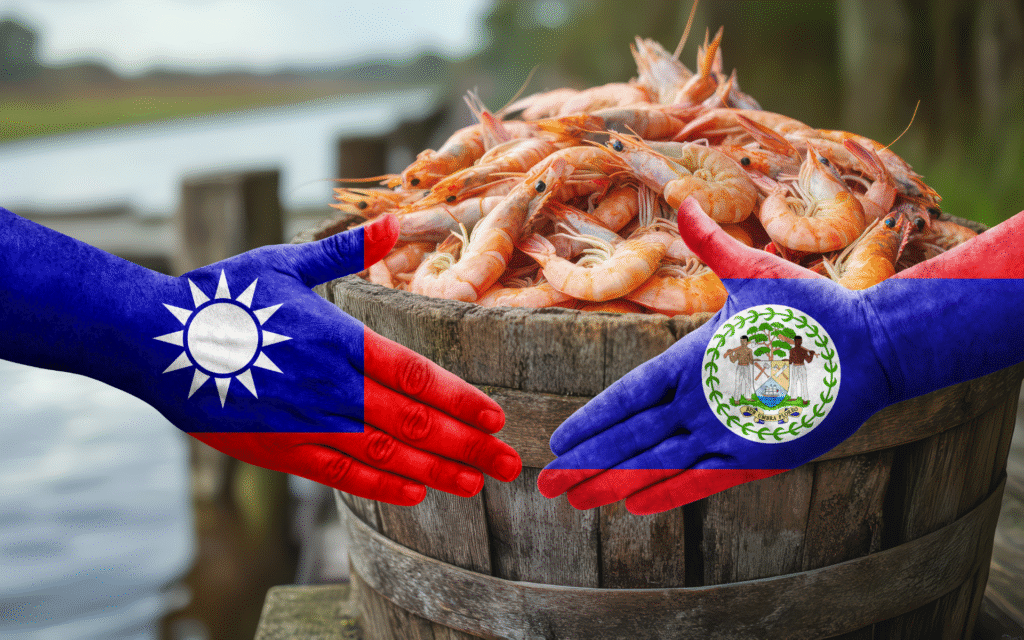
On July 30, 2025, the Taiwanese government announced that shrimp from Belize will be able to enter the Taiwanese market tariff-free. This decision goes beyond purely commercial considerations: it represents Taiwan’s sustained commitment to a diplomacy focused on mutual respect, trust among allies, and shared development, especially with Latin American and Caribbean countries that share democratic principles.
While Belize celebrates this expansion of economic and diplomatic ties, Honduras faces the consequences of a miscalculated gamble. Since breaking relations with Taiwan in March 2023 to move closer to the People’s Republic of China, the Central American country has seen one of its main export industries, shrimp farming, collapse. According to media reports, exports to Taiwan fell by 74%, from 2,580 million pounds to just 840 million. This decline translated into the loss of thousands of jobs in coastal communities and a significant reduction in foreign currency earnings.
The promises of privileged access to the Chinese market quickly faded. Far from generating real new opportunities, China absorbed minimal export volumes at low prices and without guarantees of stability, leaving Honduras trapped between economic frustration and growing geopolitical dependence.
China’s Coercive Diplomacy: Silence to Obey
But the situation is not limited to the economic arena. In the context of the Honduran presidential elections in November 2025, two key candidates—Salvador Nasralla (Liberal Party) and Nasry “Tito” Asfura (National Party)—have expressed their intention to reestablish diplomatic relations with Taiwan if elected. Nasralla, a former vice president, stated that “Honduras was much better off when it cooperated with Taiwan,” while Asfura proposed a foreign policy based on a strategic alliance with the United States, Israel, and Taiwan.
These statements provoked an immediate reaction from the Chinese Embassy in Tegucigalpa, which publicly urged the candidates to “correct their words before it’s too late.” This type of covert diplomatic warning demonstrates how Beijing does not tolerate the political independence of its “partners” and resorts to direct pressure to influence countries’ internal debate.
At the same time, this authoritarian dynamic has also reached the Caribbean. In July 2025, Dominican politician and academic Pelegrín Castillo publicly denounced China’s double standards in the Greater Caribbean region, criticizing its geopolitical use of the area vis-à-vis the United States and its indifference to the crisis in Haiti. The Chinese Embassy in Santo Domingo responded with a strongly worded statement, calling his statements “groundless, erratic, and laden with ideological bias,” and suggesting that the academic should retract his remarks. This attempt to silence a critical voice once again demonstrates the pattern of censorship that China seeks to impose even outside of South America.
These cases reveal a deeply authoritarian diplomatic model: Beijing exchanges promises for obedience, distorts markets through unfair subsidies, and represses any voice that questions its narrative. Latin America and the Caribbean, regions with a long history of fighting for self-determination, cannot allow their sovereign decisions to be treated as chess pieces in a foreign power game.
Taiwan: Concrete Results Under Integrated Diplomacy and the Prosperity Project for Diplomatic Allies
In the face of this coercive approach, Taiwan has built an alternative foreign policy model centered on Integrated Diplomacy, a strategy that articulates bilateral cooperation, specialized technical assistance, and sustainable multilateral alliances. This vision is operationalized through the Prosperity Project for Diplomatic Allies, an initiative that seeks to promote sustainable development, strengthen economic security, and increase the institutional resilience of its diplomatic partners.
Unlike the methods of other global actors, Taiwan does not impose political conditions or take advantage of structural imbalances. Instead, it promotes tangible benefits and assistance tailored to local priorities. A clear example of this is the recent agreement allowing tariff-free entry of Belizean shrimp into the Taiwanese market: Belize not only gains access to a high-value market, but also receives technical support in fisheries health standards, assistance in international certification processes, and support from multilateral organizations.
This approach has also been reflected in joint projects with Guatemala, Paraguay, and Eswatini, where comprehensive programs in technical education, sustainable agriculture, community health, and digital transformation have been developed. All of these initiatives are based on a logic of co-responsibility and respect for the sovereignty of the recipient country, generating concrete and sustainable impacts.
For Taiwan, international cooperation is not a tool of domination, but a platform for mutual development. Within the framework of Integrated Diplomacy and the Prosperity Project for Diplomatic Allies, allies are not subordinates or clients, but friendly nations moving together toward a more just, free, and prosperous future.
A lesson for Latin America and the Caribbean
The Honduran experience should serve as a warning to other countries in the region that, in recent years, have chosen to cut ties with Taiwan in exchange for short-term promises from China. Panama, for example, could reconsider whether the commitments made to Beijing have resulted in real development or have merely generated a structural dependency that limits its sovereign decision-making capacity.
Renewing ties with Taiwan is not a matter of diplomatic nostalgia, but a strategic decision aimed at autonomy, genuine cooperation, and building a more balanced future. Taiwan has demonstrated with actions—not propaganda—that it is a transparent, trustworthy partner firmly committed to the well-being of its allies.
Conclusion: Committing to Taiwan is Committing to Freedom, Dignity, and Development
Latin America and the Caribbean today face the challenge of redefining their role in an increasingly polarized international order. Faced with the pressure, censorship, and empty promises that characterize certain actors, the cooperation model offered by Taiwan stands out as an ethical, effective, and sustainable alternative.
Belize chose to build. Honduras regrets having lost. Countries that value freedom, sovereignty, and progress must clearly observe which of these paths they wish to follow.
Because true cooperation is not imposed: it accompanies, respects, and transforms.
The opinions expressed in this article are those of the author and do not necessarily reflect the views of the Miami Strategic Intelligence Institute (MSI²).