04 Jan Opinion – The Capture of Nicolás Maduro: A Turning Point in the Fight Against Continental Socialism
By,
Julio M. Shiling, contributor
In the early hours of January 3, 2026, the world awoke to stunning news: Venezuelan dictator Nicolás Maduro and his wife, Cilia Flores, had been captured in a bold operation led by the United States. While the details of the raid, reportedly involving elite special forces, cyber disruptions, and local intelligence assets, remain shrouded in secrecy, the implications are profound.
This daring action represents a radical shift in U.S. foreign policy. It signals a new paradigm aimed at directly confronting the scourge of continental socialism throughout Latin America. For far too long, this ideological cancer has been financed by illicit drug trafficking, allowing it to spread and metastasize. The fall of the Maduro regime, should it come to pass, would not simply be the overthrow of a tyrant. It would be a deliberate strike against a network that has poisoned the hemisphere, subsidized by drug profits and backed by foreign adversaries.
The roots of this crisis trace back to decades of U.S. disengagement from Latin America. After the end of the Cold War, American attention shifted to the Middle East, Europe, and Asia, leaving a vacuum in its own backyard. Into this vacuum stepped opportunistic powers: China, with its Belt and Road investments and resource extraction; Russia, arming regimes and interfering in elections; Iran, exporting its revolutionary fervor through proxy militias; and North Korea, acting as China’s surrogate in arms deals and nuclear technology transfers. These nations exploited regional instability, propping up leftist governments that promised equality but delivered poverty and repression. Venezuela, under Maduro, became a paradigmatic example: a failed state where hyperinflation, food shortages, and human rights abuses became normalized under the pretense of “Bolivarian socialism.”
This socialism is not a relic of the past but a mutated form of communism that evolved after the collapse of the Soviet Union in 1991. The São Paulo Forum, founded in 1990 by Fidel Castro and Luiz Inácio Lula da Silva, embodied this adaptation. It provided a blueprint for dictatorial governance disguised as “democratic” socialism, linking leftist movements from Argentina to Nicaragua. At its core stood communist Cuba, the new imperial hub, exerting influence far beyond its island borders. Deprived of Soviet subsidies, Havana reinvented itself as an ideological vanguard, exporting doctors, spies, and revolutionaries in exchange for resources. Venezuela’s vast oil reserves became Cuba’s lifeline, with Maduro sending millions of barrels at subsidized prices, estimated at over $30 billion since 2000. This petro-diplomacy was reinforced by darker revenues: the drug trade, in which Venezuelan officials, including Maduro’s inner circle, allegedly facilitated cocaine trafficking through the “Cartel of the Suns.” Neo-slavery labor, in the form of forced work in mines and farms, further swelled the coffers, turning human suffering into ideological fuel.
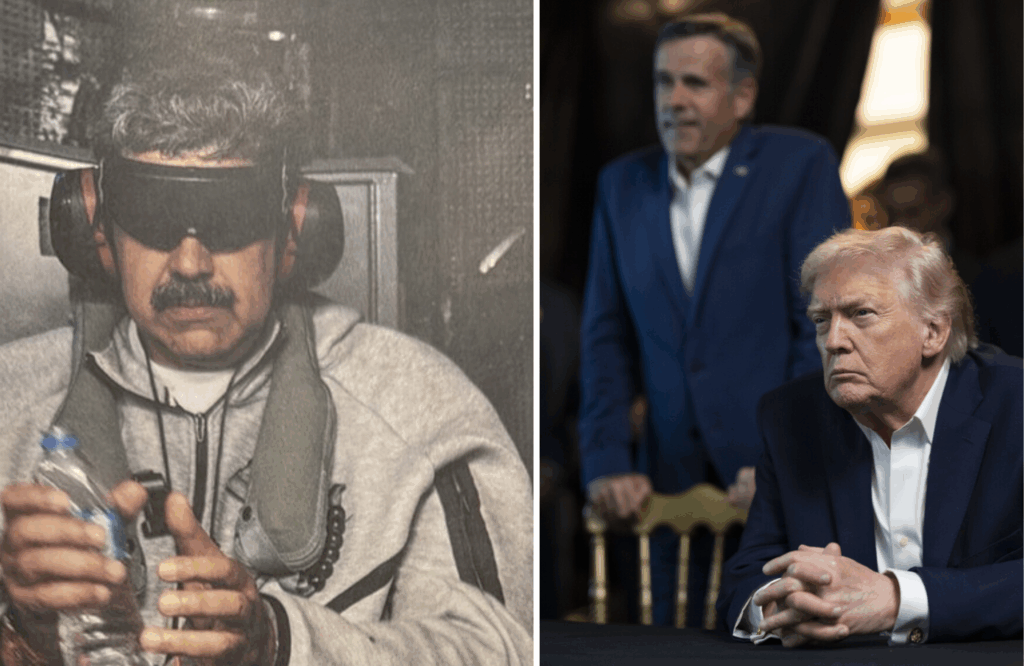
The U.S. operation against Maduro represents a rejection of this status quo. By targeting Venezuela’s strongman, Washington is signaling its intent to dismantle the broader ecosystem of continental socialism. The Maduro regime was not only an internal failure but also a colony controlled by Cuba, with Havana’s intelligence apparatus embedded within Caracas’s security forces. Venezuelan military and political decisions often required Cuban approval, transforming the oil-rich nation into a satellite state. This model extends across the region, both in regimes and in governments, such as Nicaragua, Brazil, Colombia, and Mexico. Alarmingly, these links reach northward. Domestic Marxist terrorist groups in the United States echo São Paulo Forum rhetoric, advocating “anti-imperialist” struggles aligned with Havana’s cartel vision. Drug trafficking, funneling billions from Latin American cartels into U.S. streets, serves as a financial bridge, laundering money that indirectly sustains these networks.
Nevertheless, doubts remain about the operation’s ultimate effectiveness. The details of how U.S. forces managed to evade Venezuelan and Cuban defenses point to significant vulnerabilities within the Castro-communist intelligence apparatus. More importantly, does this capture pave the way for eradicating Marxist-Leninist influence from Latin America? The road ahead is uncertain. Venezuela’s interim leadership must contend with elections, economic reconstruction, and the purge of Cuban infiltrators and Venezuelan accomplices. A broader U.S. strategy will require sustained engagement: economic incentives to counter Chinese loans, security alliances to expel Russian weaponry, and diplomatic pressure on Iranian and North Korean emissaries. Failure to do so risks creating a power vacuum that could unleash even greater chaos.
Nonetheless, this move is undoubtedly welcome news. It disrupts the flow of drug money and oil subsidies that have sustained the dictatorship and Cuba’s imperialist model for decades. By confronting socialism head-on, the United States reasserts its role as hemispheric leader, prioritizing Latin America after years of neglect. This is not interventionism for its own sake, but a necessary antidote to a “disease” that has claimed millions of lives through hunger, exile, and repression. As socialist movements, both in power and in opposition, reveal their unbreakable ties to Castro-communism, the United States must recognize the interconnected threat. From Venezuelan streets to American university campuses, the ideology persists and demands vigilance. The year 2026 has begun well. With Maduro in custody, perhaps the dawn of a post-socialist era in Latin America is within reach. The United States has fired the opening salvo; now it must commit to the fight.
The opinions expressed in this article are those of the author and do not necessarily reflect the views of the Miami Strategic Intelligence Institute (MSI²).