
04 Feb Opinion – The Struggle of the Iranian People, Between Global Jihad and the Intercontinental Conflicts of the Great Powers
By,
Pelegrín Castillo Semán, Contributor
In Iran, a decisive struggle is being waged for the destiny of humanity… The fall of the regime of the ayatollahs and its Islamic revolution would constitute a setback of great strategic importance to contain and defeat the spirit of jihad that is experiencing renewed momentum in the Umma islamiya and the Umma arabiya, since the fall of Iran, that historic and powerful nation, into the hands of a dark, theocratic revolution in 1978.
That revolution was, as Octavio Paz explains in Tiempo nublado, a reactive expression of “the revolt of particularisms,” in contrast to the White Revolution of Shah Reza Pahlavi, which was committed to a forced process of modernization and Westernization that struck the economic foundations of the religious structure of Shiism, which is hierarchical and has cultivated since its origin the mystique of martyrdom.
Furthermore, that event was largely determined by the disruptive effects produced by oil windfall profits starting in 1973. The Shah of Iran agreed with OPEC’s policy of increased prices but did not join the embargo imposed by Arab countries on the United States and Europe, which caused irritation among his neighbors.
Nevertheless, it has been considered that the erratic, naïve, and shortsighted position of President Carter and his team contributed to the fall of his greatest ally in the land of One Thousand and One Nights, which together with Israel, contributed to regional balance. The U.S. ambassador to the UN, Andrew Young, even went so far as to exalt the Grand Ayatollah as the “highest expression of humanism” in the region, unaware of who was in reality the greatest enemy of his nation, which he called the Great Satan.
Very soon, U.S. and French troops would be seen fleeing Lebanon after devastating attacks carried out by shahids imbued with the spirit of an incipient Hezbollah, while Arafat and the PLO, exultant, visited Tehran to weave a strong alliance, later deepened by the leadership of Hamas within the strategy of encirclement of the Axis of Resistance.
In the rest of the world, the significance of the ayatollah Khomeini and his faithful fundamentalists seizing power and humiliating the United States was not properly perceived. The same U.S. leaders, first for electoral calculations and later while fighting the Soviets, failed to foresee the dangerous phenomenon they were helping to create and strengthen. Even more so when they fueled the deadly war between Iraq and Iran, during which the Islamic Revolutionary Guards emerged in Iran.
First, Zbigniew Brzezinski did not want to pressure Iran at that juncture with retaliatory actions so as not to favor the USSR’s plans in the region; and later, the Reagan administration refused to agree with the Soviets on joint action to contain Islamist fundamentalism: the priority of the United States was to turn Afghanistan into the Russian Vietnam, which it largely achieved after a decade.
This explains in its origins why the spirit of global jihad, ignited by the Iranian revolution, was reinforced almost simultaneously by the triumphant struggle of the mujahideen and the Taliban in Afghanistan, first against the Soviets and then against the United States and NATO themselves, following the attacks of September 11, 2001, orchestrated by Al Qaeda, an organization protected by the Taliban, who in reality were not fully unified regarding the aggression on North American territory. Earlier, in the last decade of the twentieth century, the impact of the spirit of jihad had already been evident in the wars of Chechnya and later in the conflict of Kosovo.
What is most surprising is that throughout the prolonged war that followed in Afghanistan (2001/22), “these freedom fighters” always enjoyed the backing and the takiya of the ISI, the insidious intelligence service of a Pakistan that is a historic ally of China, which is currently Iran’s best ally, while the regime of Khomeini carries out throughout its territory a massacre of opponents that surpasses that committed in Tiananmen, Beijing, in 1989. Of course, it must be understood that China seeks above all the secure supply of its hydrocarbons.
Obama, the “appeaser” of Iran, justifying his Nobel Prize.
However, even more surprising is that since the election of Barack Hussein Obama, it was the United States that undertook actions that further stimulated the advance of jihad in the world: in Egypt, Mohamed Morsi, supreme leader of the powerful Muslim Brotherhood, came to power through elections with a broad majority and was later overthrown by a military coup that no one in the world questioned.
At the same time, the Maghreb and the Sahel were set ablaze with the elimination of Gaddafi and the tribal civil war in Libya, while Syria erupted.
Meanwhile, simultaneously, Iran was granted in 2015 splendid gains at the Geneva negotiating table: the lifting of sanctions, the opportunity to advance its advanced weapons programs, including the enrichment of uranium for its nuclear program beyond civilian uses, and the return of a huge amount of economic resources that had been withheld.
Also, prior to that unfortunate agreement, called the Joint Comprehensive Plan of Action, its close partner Hezbollah and its accomplices in Latin America were shielded by blocking the outcome of Operation Cassandra, carried out by the DEA to dismantle networks of drug trafficking, money laundering, and terrorism financing. Under no circumstances could the signing of the Nuclear Pact be affected, which fortunately was denounced by President Trump during his first term.
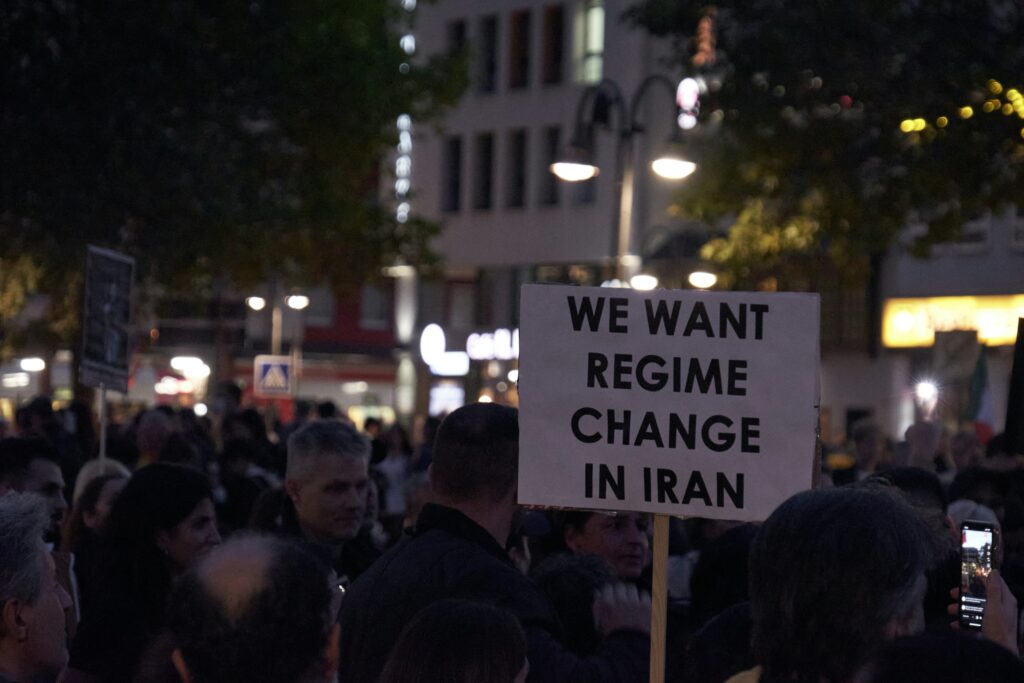
The War of the 12 Days… is about to resume soon, and it is certain that the Iranians are preparing their revenge, just as they patiently prepared the attack on Israel on October 7. Even more so when it is evident that President Trump is determined to decapitate the regime of the ayatollahs and their guardians.
Latin America and the Caribbean are perhaps the regions of the world from which this revenge or retaliation can most easily be carried out, using highly sophisticated terrorist methods by their Revolutionary Guard and their ally Hezbollah, with a destabilizing action of great magnitude. In this context, the close and deep ties with the agonizing regime of the Revolution of Twenty-First Century Socialism in Venezuela are still a matter of concern.
We must not forget that if the War of the 12 Days were to resume and escalate further within the current scenario of global hybrid war, the risk that the Strait of Hormuz and all the facilities for extraction, processing, and storage of oil and gas in the Persian Gulf become targets of devastating attacks would be very high, which would have an impact on the global economy, and particularly on the Asia-Pacific and Indo-Pacific regions, since they are highly dependent on imported oil.
Therefore, securing Venezuela and the Guianas, as well as the region of Alberta in Canada, because of their enormous hydrocarbon reserves, responds to a major strategic interest at this moment as critical as it is decisive in universal history.
The opinions expressed in this article are those of the author and do not necessarily reflect the views of the Miami Strategic Intelligence Institute (MSI²).