
29 Jun SITREP: The KGB’s Long Game and the American Left
By,
Andrés Alburquerque, Senior Fellow MSI²
In the 1980s, a former KGB informant named Yuri Bezmenov defected to the West and gave a series of interviews and lectures warning of a long-term Soviet strategy designed to weaken and ultimately destabilize the United States.
This article will explore Bezmenov’s account of KGB psychological warfare, break down its ideological mechanics, and compare it to trends seen in the modern American left. The goal is not to promote conspiracy, but to examine the consistency between Bezmenov’s framework and developments in U.S. policy and culture today.
Four Stages of Ideological Subversion
The Soviet Union’s aim was not to defeat the U.S. through war, but to undermine it from within. The plan was not a direct attack but the gradual erosion of American values and institutions through ideological influence. It consisted of a four-step process:
1. Demoralization (15–20 years)
This phase focuses on indoctrinating a generation of students and intellectuals with anti-American, Marxist, and collectivist ideas. According to Bezmenov, by the end of this phase, people lose the ability to critically assess information or facts. They become ideologically rigid.
“Even if you shower him with authentic information… he will refuse to believe it.” – Bezmenov
2. Destabilization (2–5 years)
Once the moral compass is gone, destabilization aims at key institutions: the economy, law enforcement, and foreign relations. Polarization is heightened. Traditional values are discarded or redefined. Even labeled as bigotry.
3. Creation of a Crisis
The system enters a crisis, often precipitated by social unrest or economic collapse. A tipping point is reached when the public begins demanding radical changes, often leading to a breakdown in governance or civil order.
4. Normalization
Finally, a new regime—often authoritarian or collectivist—takes over under the guise of restoring order. This may not be openly communist but follows a centralized, top-down control model. At this point, democracy is no longer functional.
Current Parallels in the U.S.
Many conservative commentators and political thinkers have revisited Bezmenov’s model in recent years, pointing to parallels between his framework and present-day trends among progressive movements in America. Below are several intersections:
There is a stark parallelism between Bezmenov’s theory and the rampant decline of the Democratic Party into the extreme left precipice:
1. Education and Cultural Demoralization
The modern American education system, especially at higher levels, has come under scrutiny for promoting ideological frameworks rooted in critical theory, Marxist in origin. Concepts like systemic oppression, white privilege, and gender as a social construct dominate academic discourse. Dissenting opinions are often not only discouraged but condemned as harmful or hateful, or even as reactionary.
Bezmenov argued that demoralization required a full generation of ideological grooming. Today’s educational landscape reflects just that—producing graduates who hate capitalism, patriotism, and traditional social norms and values.
2. Destabilizing Institutions
Key institutions, especially the police, the military, and the family unit, have been subjected to increasing ideological pressure. The “Defund the Police” movement, redefinition of gender roles and marriage, and an increasingly activist judiciary are all signs of the destabilization phase.
Economic interventions like massive stimulus spending, student loan forgiveness, and increasing reliance on federal control are a stark reminder of Bezmenov’s warning that economic and social “crutches” can be used to bring about dependence on the state.
3. Manufactured Crisis
COVID-19, the 2020 riots, dubbed by the left “the summer of love”, and the hyper-politicization of nearly every cultural event have been seen by some as crises leveraged for ideological gain. Many Americans became more accepting of surveillance, speech restrictions, and limitations on movement—all normalized in the name of safety.
These responses were not orchestrated by a foreign power. Bezmenov’s core point is that ideological subversion doesn’t require the subverter to be present—the victims themselves carry it out. This is widely based on Antonio Gramsci’s dream of destroying the West from within by using its very laws and structures. And the “beauty” of it all is that this theory has been there since 1920, and we seem not to pay attention to it. We even shrugged off the inherent peril contained in it. Or worse…
4. “Normalization”
In the name of progress, new societal norms have emerged that seem enforced more by social pressure and institutional policy than democratic consensus. Big Tech censorship, ESG (Environmental, Social, Governance) frameworks, and DEI mandates in corporate and governmental settings resemble centralized ideological control more than grassroots reform.
Ideology as a Trojan Horse
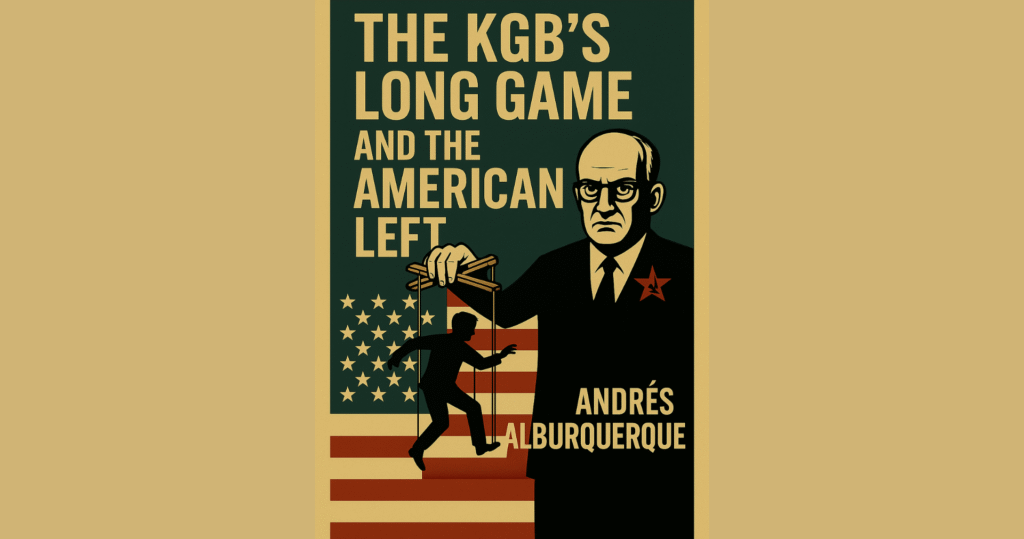
Bezmenov’s message wasn’t about a Soviet plan in the sense of a secret bunker filled with scheming agents. Rather, he warned of the inherent fragility of free societies that are subtly induced to lose confidence in their foundational values. The modern left is not necessarily enacting a KGB plot, but the resemblance in patterns of demoralization and destabilization suggests that ideological subversion can happen organically, through cultural shifts and uncritical adoption of imported ideas that may have lived in the minds of our puppeteers since the beginning of time. Shifts and puppeteers are key words to follow up.
Whether America heeds Bezmenov’s warning remains to be seen. Though decades old, his message remains a cautionary tale for any society tempted to sacrifice truth, freedom, and individual responsibility in the name of ideological purity or social justice.
The opinions expressed in this article are those of the author and do not necessarily reflect the views of the Miami Strategic Intelligence Institute (MSI²).