23 Sep SITREP: Unusual Bed Partners: Everyone Doing Their Own Thing. What Messages Are They Sending?
By,
Octavio Pérez, Co-Founder & Senior Fellow, MSI²
Reading the news over the last couple of weeks really highlights how convoluted the world is and how everyone is seeking stability or alliances in common.
Start with Turkey and Egypt, who for the first time in 13 years will conduct joint naval drills—Exercise Friendship Sea—taking place the week of September 22–26 in the Eastern Mediterranean Sea. For those who don’t recall the history, President and Field Marshal Abdel Fattah el-Sisi of Egypt, a commanding general in power since 2014, took down the Muslim Brotherhood and restored order in Egypt, declaring the group a terrorist organization.
Recep Tayyip Erdogan, on the other hand, has supported the Muslim Brotherhood since the 1970s. This difference led to disputes over stability in Libya and the presence of the Muslim Brotherhood there, seen as a threat to Egypt. Toward the end of 2022, both countries began reconciling differences over Libya, reinitiated diplomatic relations by reappointing ambassadors in 2023, and have recently condemned Israeli operations in Gaza while working toward a ceasefire.
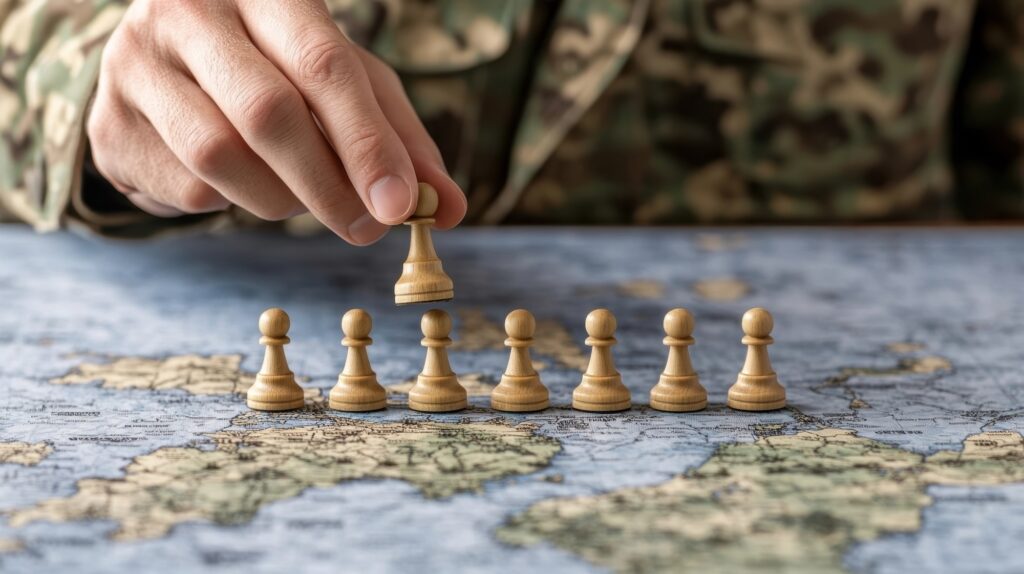
In September 2025, these joint naval exercises are underway in the Eastern Mediterranean.
During the same month, the Syrian Foreign Minister visited Washington for the first time in 25 years to reconcile relations with the U.S. and seek assistance from the World Bank. Coinciding with this, Israel and Syria met in Paris in August (brokered by the U.S.), a first step toward normalizing bilateral relations. Issues involving the Druze and Christian communities in southern Israel remain at the forefront of these discussions.
Also in September, Saudi Arabia and Pakistan signed a mutual defense pact following Israel’s attack on Hamas leaders in Qatar. These countries have longstanding religious and economic ties, including Saudi funding for Pakistan’s nuclear development—effectively extending a nuclear umbrella over Saudi Arabia, sending a strategic signal to Israel. This development occurs despite U.S. assistance in Saudi civilian nuclear programs.
India’s deployment of 65 soldiers to Exercise Zapad 2025 in Belarus, simulating nuclear launch scenarios, raises questions about signals to the West. India’s reliance on Russian military hardware and oil, coupled with its efforts to remain self-reliant, illustrates a pragmatic approach by Prime Minister Modi, who appears willing to “go to bed with unusual partners” to advance his agenda.
Meanwhile, in East Asia, China’s Defense Minister renewed threats to take over Taiwan. At the Xiangshan Forum, attended by representatives from 30 nations, Admiral Dong Jun emphasized safeguarding national sovereignty, security, and future development while serving as a force for peace, stability, and progress. During this week, China’s new aircraft carrier Fujian conducted its first transit of the Taiwan Strait as part of crew training exercises. Incidents, such as encounters between the Philippine Coast Guard and the Chinese Coast Guard at the Scarborough Shoals, add to regional tension.
In the Southern Caribbean, Venezuela countered U.S. presence by conducting an exercise at La Orchilla Island. According to Defense Minister Vladimir Padrino, Venezuela deployed air defense systems, armed drones, surveillance drones, twelve ships, twenty-two aircraft, and twenty members of the special naval militia.
It was a remarkable week in September, where almost every actor revealed true colors, formed new alliances, and sent strategic messages to their rivals, leaving observers to watch the shifting global landscape.
References
AP News. (2025, August). Syria’s top diplomat and an Israeli delegation meet in Paris as U.S. pushes for normalizing ties. https://apnews.com/article/syria-israel-diplomacy-conflict-us-e3fd86d0e2a011e6eba6dea8977bc084
AP News. (2025, September). Saudi Arabia signs a mutual defense pact with nuclear-armed Pakistan after Israel’s attack on Qatar. https://apnews.com/article/pakistan-saudi-arabia-defense-israel-india-11cd003a55eb7bec7431cb134f29db5d
AP News. (2025, September 18). Syria’s foreign minister is in Washington for the first visit by a Damascus official in 25 years. https://apnews.com/article/syria-us-asaad-alshibani-trump-sanctions-alsharaa-526af7ef1ad6afc5ad1086e0707a5720
AP News. (2025, September 18). Turkey and Egypt will hold joint naval drills for the first time in 13 years. https://apnews.com/article/turkey-egypt-relations-navy-drills-5e2ae10f51c602d5f856efc5c1efa33d
Miami Herald. (2025, September). Venezuela: Tensions rise in Caribbean as U.S., Venezuela conduct parallel military exercises. https://www.miamiherald.com/news/nation-world/world/americas/venezuela/article312157118.html
NDTV. (2025, September 18). India at Russia-Belarus war games: What it means and why NATO, US are uneasy. https://www.ndtv.com/world-news/zapad-2025-zapad-war-games-russia-belarussia-zapad-military-exercises-india-joins-zapad-war-games-9300128
Newsweek. (2025, September). Satellite photo shows Chinese aircraft carrier sailing in contested waters. https://www.newsweek.com/china-aircraft-carrier-us-allied-military-drills-2129949
South China Morning Post. (2025, September). China’s defense minister renews threats to take over Taiwan as he opens security forum. https://www.scmp.com/news/china/military/article/3325927/chinese-defence-minister-dong-jun-address-xiangshan-forum
The opinions expressed in this article are those of the author and do not necessarily reflect the views of the Miami Strategic Intelligence Institute (MSI²).