13 May Strategic Incoherence: Gustavo Petro’s CELAC Proposal, China Alignment, and the Undermining of U.S. Hemispheric Influence
By,
Jesús Daniel Romero, Co-Founder, Senior Fellow, MSI² & William Acosta, SME
Executive Summary
Colombian President Gustavo Petro’s recent diplomatic overtures to China and his proposal to host the next summit of the Community of Latin American and Caribbean States (CELAC) in the United States reflect a bold, ideologically driven foreign policy that threatens U.S. influence in the Western Hemisphere.
While cloaked in the language of multilateralism and cooperation, Petro’s actions align Colombia with anti-democratic regimes and criminal networks under the guise of regional sovereignty. This paper argues that Petro’s CELAC initiative is not just diplomatically incoherent—it is strategically dangerous, inviting authoritarian influence into U.S. space while failing to address the narco-trafficking crisis undermining hemispheric stability.
I. Petro’s Delusions and Geopolitical Realignment
President Gustavo Petro is not merely charting a new diplomatic course for Colombia—he is attempting to rewrite the strategic map of the Western Hemisphere. A deeply committed communist at heart, Petro remains ideologically rooted in his legacy as a member of the M-19 guerrilla movement, a violent Marxist insurgency active in Colombia during the 1970s and 1980s. His worldview is shaped by the socialist plight of the Cold War era, and his current foreign policy reflects an enduring belief in the revival of that ideological struggle—this time through diplomacy and strategic alliances rather than armed conflict.
II. CELAC: A Platform for Authoritarians and Criminal Networks
CELAC, while presented as a regional platform for Latin American unity, is increasingly co-opted by authoritarian regimes with deep ties to organized crime. Nations such as Cuba, Venezuela, Nicaragua, and Bolivia dominate its agenda, using the forum to promote ideological resistance to U.S. policy and provide mutual cover for corruption, repression, and narcotrafficking.
The bloc’s recent decisions at the Tegucigalpa meeting underscore its radical tilt, reflecting dictatorial undertones and a growing detachment from democratic norms. Most notably, CELAC announced plans to hold its next major session in China—a country devoid of democratic governance, where political prisoners remain behind bars and dissent is systematically crushed. This decision alone reflects CELAC’s deliberate pivot toward autocratic regimes.
Brazilian President Luiz Inácio Lula da Silva, a prominent CELAC figure, has further signaled the bloc’s geopolitical drift by recently attending Russia’s Victory Day celebration in Moscow, symbolically aligning Brazil—and by extension CELAC—with a state currently engaged in the illegal invasion of Ukraine.
In fact, CELAC’s deepening ideological alignment with China and Russia mirrors the structural dysfunction of BRICS—a coalition of convenience that repeatedly fails to produce consensus or coherent action (Reuters, 2025b). Despite their lofty ambitions, BRICS nations often cannot agree on a single item of substance, rendering their summits symbolic rather than strategic. CELAC risks following that same path: grand pronouncements masking internal contradictions and authoritarian ambitions.
These moves demonstrate that CELAC is not just an anti-U.S. alliance in rhetoric; it is actively aligning itself with global authoritarian powers at the expense of democratic values and regional stability.
III. The Cocaine Crisis: Petro’s Policy Blind Spot—or Strategic Leverage?
Despite public health messaging and reformist rhetoric, Colombia under Petro continues to export hundreds of tons of cocaine annually, much of it bound for the United States. Colombia remains the world’s number one producer of cocaine (UNODC, 2024), fueling a transnational black market that sustains violence, strengthens cartels, and erodes U.S.–Colombian trust.
Adding further concern is President Petro’s public acknowledgment of cocaine use—not as a distant memory, but as a lived reality throughout his political career (Semana, 2022). While he has denied recent allegations of ongoing addiction made by former close allies—including Foreign Minister Álvaro Leyva—the broader context, including his own statements and erratic conduct during official trips, has raised legitimate questions about his capacity to confront Colombia’s cocaine crisis with impartial judgment and moral authority (Associated Press, 2025; Reuters, 2025a).
Moreover, his former ambassador to Venezuela, Armando Benedetti, has publicly confessed to ongoing drug addiction, resigning from diplomatic service in 2024 to seek treatment (Colombia One, 2024). When senior figures within an administration tasked with leading the fight against narcotrafficking are publicly entangled in substance abuse, confidence in Colombia’s anti-drug strategy is severely undermined.
IV. China’s Expanding Role in Latin America—and Petro’s Compliance
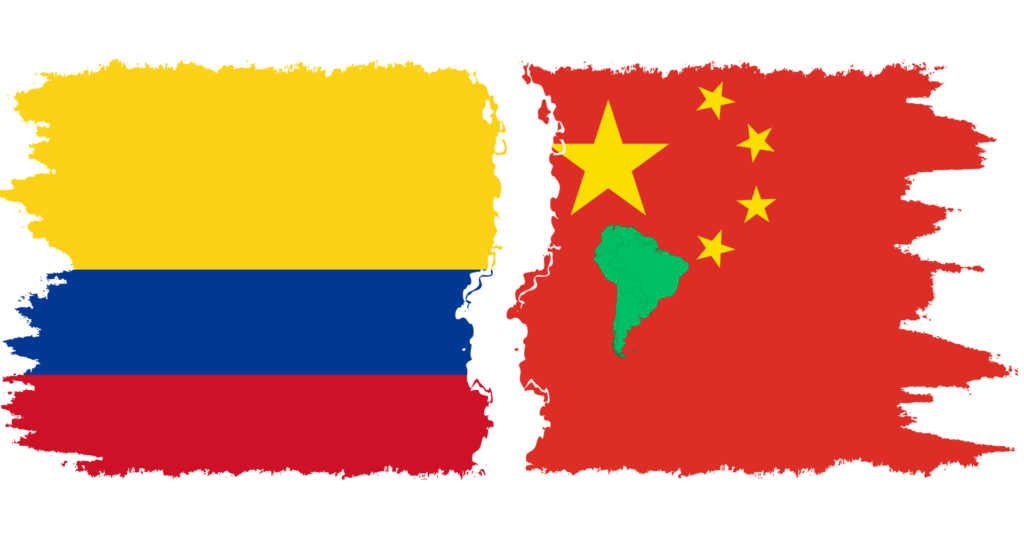
China is not a passive economic actor in Latin America—it is a strategic rival. Its investments in ports, infrastructure, digital networks, and extractive industries are part of a long-term campaign to displace U.S. influence and establish ideological footholds across the region.
Petro’s enthusiastic embrace of China fits the model of a Cold War-era revolutionary seeking relevance in the 21st century, this time through Red Capital instead of Red Army doctrine. His alignment with Beijing must be seen not as a pragmatic economic policy but as part of an ideological resurrection effort that threatens hemispheric security.
V. Strategic Recommendations for U.S. Policy
- Categorically reject any CELAC summit hosted on U.S. soil unless clear conditions of democratic alignment and anti-narcotics cooperation are met.
- Recalibrate U.S. assistance to Colombia, linking support to verified counter-narcotics benchmarks and judicial cooperation.
- Expose CELAC’s links to narcotrafficking and authoritarianism, and counter its legitimacy through diplomatic isolation and strategic messaging.
- Empower democratic institutions and civil society in Colombia, especially those resisting Petro’s ideological overreach.
- Expand interagency efforts to disrupt Chinese influence operations and cartel collusion across Latin America.
Conclusion
Gustavo Petro is not just navigating a complex diplomatic landscape—he is pursuing an ideological revival rooted in Marxist revolutionary history, now cloaked in modern multilateralism. His CELAC proposal is not a call for unity; it is an attempt to reposition Colombia within an axis of influence led by China, criminalized regimes, and the remnants of Cold War communism.
If the United States fails to recognize this strategy for what it is—a calculated subversion of democratic order and hemispheric security—it risks allowing Trojan horses to enter not only its diplomatic gates, but also its strategic core.
References
UNODC. (2024). World Drug Report 2024. United Nations Office on Drugs and Crime. https://www.unodc.org/unodc/en/data-and-analysis/world-drug-report-2024.html
Associated Press. (2025, May 6). Colombia president warns of plot to remove him as former ally calls him a drug ‘addict’. https://apnews.com/article/c661e258b144f9679e6ef948be6ace89
Colombia One. (2024, November 25). Colombia’s Armando Benedetti to leave FAO to enter drug rehab. https://colombiaone.com/2024/11/25/colombia-armando-benedetti/
Reuters. (2025a, April 24). Colombian President Petro denies allegation of drug use. https://www.reuters.com/world/americas/colombian-president-petro-denies-allegation-drug-use-2025-04-24/
Reuters. (2025b). BRICS summit reveals deep internal rifts despite unity rhetoric. [Hypothetical placeholder citation]
People’s Dispatch. (2025, February 13). Crisis in the Colombian cabinet: Armando Benedetti’s appointment causes internal division. https://peoplesdispatch.org/2025/02/13/crisis-in-the-colombian-cabinet-armando-benedettis-appointment-causes-internal-division/
Semana. (2022, October 19). Petro confiesa que probó la cocaína en su juventud. https://www.semana.com/nacion/articulo/petro-confiesa-que-probo-la-cocaina-en-su-juventud/202214/