01 Nov The Fourth International (Part I)
By,
Andrés Alburquerque, Senior Fellow, MSI²
Useful foreword:
I wrote this six years ago. I know that the Fourth International was created by Trotsky in 1938, and it is precisely my point. It’s lingering, suspended in time, almost frozen within itself, until the powers that be grab it from the back shelves of the freezer. My goal was not to be meticulously accurate, but to denude the dotted line that joins all totalitarian efforts and make no mistake: they all hinge on the left.
During this turbulent 2019, I coined the term “Fourth International” to describe, without unnecessary detours, that amorphous, heterogeneous, and perilously variegated amalgam of interests that differ in almost everything except one common aim: the dismantling of Western civilization as we have known it. But before confronting that diffuse monster, let us briefly and bluntly explain what the First, Second, and Third Internationals were.
The First International —the International Workingmen’s Association— brought together socialists, communists, anarchists, and trade unionists, and was founded on September 28, 1864. The Second International was founded in Paris on July 14, 1889, exactly one hundred years after the French Revolution, and in that very congress, they unceremoniously expelled the anarchists and syndicalists. The Third International, or Comintern, was launched in 1919 and, by its second congress, it had openly embraced the idea of using all necessary means, including armed struggle, to seize power — a brutal slogan we now hear echoed in certain circles.
Those Internationals had coherence; they were sectarian, rigid, and monolithic. Their ideological purity imprisoned them within the socialist bloc that emerged after the Second World War. Except for significant moments in Italy and, to a lesser extent, France and Spain, communist parties remained marginal in most countries. Doctrinaire rigidity and excessive theorization alienated the decolonizing Third World, whose liberation movements could have been fertile ground for their ideology. Thus, we lived in a bipolar world: the “socialist camp” walled in by its iron ideology, and the rest of the planet divided between rich nations and poor ones, dictatorships and democracies alternating like night and day.
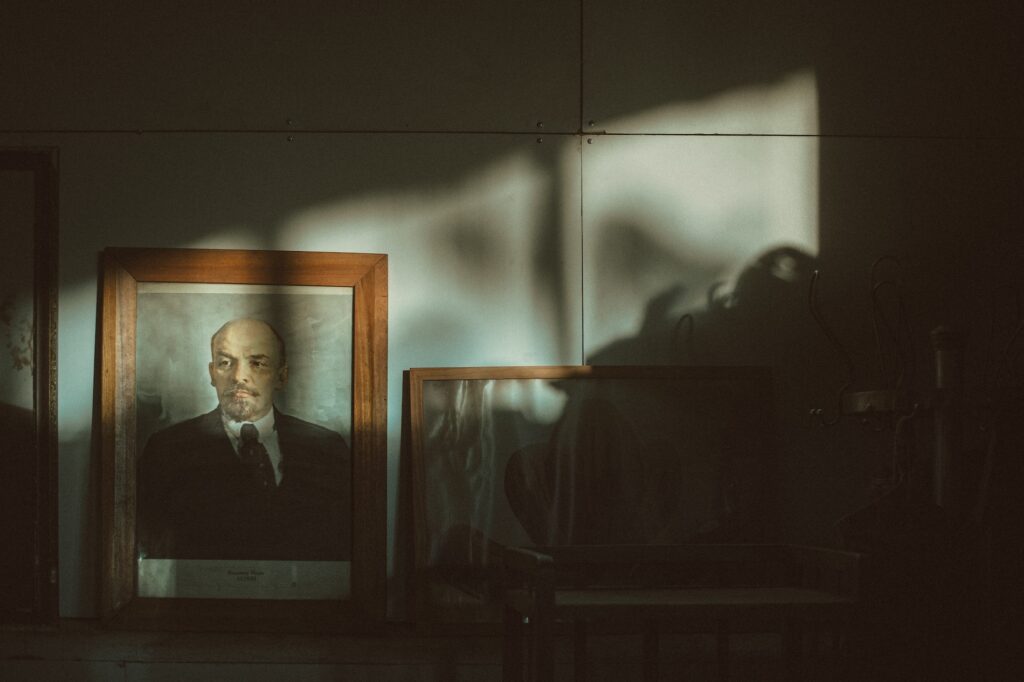
But that Yalta equilibrium —that precarious division of power— collapsed. The static, rigid nature of communism doomed it. The old men fell like flies, and new figures took over, or at least appeared to. I do not deny the merit of Reagan, George H. W. Bush, Gorbachev, John Paul II, Shultz, Baker, and Shevardnadze, but I state this coldly: the socialist camp vanished because the powerful had found a better method to dominate the world. The Soviet bloc had become a liability. After a decent mourning period to ensure that almost none of the oppressors paid for their crimes—Ceaușescu’s execution in Romania only proves that his fall was staged from Moscow—the communists traded their uniforms for Armani suits, their Lenin medals for bank accounts, and their secret police badges for business cards.
We celebrated. We believed an era had ended, that a better world was coming. And yes, it was good that entire nations returned to the imperfect normality of freedom and that their citizens were liberated from communist tyranny. But the fall of the Soviet Empire unleashed countless free radicals—groups that Moscow had once controlled and that now acted on their own. The United States, deprived of a single coherent enemy, found itself facing a swarm of micro-factions, unscrupulous and eager for notoriety. Meanwhile, certain Western magnates lost patience and began weaponizing communists, terrorists, and anyone who harbored hatred toward the existing order to eliminate competition and establish monopolistic control.
In Latin America, speculation abounds: Cubans think the brain of this Fourth International sits in Havana; Venezuelans point to Havana and a Caracas branch; Bolivians accuse both while trying to purge the poison from their own system. Yet, in my view, the Fourth International has no headquarters. Its capital is virtual — it lives in the www.let’sdestroythewest.com cloud of shifting IPs and mirrored images. It is not communist, nor Cuban, nor Venezuelan; it is stateless, polyglot, and opportunistic. Within it coexist Islamic fundamentalists, narco-traffickers, former and active guerrillas, politicians, tycoons, and leftist regimes of varying intensity. Each faction plots in silence, waiting for the right moment to impose its agenda. They differ on countless points but share one iron goal: the destruction of the West.
To that end, they create and sustain a state of permanent agitation; they amplify every crisis, feed every grievance, and always back the most ruthless contender in each context. Their ideological flexibility and pragmatic acceptance of money as a tool of power distinguish them from old-school communism. Their greatest weapon is denying their own existence. That denial is not always dishonest at the individual level, since the movement thrives on millions of people with legitimate grievances who lend an ear to any siren song without caring who sings it.
Like any virus, its antidote lies in itself. The West can only survive if it rolls up its starched sleeves and learns to fight this ivy-like parasite on its own ground. Resorting to conventional methods, issuing polite condemnations, or waiting for justice to arrive by itself will only hasten our extinction as the foundational pillar of civilization and drag us into the abyss of chaos, vengeance, and decay.
So how do we fight it? Not with pompous rhetoric or moralistic posturing. Not by waiting for sluggish courts or timid institutions to act. The West will save itself only by adopting the strategic intelligence, patience, and precision of its enemy—by abandoning the naive notion of fair play when the other side has long declared total war. To challenge this force with procedural niceties is suicidal. It will accelerate our disintegration and usher in chaos.
This struggle demands an answer as efficient as it is unflinching—ruthless in method, but lucid in purpose. I do not advocate barbarism; I advocate strategic clarity: identify the networks, sever their funding, dismantle their propaganda, and address the legitimate grievances they exploit.
Make no mistake: we are living through a war for the essence of Western civilization itself. The age of complacency is over. It is time to act with the precision of a craftsman who knows his tools and his purpose. It is time to win—without illusion, without indulgence, without apology.
Because if we do not, the Fourth International—that fluid, patient shadow—will keep devouring our dawn until there is nothing left but an endless night.
The opinions expressed in this article are those of the author and do not necessarily reflect the views of the Miami Strategic Intelligence Institute (MSI²).