21 Aug The Pendulum Shifts: Bolivia and the End of the Left’s Hegemonic Cycle in Latin America
By,
Jesús Romero, Senior Fellow, MSI²
Introduction
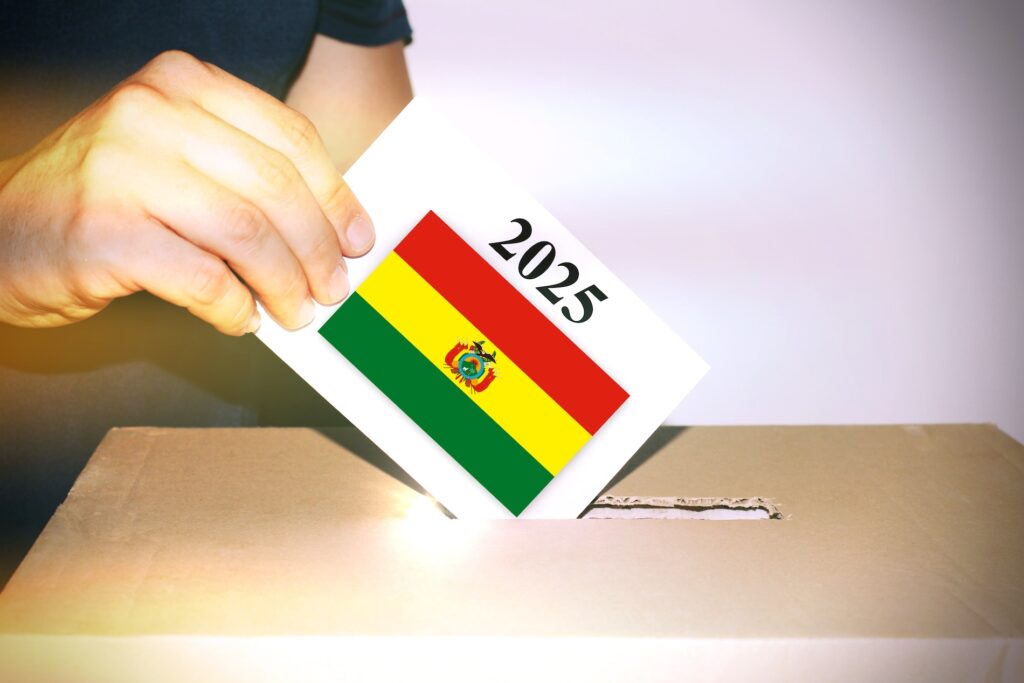
On August 17, 2025, Bolivia reached a historic turning point: for the first time in two decades, the Movimiento al Socialismo (MAS) was left out of the presidential runoff. The result not only marks the collapse of the party that had governed Bolivia since 2006 with Evo Morales as its central figure, but also signals a shift in the regional political pendulum, away from hegemonic leftist projects.
The Collapse of MAS
The numbers are conclusive: while Rodrigo Paz (Christian Democratic Party) and Jorge “Tuto” Quiroga (Libre alliance) advanced to the second round with 32% and 27% respectively, MAS candidates barely surpassed 10% of the vote combined. This unprecedented defeat reveals the exhaustion of a model based on state control, corruption, and ideological radicalization (Reuters, 2025a; AP News, 2025; El País, 2025).
Argentine political scientist and diplomat Pedro Von Eyken summarized it clearly: “Not much is yet known about Paz Pereira, the surprising winner of the Bolivian elections, other than that he is identified with a centrist stance. A key factor will be the support of Samuel Doria Medina, another major candidate who has already expressed his backing for Pereira ahead of the runoff. Beyond the uncertainties about the new leadership, the result sends a clear message: MAS and Evo Morales suffered a resounding defeat that reshapes Bolivia’s political landscape.”
The Regional Pendulum
Bolivia is not an isolated case. In recent years, significant changes have taken place across Latin America’s political map:
- Argentina: Javier Milei broke with Peronist dominance.
- Ecuador: Daniel Noboa is implementing shock policies against organized crime.
- El Salvador: Nayib Bukele consolidated a right-wing security model.
- Guatemala: citizens challenged entrenched corrupt structures.
These examples highlight electorates tired of unfulfilled promises and entrenched hegemonies, increasingly demanding economic pragmatism, security, and governance.
Venezuela and the Exhaustion of 21st Century Socialism
One of the structural factors behind MAS’s collapse is the end of Venezuela’s oil-check diplomacy. During the oil boom years (2005–2013), Venezuela financed allied governments through soft loans, subsidized oil, and programs such as Petrocaribe and ALBA. With these resources, Caracas propped up friendly governments such as Evo Morales’s in Bolivia.
Today, that capacity has vanished:
- Venezuela’s economy has been devastated by international sanctions and PDVSA corruption.
- Maduro’s regime, controlled by the Cartel de los Soles (designated a Specially Designated Global Terrorist organization in 2025), allocates its scarce resources to political and military survival.
- The external subsidy network collapsed, leaving parties like MAS exposed to the reality of governing with their own means.
Without Caracas’s backing, “21st Century Socialism” no longer has the transnational financial support that once turned it into a regional bloc.
Bolivia as a Barometer
Bolivia now emerges as a barometer of 21st Century Socialism’s decline for several reasons:
- It was part of the ideological core alongside Venezuela, Cuba, and Nicaragua.
- It relied heavily on Venezuelan oil financing to sustain its social programs.
- Its electoral collapse is the first major defeat of the bloc in the region.
- The October runoff will confirm whether Bolivia definitively joins the regional shift toward the center and right.
Just as in the early 2000s, Bolivia was a laboratory for continental chavismo; today it could become the first test case of its structural collapse.
Washington and the Trump Doctrine: A Decisive Moment
For Washington, Bolivia’s elections are not merely a domestic political shift—they represent a strategic opening. During the first two decades of the 21st century, 21st Century Socialism—backed by Venezuela and Cuba—was designed to erode U.S. hemispheric hegemony while the United States focused on the Middle East and the war on terror.
With Donald Trump’s arrival, U.S. foreign policy adopted a doctrine of maximum pressure against the regimes in Caracas, Havana, and Managua. This strategy included:
- Unprecedented economic sanctions.
- Diplomatic recognition of Venezuela’s opposition.
- Strengthened hemispheric cooperation against narcotrafficking and terrorism.
- The recent designation of the Cartel de los Soles as a Specially Designated Global Terrorist (SDGT) organization (2025).
In this context, MAS’s defeat in Bolivia represents an opportunity for Washington to consolidate the fall of the chavista bloc and reconfigure the continental balance. This is a historic moment: the narrative of 21st Century Socialism, which once exported power and propaganda, is now a project in retreat.
This is the geopolitical moment for the United States, alongside regional allies, to apply the Trump Doctrine and definitively close the ‘chavista’ cycle that for years challenged U.S. hemispheric leadership.
Conclusion
Bolivia’s election proved that 21st Century Socialism can also be defeated at the ballot box. MAS could not sustain its hegemony, and neither Venezuela, Cuba, nor Nicaragua managed to provide enough support to prevent its collapse. What was once promoted as an irreversible project has been reduced to a minority, confirming that the regional political pendulum is shifting and that the citizen vote remains the most powerful tool against authoritarian regimes.
Bolivia not only ends two decades of MAS dominance, it also reflects the exhaustion of Venezuelan influence and becomes a thermometer for the decline of 21st Century Socialism. For Washington, this is the moment to apply the Trump Doctrine and ensure that this cycle closes once and for all.
References
Al Jazeera. (2025, August 17). Bolivia heads to the polls as 20 years of leftist rule expected to end. Al Jazeera. https://www.aljazeera.com/news/2025/8/17/bolivia-heads-to-the-polls-as-20-years-of-leftist-rule-expected-to-end
AP News. (2025, August 18). Bolivia heads to a runoff after an election ends two decades of ruling party dominance. AP News. https://apnews.com/article/7d24bfd2bc87e4f312d574663aee9f5d
El País. (2025, August 18). Rodrigo Paz and Tuto Quiroga will compete for Bolivia’s presidency in October. El País. https://elpais.com/america/2025-08-18/rodrigo-paz-y-tuto-quiroga-se-disputaran-la-presidencia-de-bolivia-en-octubre.html
Reuters. (2025, August 18). Bolivia heads to runoff after right turn in presidential vote. Reuters. https://www.reuters.com/world/americas/bolivia-heads-runoff-after-right-turn-presidential-vote-2025-08-18/
Reuters. (2025, August 18). Who are Bolivia’s presidential runoff contenders promising economic overhaul? Reuters. https://www.reuters.com/world/americas/who-are-bolivias-presidential-runoff-contenders-promising-economic-overhaul-2025-08-18/
The opinions expressed in this article are those of the author and do not necessarily reflect the views of the Miami Strategic Intelligence Institute (MSI²).