09 Dec Strategic Outlook: Canal Ports, Chinese Influence, and U.S. Countermoves
By,
Miami Strategic Intelligence Institute (MSI²)
Panama remains a critical focal point of U.S.–China strategic competition. Over the past several months, the dynamics around telecommunications infrastructure, port concessions at the Panama Canal, and geopolitical alignment have continued to evolve. Below is the latest status picture based on credible open-source reporting through early December 2025.
1. Huawei Footprint: No New Expansion, Continued Containment
There have been no verified new Huawei projects announced in Panama during the past quarter.
Key developments remain:
• The U.S.–Panama telecommunications initiative to replace Huawei equipment at 13 national sites (announced in mid-2025) continues shaping Panama’s digital landscape.
• This program, valued at approximately US$8 million, includes deployment of “trusted U.S. technology” and new communications towers across multiple provinces.
• Beijing publicly criticized the initiative, signaling heightened sensitivity to losing ground in Panama’s tech infrastructure.
Status: Huawei’s public activity appears stagnant, with no new 5G trials, surveillance contracts, or logistics partnerships disclosed since mid-2025. Panama’s telecom posture continues to lean toward U.S.-favored secure-network architectures.
2. Canal-Adjacent Port Crisis: Litigation, Uncertainty, and Strategic Re-Positioning
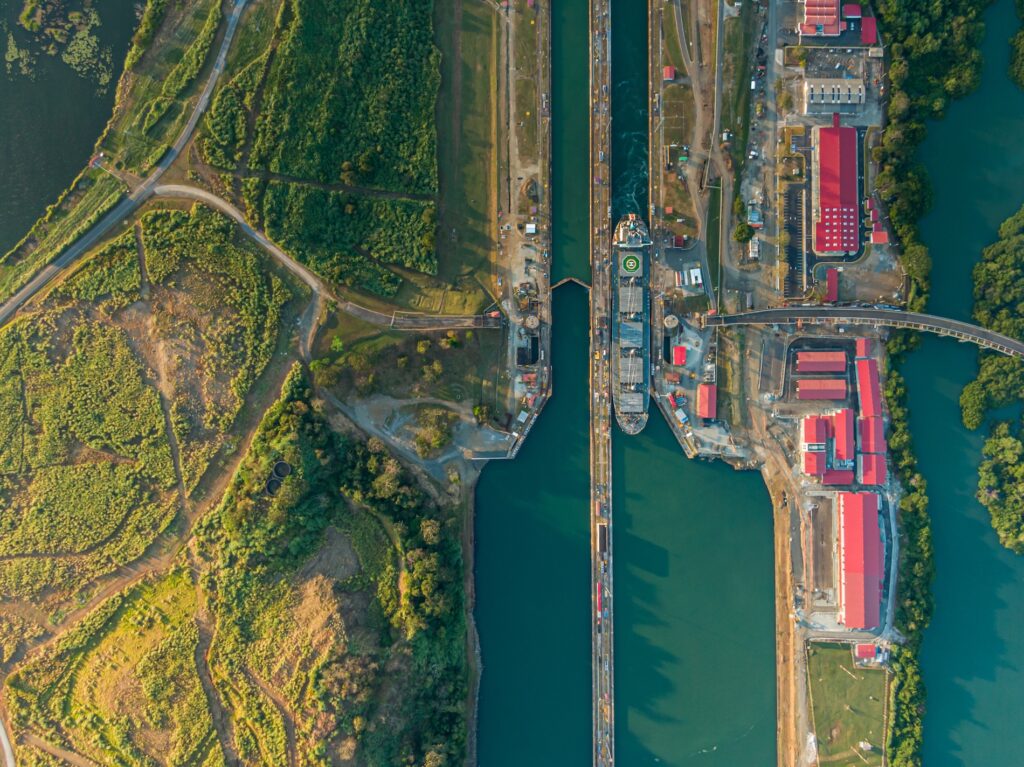
The largest geopolitical movement remains centered on the Balboa and Cristóbal ports, operated by Panama Ports Company (PPC), a subsidiary of CK Hutchison (Hong Kong/China-linked conglomerate).
Key facts:
• In mid-2025, Panama’s Comptroller General filed lawsuits asking the Supreme Court to annul the PPC concession, citing serious contract irregularities and more than US$1 billion in unpaid obligations uncovered by auditors.
• The concession’s legality, renewal history, and compliance records are now under judicial review.
• The originally announced BlackRock-led acquisition of CK Hutchison’s global ports portfolio, expected to bring Panama’s ports under a Western investment structure, remains unsettled, with public signals of renegotiation and geopolitical friction.
New movement (late 2025):
• The Panama Canal Authority announced it is prequalifying bidders for two new port terminals, with the process expected to conclude in early 2026.
• This creates a parallel strategy: even if the PPC concession remains contested, Panama is constructing an alternative pathway to expand or rebalance port control.
Status: The port environment surrounding the Canal is in active flux. Sovereignty, commercial reliability, and geopolitical alignment all converge in this dispute. A potential restructuring of port control is now more likely than at any time in the past decade.
3. U.S. Countermoves: More Concrete, Less Rhetorical
Washington’s posture toward Panama continues to shift from policy signaling to operational measures:
• Telecom replacement operations (removal of Chinese equipment).
• Growing U.S. emphasis on critical-infrastructure security at the Canal and adjacent logistics hubs.
• Support for Panama exploring alternative port partners beyond Chinese-linked operators.
U.S. commentary in recent months highlights Panama as a priority node in hemispheric strategy, particularly in supply-chain resilience and denial of strategic leverage to the PRC.
Status: While the U.S. has not publicly intervened in the PPC litigation, the broader pattern of diplomatic and technical engagement points toward sustained U.S. interest in reorienting Panama’s strategic infrastructure toward Western alignment.
4. Elite Ties: No Newly Verified Panama–PRC Linkages
A review of 2025 public records and credible reporting found:
• No new evidence linking major Panamanian political or economic families to recently formed partnerships or contractual relationships with PRC-backed firms.
• Chinese engagement remains concentrated in corporate infrastructure players (e.g., CK Hutchison, COSCO) rather than local elite networks.
Status: Influence operations appear corporate-structural rather than familial/domestic-elite–driven at this time.
5. Strategic Outlook (Next 60–90 Days)
Watchpoints:
1. Supreme Court rulings on the PPC concession.
2. Publication or leak of the full port audit documenting irregularities.
3. Announcement of prequalified bidders for the two new port terminals (which will reveal whether Chinese state-linked firms attempt to re-enter).
4. Updates on U.S. telecom replacement project milestones.
5. Any new tenders or public–private partnerships involving digital infrastructure, customs modernization, or port-logistics systems.
Overall Assessment:
Panama is entering a realignment phase. The Canal remains a global chokepoint where U.S. and Chinese strategic interests directly collide. The halt in Huawei expansion, the legal jeopardy facing Hutchison’s port concession, and new U.S.-aligned technical investments point toward a country reconsidering its strategic exposure.
The next quarter will be decisive in determining whether Panama shifts more firmly into the U.S. security orbit or whether Chinese-linked firms attempt to reassert influence through port tenders or back-channel negotiations.
Contributors:
CDR Jose Adan Gutierrez, USN (Ret.), Senior Fellow
Dr. Rafael A. Marrero, Founder and Chief Economist
The opinions expressed in this article are those of the author and do not necessarily reflect the views of the Miami Strategic Intelligence Institute (MSI²).